
Idea 1
Understanding the Four Tendencies: Why We Do or Don’t Do What We Should
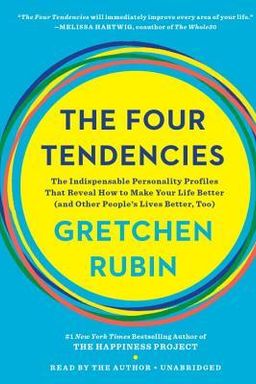
Why can you hit every work deadline but can’t make yourself go to the gym? Or why do some people question every rule, while others shrug and follow them without hesitation? In The Four Tendencies, Gretchen Rubin tackles a deceptively simple question that reshapes how we understand motivation and behavior: How do you respond to expectations?
Rubin argues that the key to personal change isn’t willpower, discipline, or even motivation—it’s self-knowledge. Specifically, knowing whether you instinctively meet or resist inner (self-imposed) and outer (others-imposed) expectations determines almost everything about how you form habits, communicate, and achieve goals. This insight, Rubin contends, unlocks one of the most practical frameworks for understanding human nature since personality psychology itself.
The Power of Expectations
At the heart of Rubin’s work lies the idea that expectations shape nearly every action we take. Outer expectations may come from your boss, spouse, or doctor. Inner expectations come from yourself—deciding to run a marathon, write a novel, or save money. How you respond to these two types determines your “Tendency.” Rubin’s aha moment came after a friend lamented that while she never missed team practices in high school, she couldn’t make herself exercise now. The difference? Back then, others held her accountable. Today, she only had to answer to herself. This realization led Rubin to identify four main patterns of response.
The Four Personality Tendencies
Rubin discovered a simple question could sort people into four categories: How do you respond to outer and inner expectations?
- Upholders meet both inner and outer expectations easily. They love structure, schedules, and reliability. “Discipline is my freedom” could be their motto. They’re self-starters but can veer into rigidity.
- Questioners question all expectations; they’ll meet them only if they make logical sense. Once convinced, they’re highly reliable—but prone to overanalysis and paralysis.
- Obligers readily meet outer expectations but falter on inner ones. They’ll do anything for others—until they burn out or rebel.
- Rebels resist all expectations, valuing freedom and self-expression above all else. They’ll act only when they want to, not when they’re told to.
In Rubin’s national survey, Obligers made up the largest group (about 41%), followed by Questioners (24%), Upholders (19%), and Rebels (17%). Each type sees the world through a different motivational lens, and understanding this reveals what really drives—or derails—our habits.
Why It Matters
Rubin argues that these Tendencies explain much of the friction in everyday life. Why couples clash over chores, why teams fall apart under stress, and why well-meant advice—“You just need to set your mind to it!”—often fails. Because we assume others are motivated the same way we are, we give advice tailored to our own Tendency. An Upholder tells a Rebel to “just stick to the plan.” A Questioner nags an Obliger with endless rational arguments. A Rebel balks when someone tries to schedule their time. Recognizing these differences can transform relationships at work and home.
In subsequent chapters, Rubin delves into each Tendency in detail, showing their strengths, pitfalls, and distinctive ways of handling work, love, parenting, and even health. She explores Obliger burnout and “Obliger-rebellion,” how Rebels can use identity to motivate themselves, and why Questioners need clarity to escape overthinking. She even shows how understanding your partner’s or team’s Tendency can improve communication and motivation.
A Framework for Change
Unlike tests like Myers-Briggs or the Enneagram, Rubin’s framework isolates one narrow dimension: your response to expectations. That simplicity makes it powerful. Once you know your Tendency, you can tailor the environment around you. Obligers can use accountability partners or deadlines; Questioners must seek justifications before committing; Upholders thrive with clear rules; Rebels need freedom and choice.
Rubin’s message is hopeful but pragmatic: you can’t change your Tendency, but you can design your life to make your nature work for you, not against you. Understanding it is not a box—it’s a spotlight. By learning how to harness your unique motivational style—and that of those around you—you can finally follow through on what matters most, in your way.