
Idea 1
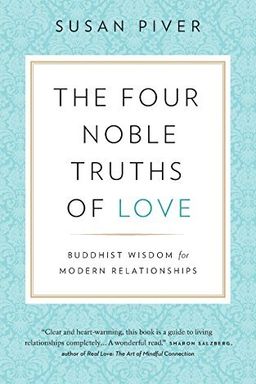
The Four Noble Truths of Love: Finding Freedom Through Uncertainty
Have you ever asked yourself why love—something so beautiful—can also be so painful and confusing? In The Four Noble Truths of Love, Susan Piver offers a radical answer drawn from over two decades of Buddhist practice: love and suffering are not opposites; they are intertwined. She argues that the way to true intimacy is not by trying to fix instability, but by learning to meet it together with openness, compassion, and awareness.
Using the framework of the Buddha’s original Four Noble Truths—suffering, its cause, its cessation, and the path to liberation—Piver adapts them to the realm of romantic relationships. The result is the Four Noble Truths of Love: 1) Relationships never stabilize. 2) Expecting them to be stable is what makes them unstable. 3) Meeting the instability together is love. 4) There is a path to liberation. These four formulations provide not just insight into the messiness of human connection, but a practical guide for transforming conflict, confusion, and heartbreak into spiritual practice.
Why This Matters
Most advice about relationships focuses on how to get love—how to attract it, preserve it, or restore it. Piver shifts the lens to how to give love, how to embody it as awareness and bravery rather than as a fantasy of comfort. She contends that the human desire for stability—our wish for relationships to be peaceful, predictable, and safe—is actually what makes them break down. Love, she writes, is alive by nature. Its pulse is found not in security but in deep presence with change.
This message reflects her own journey. When she and her husband Duncan hit a long spell of conflict, every interaction—"What time is it?” or “Where should we eat?”—became a fight. Nothing worked: talking, silence, lovemaking, avoidance. One night, desperate and lost, she remembered the original Buddhist truth: everything changes; clinging causes suffering. She applied it not just to her inner life but to her marriage. The insight that relationships are impermanent became her compass for rediscovering love. Instead of chasing solutions, they began learning to stay present with discomfort. From there, openness reappeared.
Uncertainty as the Gateway to Intimacy
Piver invites readers to accept that uncertainty is not something to overcome but the very ground on which love stands. Just as the Buddha discovered liberation in acknowledging suffering, we can discover liberation in acknowledging relational instability. This insight reverses the usual equation—love is not about removing storms but learning to stand together in the rain.
“To say yes to love is to say yes to the unfolding, impenetrable arc of uncertainty,” Piver writes. “The bad news is you’re falling through the air. The good news is there is no ground.”
The Four Noble Truths Reimagined
Through the remainder of the book, she expands each truth:
- Relationships never stabilize: Discomfort, irritation, and confusion are not signs of failure but the pulse of living connection.
- Expecting stability makes them unstable: Our grasping for security—what Buddhists call attachment—creates strain that suffocates love.
- Meeting the instability together is love: Intimacy grows not from agreement but from courageously facing chaos side by side.
- There is a path to liberation: Through mindfulness, lovingkindness, and honest conversation, relationships become vehicles for awakening.
These truths form a map that’s both psychological and spiritual. By bringing Buddhism “out of the monastery and into our living rooms,” as she puts it, Piver argues that every argument, every irritation, every silence can be an invitation to awaken together. Love becomes a practice—not a place of refuge from the world, but a path through it.
Love as Warriorship
Toward the book’s close, she deepens the metaphor of love as spiritual warriorship. Like the Shambhala teachings of her lineage (from Chögyam Trungpa, author of Shambhala: The Sacred Path of the Warrior), Piver defines bravery not as suppression of fear but as the willingness to feel it fully. When you open your heart to love, you also open to fear, sadness, and uncertainty. The warrior learns to stay—to “fall without ground.” Vulnerability, she says, is not weakness but “the only true elegance.”
Through this lens, relationships stop being problem-solving arenas and become a container for truth-telling, courage, and compassion. Meditation, conversation, and even ordinary acts of cooking or cleaning turn into spiritual practice. Love ceases to be something you own and becomes a field you dwell within. The result is liberation in connection—the discovery that the heart, like the sky, can hold sunshine and storms alike.
By blending Buddhist wisdom, marital storytelling, and practical exercises, Susan Piver gives readers a new framework for love: not to fix what is broken, but to awaken what is already whole. In this way, The Four Noble Truths of Love becomes both a relationship manual and a meditation guide—a call to meet instability not with resistance, but with presence, humor, and the unshakable confidence that love itself is indestructible.