
Idea 1
The Rise and Power of the Four Horsemen
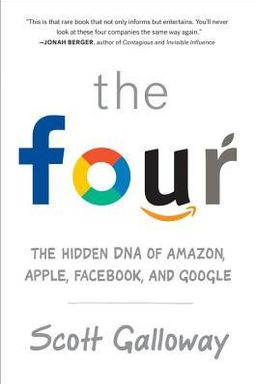
How have a handful of firms come to dictate how you shop, socialize, search, and even think? In The Four: The Hidden DNA of Amazon, Apple, Facebook, and Google, Scott Galloway explores the anatomy of modern corporate dominance—examining how these four companies have embedded themselves into every fiber of your life and reshaped what it means to succeed in the digital age.
Galloway argues that the success of Amazon, Apple, Facebook, and Google—the Four Horsemen—cannot be explained solely by technology or business acumen. Each company has tapped into a fundamental aspect of human nature: consumer desire, love, connection, or the search for meaning. Together, they represent the commercialization of our most basic instincts: Amazon channels our drive to accumulate, Apple embodies our yearning for beauty and status, Facebook feeds our hunger for connection, and Google satisfies our thirst for knowledge and certainty.
A New Kind of Empire
Galloway insists that these companies function as modern-day empires—privately controlled ecosystems rivaling nations in reach and wealth. Amazon dominates commerce, controlling half of U.S. e-commerce growth; Apple commands an almost religious following with products that blur technology and luxury; Facebook has redefined community for billions; and Google stands as an all-knowing oracle of information. Collectively, they influence what we buy, how we communicate, and even how we interpret truth.
According to Galloway, their power stems from two forces: their ability to leverage our instincts and their mastery of scale and intelligence. Rather than simply inventing technology, they reinvented how technology interacts with human emotion—merging machine efficiency with human vulnerability.
The DNA of Dominance
Each Horseman embodies an archetype of human need. Amazon appeals to consumption and survival—our hunter-gatherer instinct to hoard goods and seek convenience. Apple seduces through beauty and sexuality, cultivating luxury and identity as a modern religion. Facebook satisfies emotional and social cravings by monetizing connection and love. Google represents intellect and faith, playing the role once reserved for priests and philosophers.
The companies differ in mission but share common DNA: a relentless focus on the user, vertical control over their ecosystems, an ability to scale globally, and a mastery of data. Each of them grows smarter with every click, each crafting the illusion of a benevolent partner while quietly absorbing enormous power and wealth. Together, Galloway suggests, they represent the most successful colonization of human attention in history.
Human Instinct Meets Digital Exploitation
Behind their sleek design and customer obsession, these firms exploit the same biological and psychological impulses that once fueled religion and tribalism. Amazon’s relentless convenience feeds our drive for resource security. Apple’s minimalist perfection offers transcendence. Facebook’s endless stream of validation through likes rewards us with dopamine hits. Google, meanwhile, absorbs our doubts, offering certainty in an uncertain world. They are, as Galloway says, the “Four Horsemen of god, love, sex, and consumption.”
“No other firms in history have combined the reach of nations, the intimacy of religion, and the precision of modern science like these four.”
Why It Matters
Understanding the Four isn’t just an academic exercise—it’s the key to understanding your economy, your career, and even your private life. Galloway shows how they’ve reshaped entire industries, hollowed out traditional media, destroyed millions of retail jobs, and redefined success around digital scale. Their dominance, however, comes with consequences: the erosion of privacy, the polarization of politics, and the concentration of wealth among a tiny elite.
Through these pages, you’ll explore how Amazon weaponized consumer convenience, how Apple turned design into dogma, how Facebook blurred the line between love and surveillance, and how Google became a digital deity. You’ll also see how their playbooks—relentless user focus, data mastery, global ambition, and likable storytelling—can help ambitious people and companies survive in a world they’ve remade. And beneath it all lies Galloway’s haunting question: if the Horsemen define the modern world, what comes after them—and who, or what, will ride next?