
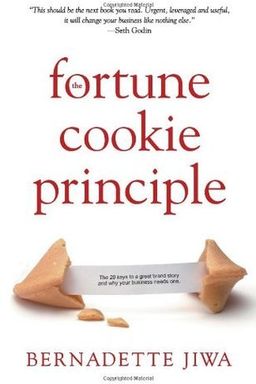
The Fortune Cookie Principle cover

The Fortune Cookie Principle

by Bernadette Jiwa

The Fortune Cookie Principle is your roadmap to building a strong brand through compelling storytelling. Discover how to engage customers with a purpose-driven narrative, align your business practices, and stand out in a competitive market to achieve meaningful success.

The Story Behind Every Great Brand

Why do some businesses feel magnetic, while others fade into the noise? In The Fortune Cookie Principle, Bernadette Jiwa argues that every successful brand is built not simply on the quality of its product but on the power of its story. She contends that the fortune—the intangible meaning that connects emotionally with customers—is what truly separates a great brand from a mere commodity.

In Jiwa’s vivid metaphor, every business offers both a cookie and a fortune. The cookie is the tangible thing you sell—the coffee, app, or car. The fortune is the story, the emotional connection, and the sense of meaning people attach to your brand. You need both: a solid product and a compelling story. But while most businesses obsess over baking a better cookie, the ones that win hearts spend time crafting unforgettable fortunes.

From Commodities to Meaning

Jiwa shows that the shift from “new marketing” to “story marketing” isn’t optional. We live in the opt-in age—people can easily ignore you. Audiences skip ads, scroll past sponsored posts, and dismiss pitches unless they care. To thrive, you must give people a reason to care. Great brands—from Apple to Starbucks—don’t fight for attention; they earn affection. Apple didn’t sell 32MB of storage; it sold “1,000 songs in your pocket.” Starbucks didn’t just sell coffee; it sold a ritual, a space between home and work—the “third place.”

The Fortune Cookie Principle Explained

The book’s central framework rests on twenty keys that unlock how businesses can craft their stories from the inside out. Each key—from truth and purpose to customer experience and reaction—helps a company align what it does with why it exists. Your truth is what business you’re really in; your purpose is why that business matters; your vision is how it changes lives. Together, these create a consistent, authentic story that customers can believe.

Why Stories Are the Real Advantage

In the digital era, anyone can launch a product. Technology and globalization have lowered barriers to entry, but they’ve also flooded the market with sameness. The story becomes the only sustainable advantage. Jiwa expands on the idea popularized by Seth Godin (All Marketers Are Liars) and Jim Stengel (Grow): that people don’t buy products, they buy how they make them feel. Emotional resonance—not features or pricing—drives long-term loyalty. Brands that articulate a shared worldview attract customers who see their purchase as a reflection of identity.

From Awareness to Affection

Traditional branding was about being top-of-mind—persuading people to remember your name. Jiwa redefines the goal: you must be “close-to-heart.” Recognition doesn’t create love; emotion does. As she puts it, “Ask Microsoft.” Awareness didn’t make Windows beloved the way Apple became part of people’s stories. Your brand must shift from being recognized for what you sell to being loved for what you stand for.

The Human Element

The book teems with real-world examples—the iced coffee entrepreneur who sells “happiness in a carton,” the jeans maker who revives an entire town’s livelihood, and the chocolate craftsman who sells integrity as much as flavor. These stories show how meaning adds value. When your business expresses human truth—joy, pride, or connection—it transcends utility. Jiwa invites you to rediscover the heart behind your enterprise: to define your values, nurture your community, and act with integrity. Every touchpoint, from design to customer service, becomes part of the story that speaks silently and powerfully.

Why This Matters to You

In a world of endless choice, your customers aren’t looking for more information; they’re seeking meaning. They’re asking, “What does this brand say about me?” The Fortune Cookie Principle is about helping you shape that answer. It’s not enough to aim for quality or visibility—you must aim for significance. When people buy into your story, they buy into themselves as heroes of it. Jiwa’s message is both empowering and humbling: success belongs not to those who are the best, but to those who tell the best story.

“It’s not how good you are; it’s how well you tell your story.” —Bernadette Jiwa

The book gives you the lens to reimagine marketing—from selling products to sharing beliefs, from chasing attention to building belonging. In the end, Jiwa’s fortune is clear: every brand has a story waiting to be told—and that story is the bridge between what you make and what people feel.


Truth: Know What Business You’re In

Every story begins with truth—the honest intersection between what you do and what your customers really want. Bernadette Jiwa insists that a brand’s “truth” isn’t just about the product’s features or technical data. It’s about understanding the emotional need your business fulfills. People don’t buy coffee; they buy warmth, identity, and the feeling of belonging. They don’t buy shoes; they buy confidence or adventure.

Defining Business Truth

To discover your business truth, you must look beyond the obvious functionality and uncover what outcome or emotion your product enables. Theodore Levitt’s classic insight—“People don’t want to buy a quarter-inch drill; they want a quarter-inch hole”—anchors Jiwa’s argument. Businesses that connect their truth to customers’ emotional realities transform from vendors into partners in identity.

Jimmy’s Iced Coffee: Selling Happiness

One vivid example is Jim Cregan’s journey in founding Jimmy’s Iced Coffee. A road trip in Australia introduced Jim to the joy of real iced coffee—refreshing, energizing, and optimistic. Rejected by established brands when he tried to franchise their product back in the UK, he realized his real business wasn’t about coffee at all; it was about joy. So he launched his own iced coffee line with the uplifting tagline “Keep Your Chin Up.” Everything—from packaging design to social media—celebrates optimism. Customers aren’t just buying a drink; they’re buying “happiness in a carton.”

Pampers: Discovering What Mothers Truly Want

Jiwa contrasts Jimmy’s with the transformation of Pampers under P&G executive Jim Stengel. The brand lost its edge when it focused only on dryness metrics and ignored what parents cared about most—their baby’s development. Research showed mothers valued reassurance and growth milestones. Pampers repositioned itself as a partner in parenting, not just a provider of diapers. This deeper truth raised global revenue to $10 billion. Pampers moved from selling a disposable necessity to selling nurturing, trust, and love.

“You can choose to be a commodity, or you can ask the question ‘What are we really selling?’” —Bernadette Jiwa

The Paradox of Customer Truth

Customers want both individuality and belonging—what Rob Walker calls “the paradox of the customer’s truth.” The best brands tell stories that honor both desires. Nike’s swoosh stands not only for athletic success but for personal empowerment—“Just Do It.” Each wearer feels like part of a global tribe yet uniquely driven. Your business truth resides here: at the emotional crossroads of personal and collective identity.

Turning Truth Into Strategy

Once you define this truth, all other brand keys—purpose, vision, values—build on it. Your hiring, design, content, and pricing should reflect it. Jiwa urges leaders to ask: “Are we selling convenience, or are we selling freedom? Are we selling data storage, or are we helping people feel secure about their memories?” Truth gives your business meaning; meaning gives customers a reason to care.

Getting to truth means listening deeply, asking questions, observing how your story lives in customers’ lives, and aligning every decision with that authentic purpose. When your truth resonates, your brand doesn’t shout—it connects.


Purpose: Why Your Business Exists

Your purpose is the heartbeat of your brand. Jiwa reminds us that money is a result, not a reason. The most successful companies begin with a mission that transcends profit. Purpose creates direction, motivation, and continuity; it’s what keeps customers and employees inspired through change.

Purpose Drives Profit

Jim Stengel’s research for Procter & Gamble revealed that companies driven by ideals grew three times faster than their competitors. Apple exists to empower creativity; Google exists to satisfy curiosity; LEGO exists to “inspire and develop the builders of tomorrow.” These ideals inform every decision, shaping culture, product design, and marketing strategy. When your business acts from purpose, growth follows naturally.

LEGO: Rediscovering Its Soul

LEGO nearly collapsed in the early 2000s by chasing diversification—theme parks, games, apparel—and losing sight of its core purpose. When Jørgen Vig Knudstorp became CEO, he asked one haunting question: “Why do we exist?” The answer was simple yet powerful: to inspire creativity through building. Refocused on its iconic brick, LEGO streamlined operations, cut excess product lines, and revived its construction sets. Within two years, profits soared again. Their moral: purpose isn’t a slogan—it’s a compass.

Hiut Denim: A Town’s Revival

For David and Clare Hieatt, founders of Hiut Denim in Wales, purpose meant more than craftsmanship—it meant social restoration. When their town’s factory closed, hundreds lost jobs and pride. The Hieatts created Hiut Denim to bring jeans-making back home. Each pair carries a “History Tag” that documents its creation and the wearer’s story. Their motto—“Our town is going to make jeans again”—isn’t just branding; it’s redemption. Customers buy not only premium jeans but a piece of dignity and hope.

“Businesses need soul, too, and the ‘why’ is the soul.” —David Hieatt

Purpose in Action

Purpose informs not only your story but your structure. It determines how you hire, how you speak to customers, and what you prioritize. Jiwa challenges readers to ask: “What can I do that nobody else can do? What can my business stand for that’s uniquely ours?” Whether your calling is sustainability, creativity, or joy, tying every decision to that purpose cultivates consistency and authenticity.

A brand without a purpose is just a transaction. A brand with purpose becomes part of people’s lives. Jiwa’s enduring advice: don’t chase more customers—stand for something worth finding.


Vision: Imagining the Future You’ll Create

Vision is your business’s possibility—the dream of what could be. While purpose defines why you exist, vision defines where you’re going. Jiwa describes vision as the projection of the impact you want to make in the world. It can be modest or audacious, but it must be clear.

Airbnb: From Airbeds to Global Belonging

Brian Chesky and Joe Gebbia started Airbnb by renting out air mattresses during a design conference. Their original goal—“find accommodation for conference-goers”—evolved into a vision to connect people worldwide through shared spaces. The phrase “from a couch to a castle” captures how Airbnb’s vision turned an economic necessity into a cultural revolution. Today, millions travel not just to sleep but to connect. Their story reminds you that vision grows when you see what your idea could become for others.

Charity: Water: Changing the World Drop by Drop

Scott Harrison’s transformation from nightclub promoter to humanitarian is an emotional example of vision in action. After volunteering in Africa, he realized that clean water could transform health, education, and dignity. His vision: end the global water crisis within our lifetime. By framing the mission so boldly—and proving transparency through GPS-tracked wells—Charity: Water attracted millions of donors and turned birthdays into campaigns. Vision inspired scale.

“We can end the water crisis in our lifetime by ensuring everyone has access to clean drinking water.” —Charity: Water vision statement

Why Vision Matters to You

A strong vision guides daily decisions and shapes your business’s story. It tells your team what success looks like. Jiwa suggests crafting a vivid picture of the outcomes you want to create: happier homes, cleaner streets, learners empowered. Vision isn’t hype—it’s a promise. It provides the emotional north star for marketing, culture, and innovation. When your vision inspires action in others, it becomes part of their story too.

Your challenge is to ask: What happens because your business exists? Even if your reach is small—twenty people instead of two million—your vision defines how each encounter leaves the world better than before.


Values: The Soul of Your Story

Values turn beliefs into behavior. Jiwa observes that when businesses succeed and then lose sight of their values, they also lose their magic. Values determine how you act, how you treat people, and what kind of legacy you create.

Living Values, Not Just Writing Them

Consider the neighborhood café Jiwa once loved. As it expanded, it traded craftsmanship and connection for efficiency and profit. The owners stopped greeting regulars; smiles faded; the story died. Growth without integrity destroys intimacy. True values are non-negotiable—they anchor authenticity amid change.

TOM Organic: No Compromise

Aimee Marks founded TOM Organic after discovering harmful chemicals in everyday tampons. At twenty-three, she created organic cotton products free from pesticides and perfumes. Her values—honesty, sustainability, empowerment—turned a school project into a multimillion-dollar enterprise. TOM’s success lies not just in innovation but in moral clarity. Aimee measures success not only by profit but by impact: how many women she helps live healthier lives.

Tattly: What the World Was Waiting For

When designer Tina Roth Eisenberg saw her daughter’s tacky temporary tattoo, she stopped complaining and started creating. Her company, Tattly, makes beautifully designed temporary tattoos by professional artists. Its brand expresses values of creativity, collaboration, and play. Customers buy joy, not ink. Each tattoo turns skin into a canvas for self-expression—proof that genuine values can become visible culture.

“The values of the founder trickle down in the product.” —Tina Roth Eisenberg

From Beliefs to Action

Your values are the story you live, not just tell. Jiwa suggests listing your beliefs—about integrity, responsibility, or joy—and asking whether your customers can see them. Do your actions match your claims? Transparency, design, and tone should reflect your moral DNA. Shared values build trust and belonging. When your customers share your worldview, they don’t just buy—they join.

Values align everything: design with belief, product with purpose, people with meaning. Lose them, and you lose connection. Keep them, and your story endures.


Your People: The Heartbeat of the Brand

People are the living storytellers of your brand. Jiwa emphasizes that leaders and employees bring your story to life through every smile, gesture, and decision. Your team can make marketing unnecessary if they embody your values authentically.

Empowerment Creates Alignment

At Kimpton Hotels, founder Bill Kimpton built an empire around human connection. His belief: “A hotel should relieve travelers of their insecurity and loneliness.” Staff were empowered to act on empathy—not rules. When a guest with a bad back called to ask about Epsom salts, employees upgraded her room and delivered a handwritten card with chocolates and salts. This act wasn’t corporate policy; it was humanity in motion. Kimpton’s empowerment culture generated customer satisfaction scores above 90%—and emotional attachment near 89%. People cared because the staff cared.

MailChimp: Fun Meets Humanity

MailChimp proves that personality sells. Their cheeky mascot Freddie and playful emails (“Thanks a million—it’s like gold dipped in frosting”) turn every transaction into a smile. The company hires for character, not just credentials, and gives employees “permission to be creative.” This infectious humanity fuels loyalty—adding 6,000 new customers daily. It’s proof that joy and laughter can coexist with professionalism.

“Our employees are our brand.” —Kimpton Hotels

Hiring for Heart Over Skill

Jiwa advises leaders to recruit people who believe in the vision, not just execute tasks. Hire for empathy, curiosity, and alignment with core values. Culture isn’t written—it’s lived through daily actions. Empowerment replaces manuals with trust, swapping transaction for transformation.

People shape emotion; emotion shapes story. When your team loves what they do, customers feel it instantly. Authenticity becomes contagious—and profits follow.


Delivering Value That Money Can't Buy

Value is perception, not price. Jiwa reminds us that customers buy how something makes them feel, not what it costs. Emotional currency outweighs financial exchange.

Beyond Price Tags

When 95% of human decisions happen subconsciously (as psychologist Gerald Zaltman notes), value becomes emotional. The florist who sells $8 roses on Valentine’s Day isn’t selling flowers; he’s selling love, hope, redemption. Charles Revson of Revlon understood this decades ago: “In the factory we make cosmetics; in the drugstore we sell hope.”

Snakes & Lattes: Selling Connection

Toronto café Snakes & Lattes doesn’t just sell coffee—it sells experiences. Patrons pay not for lattes but for nights filled with laughter and old-school board games. With over 2,500 games, this café became a social haven where people rediscovered analog joy. Customers wait hours to get a table; their loyalty grows from memory, not menu.

Bahen & Co.: Honest Chocolate

Australian chocolatier Josh Bahen learned from winemaking that integrity defines flavor. He built Bahen & Co. around timeless craftsmanship—stoneground bars made from just two ingredients: cacao and cane sugar. Paying farmers multiples above trade value, he turned his brand into an ethical story of purity and fairness. Customers gladly pay $10 per bar because they taste authenticity—and ethics.

“People aren’t buying facts or features—they’re buying the difference you make.” —Bernadette Jiwa

True value lives in how your brand makes people feel about themselves. Deliver generosity, trust, and delight at every touchpoint. When your story fills emotional gaps—belonging, self-expression, pride—your value becomes limitless.

Money measures transactions; emotion measures meaning. Jiwa urges you to create businesses where both coexist, transforming every purchase into participation in a bigger story.

Dig Deeper

Get personalized prompts to apply these lessons to your life and deepen your understanding.

Go Deeper

Get the Full Experience

Download Insight Books for AI-powered reflections, quizzes, and more.