
Idea 1
The Formula: Edge, Rules, People, Money
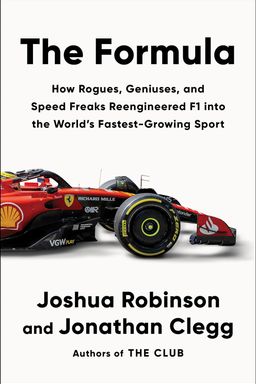
How do you win a sport engineered to eliminate easy advantages? In The Formula, the authors argue that Formula 1 is a systems competition where engineering brilliance, legal interpretation, organizational culture, and media savvy interact to produce winners. You don’t just need a faster car; you need to master airflow, read ambiguity into opportunity, build institutions that can iterate faster than rivals, and tell a story compelling enough to attract the capital and talent that keep you ahead.
Engineered speed: airflow beats horsepower
The book’s core claim is blunt: aerodynamics is F1’s single biggest performance differentiator. Adrian Newey’s career (Williams, McLaren, Red Bull) and cautionary tales like Mercedes’s porpoising W13 show that you win with how air meets metal. Cars are inverted airplanes: they generate downforce that glues them to the track. The more stable, efficient downforce you create, the more speed you unlock in corners—the places where lap time really hides. Wind tunnels, computational fluid dynamics (CFD), and old-school drawing boards become weapons for tenths of a second. (Note: This mirrors what you see in other tech races—software-defined advantages compounding over hardware specs.)
A contest of interpretations: loopholes vs. law
F1 literally names itself after its rules—the Formula—and then invites you to bend them. The book frames innovation as legal ingenuity: spot a gray area, build a concept (ground effect, double diffusers, active suspension), and keep it secret long enough to bank points before rivals copy or the FIA bans it. Patrick Head’s “unfair advantage” mantra captures the sport’s DNA. You’ll see two outcomes: short-lived brilliance that forces regulation to catch up, or scandal when the edge crosses into cheating (Spygate, Crashgate).
Institutions, not just inventions
Technical genius rarely survives inside weak organizations. Ferrari’s mythic brand masked decades of institutional fragility until Luca di Montezemolo and Jean Todt rewired Maranello with a wind tunnel, centralized processes, and the Schumacher–Brawn partnership. Mercedes’s Toto Wolff did something similar—clean facilities, clear standards, and ruthless process discipline—then rode a prepared hybrid engine era to dominance. Red Bull fused a brand-first culture with Newey’s aerodynamic mastery, while Brawn GP showed how opportunistic leadership could convert collapse into a championship (and a Mercedes buyout).
Money architecture: from Bernie to the cost crunch
Bernie Ecclestone industrialized F1: he centralized broadcast rights, sold TV country-by-country, and monetized scarcity. Tobacco money paid the bills while he packaged full-race broadcasts into global sponsorship platforms. When the 2008–2009 crisis hit and manufacturers fled, Max Mosley pushed cost caps; Ferrari and other manufacturers resisted. The resulting political brawl (FOTA’s near-breakaway) exposed who really holds power: those with leverage over money, brands, and calendar slots. The compromise delayed structural reform—but set the stage for Liberty Media’s media-first reboot.
People and narrative: the sport’s emotional engine
Even in a wind-tunnel sport, people drive attention. Senna’s mystique at Monaco, Prost’s cerebral craft, Lauda’s courage after Nürburgring, and Schumacher’s ruthless professionalism give F1 a beating heart. Under Liberty, Netflix’s Drive to Survive turned team bosses and drivers into bingeable characters, supercharging U.S. growth. But attention cuts both ways: the Abu Dhabi 2021 finale—where race director Michael Masi’s Safety Car call decided the title—became both a ratings peak and a trust crisis.
Thesis in one line
To win consistently in F1, you must convert ambiguity into advantage—technical, legal, organizational, financial, and narrative—faster than anyone else, while surviving the backlash that success inevitably invites.
Across chapters, you learn a transferable playbook. Engineer for aerodynamic stability; scout the rulebook for asymmetries; build cultures that make speed repeatable; finance your edge with smart media and sponsorship; protect your IP like gold; and tell stories that grow the pie. If you manage any complex, competitive enterprise, this is a blueprint—not just for a faster lap, but for sustained dominance in a moving rule-space.