
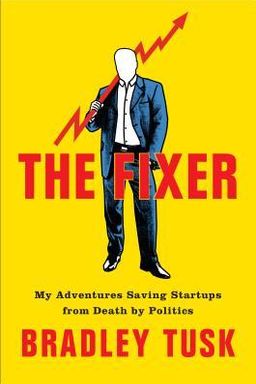
The Fixer cover

The Fixer

by Bradley Tusk

Bradley Tusk''s ''The Fixer'' delves into the intersection of politics and business, showcasing how strategic political and media campaigns can save start-ups like Uber and Lemonade from regulatory and industry threats. With captivating tales of ingenuity and resilience, Tusk reveals the art of political strategy as a vital tool for entrepreneurial success.

How Startups Can Survive Politics and Regulation

How can a startup survive in a world where regulators, entrenched interests, and politicians seem built to crush innovation? In The Fixer: My Adventures Saving Startups from Death by Politics, Bradley Tusk argues that disruption doesn’t happen just through technology or entrepreneurship—it requires mastering the political game. You can build the perfect product, raise millions, and capture headlines, yet still fail if you don’t anticipate the onslaught of laws, bureaucrats, and lobbyists who guard the status quo.

Tusk contends that the line between politics and business has blurred. Every significant innovation—from ridesharing and fantasy sports to cannabis delivery and mobile voting—threatens someone who already controls power, profits, or regulation. Those entrenched actors respond not by competing in the marketplace but by lobbying politicians to ban or slow you down. His solution: treat every regulatory challenge like a campaign, using political strategy to neutralize opponents, mobilize customers, and shape public narratives.

From Political Insider to Startup Savior

Tusk made his reputation as a master political strategist—working for figures like Ed Rendell, Chuck Schumer, and Mike Bloomberg, and even surviving as deputy governor under the notoriously corrupt Rod Blagojevich in Illinois. These experiences taught him how political systems really work: leaders crave attention, bureaucracies resist change, and success depends on controlling perception and narrative. When Tusk entered the startup world, he realized founders were brilliant technologists but political amateurs. His consulting firm, Tusk Strategies, became the bridge—helping companies like Uber, Lemonade, and FanDuel wage battles against regulators and lobbyists.

The Core Argument: Winning Requires Political IQ

The core message of the book is that in a regulated economy, success means learning to outthink politicians as much as outcode competitors. Regulators, Tusk says, don’t hate innovation because it’s new; they oppose it because it threatens the donors and industries that keep them in office. The startup’s job isn’t to plead for permission—it’s to reshape the political incentives so doing the right thing becomes the politically smart thing. He calls this approach “Travis’s Law,” after Uber’s cofounder Travis Kalanick, who learned that it’s often better to launch boldly and beg for forgiveness later than to wait indefinitely for permission.

Why This Matters for Entrepreneurs

If you’re an entrepreneur, policymaker, or investor, the lessons here are crucial. The same regulators who once policed taxis now debate autonomous vehicles, cryptocurrency, and AI. Tusk’s framework helps you understand how political risk works—and how to turn it into momentum. He reveals that most founders fail not because their technology is weak but because they underestimate how fiercely incumbents use political power to block them. Learning to navigate this world isn’t optional; it’s existential.

What You’ll Discover

Across this summary, you’ll discover how Tusk learned to “fix” businesses at the edge of politics. You’ll meet Uber’s fight against Bill de Blasio’s crackdown in New York, watch Bloomberg’s campaign war rooms battling perception, and see how startups like Lemonade and Eaze turned regulation into innovation. You’ll learn actionable tactics to pick your battles, mobilize customers as advocates, and transform complex policy into storytelling power. And finally, you’ll explore Tusk’s bold vision of “mobile voting”—his moonshot idea for fixing democracy itself.

Why does this matter now? Because every founder faces political disruption—from data privacy laws to labor classifications, antitrust scrutiny, and urban regulation. Tusk’s book turns what seems like chaos into a roadmap. Instead of fearing politics, you can master it—and that, he argues, is the most powerful form of innovation of all.


Learn the Language of Politics

Bradley Tusk begins his story with humility: as a college student in the early 1990s, he stumbled into politics through pure persistence. His early experiences with Philadelphia’s mayor Ed Rendell and New York’s eccentric parks commissioner Henry Stern taught him how government really operates. He discovered that people in power don’t move for good ideas—they move when public attention or political benefit demands it. This lesson became the foundation of his entire career.

Politics Runs on Attention

Working with Henry Stern showed Tusk the psychology of politicians. They crave validation more than results, and attention is currency. Stern’s bizarre publicity stunts—chain himself to trees to protest arborcide, dress as a groundhog for media photos—weren’t silly; they were strategy. Press coverage outpunched budgets and created leverage. As Tusk puts it, “If you control attention, you control action.” That idea became his political law of gravity, used later to help startups steer media narratives during crises.

From Toilets to the Senate

Tusk leveraged these lessons to climb the ranks, first landing a Senate job with Chuck Schumer after organizing a Parks Department ribbon-cutting that replaced a ribbon with a roll of toilet paper. This humor, creativity, and work ethic impressed Schumer, a master of media manipulation himself. Under Schumer, Tusk learned that ceaseless press conferences and bold gestures could build a reputation for hard work. (He compares Schumer’s style to a running back grinding “three yards and a cloud of dust.”)

Making Chaos Work for You

The real mastery came when crises hit. During 9/11, Tusk witnessed how bipartisan action—for once—overrode ego. He saw how Chuck Schumer and Hillary Clinton cooperated to secure $20 billion for New York’s recovery, despite mutual hatred. The key was control of narrative: rather than letting the press focus on their rivalry, Schumer’s team shaped the story as “New York’s senators fighting together.” When an environment spirals out of control—whether political or media—a strong narrative can make chaos productive.

Understanding Power Psychology

By the time Tusk joined Mike Bloomberg’s administration, he saw how political categories define behavior: the attention-seeker, the ideologue, the happy placeholder, and the corrupt pay-to-play operator. Each type can be managed once you know their motivations. Bloomberg stood out as the rare fifth type—the true technocrat who governs for results, not applause. From him, Tusk learned that transparency and data could be powerful public relations tools. He invented the first “campaign promises report,” publicly listing every promise Bloomberg made and whether he’d kept it. It was radical accountability—and media loved it.

For entrepreneurs, this section teaches that audiences—whether voters, customers, or journalists—respond to authenticity, responsiveness, and proof of progress. You can’t beat bureaucracy by hiding. Like Tusk’s discoveries in city hall, you win by learning the local language of power and speaking it fluently.


Leadership and Chaos Management

Tusk’s years as deputy governor of Illinois under Rod Blagojevich were both surreal and educational. He learned how to manage chaos and incompetent leadership while still driving results—the ultimate survival lesson in politics. If you’ve ever had a boss who’s irrational, disorganized, or distracted, Tusk’s stories from Illinois provide an extreme version of that reality.

Working for an Unstable Leader

Blagojevich, later imprisoned for corruption, barely showed up at the office. He ran the state from his home, obsessed with his public image and petty feuds. Tusk, at twenty-nine, effectively ran Illinois himself—handling a $60 billion budget and seventy thousand employees while the governor focused on his tailor appointments. What made it possible, he says, was realizing that people want to be led. Most bureaucracies crave authority and relief from indecision. By simply showing up, answering calls, and taking responsibility, Tusk found that staff would follow him anywhere.

The Power of Ownership

Tusk’s daily motto became, “Own the problem before it owns you.” When colleagues or crises exploded, he absorbed blame and made decisions. This built loyalty and stabilized the machine. He compares this leadership style to startup culture: chaotic systems need a clear voice. Whether you’re managing engineers or legislators, confidence and accountability outweigh experience. (He cites his impromptu management of a Homeland Security call when Blagojevich refused to join, forcing Tusk to pretend to be the governor.)

Lessons in Ethics and Boundaries

When Blagojevich later tried to extort Rahm Emanuel by withholding a school grant until a fundraiser was held, Tusk refused and reported it to the ethics counsel. That decision saved his career when federal prosecutors came calling years later. The lesson: even amid corruption, protecting your integrity is non-negotiable. Startups face similar temptations to bend rules—but short-term gain can destroy long-term viability. “You don’t need to be perfect,” Tusk writes, “You just need to know when something crosses the line.”

This chapter reminds you that true leadership doesn’t require titles or perfection—it requires decision-making under pressure. Whether you’re stuck under a dysfunctional CEO or an unpredictable governor, the same principle applies: clarity beats chaos.


How to Pick Battles and Win Early

One of Tusk’s most famous lessons—what he calls “Strangle the baby in the crib”—comes from his experience managing Bloomberg’s 2009 reelection against potential opponents like Anthony Weiner. The metaphor sounds brutal, but it captures an important truth: sometimes the best political or business defense is preemption. You don’t wait for threats to mature—you neutralize them early.

Reverse Engineer the Enemy

Facing Weiner, a charismatic congressman with real momentum, Tusk’s team calculated the math. Bloomberg could win only if Democrats stayed divided and no strong opponent consolidated them. They built a secret mini-campaign—not to win votes, but to make Weiner choose not to run. Tusk reverse-engineered Weiner’s decision, knowing his pollster would advise against running if he trailed by fifteen points. The mission became clear: inflate Bloomberg’s numbers just long enough to scare him off.

Using Every Weapon

In true campaign style, Tusk deployed multiple fronts: earned media, opposition research, geo-targeted digital ads in Weiner’s ZIP code, and even door-knocking in his own neighborhood and his parents’. The message was psychological: “We’re everywhere.” Headlines like “Weiner’s Naughty Hotties” and “Pucking Goof-Off” in the New York Post branded him as scandal-prone long before his actual scandals erupted. The blitz worked—Weiner quit before the race began.

The Startup Parallel

For founders, Tusk’s strategy is invaluable. Competitors, lawsuits, or regulators all act like potential rivals. You can wait for them to mature—or define the narrative first. Jeff Bezos famously took similar preemptive tactics when launching Amazon Prime to neutralize Walmart; Tusk’s “strangle the baby” method is the political equivalent. It’s not cruelty—it’s urgency. The lesson: speed and psychological dominance can often replace brute force.

By the time election night came, the campaign’s bigger victory wasn’t just the win itself but the illusion of invincibility. As Tusk often repeats, perception shapes reality. Whether you lead a company or a campaign, controlling the story is half the battle; making opponents doubt their success does the rest.


Travis’s Law and the Uber Revolution

The turning point in Tusk’s career came when he met Uber’s cofounder, Travis Kalanick, in 2011. At the time, Uber was fighting cease-and-desist letters from taxi regulators. Tusk saw a perfect battlefield for his political instincts: a startup whose disruption collided head-on with entrenched local interests. Together, they created Travis’s Law—a revolutionary playbook for startups in regulated industries.

The Formula: Beg for Forgiveness, Not Permission

Most founders ask regulators what’s allowed. Travis asked, “What happens if we just launch?” The partnership’s bold idea was simple: enter markets first, win public love, and then use that grassroots power to force regulators to legalize Uber. It worked because they identified six principles for success: high stakes, unsympathetic opponents, clear legality gray zones, manageable penalties, large customer bases, and politicians driven by popularity rather than principles.

Mobilize Users as Political Advocates

When New York’s Taxi and Limousine Commission threatened Uber, Tusk helped the company craft its defense—not in court, but among riders. Users loved Uber because it fixed everything taxis neglected: affordability, convenience, respect, and racial fairness. As complaints flooded city hall, politicians learned a critical truth: voters care more about what works than what’s technically legal. This realization became the model for dozens of future startup battles.

Transforming Politics into Technology

By turning the app into a political weapon (sending users push notifications on policy issues), Tusk showed that digital networks could reshape government responsiveness. This was “Travis’s Law” in action: when a regulator opposes innovation without valid reason, overwhelm them with users demanding change. The same tactics later energized campaigns for FanDuel, Lemonade, and even Tusk’s philanthropic project for mobile voting.

This chapter teaches a profound shift in mindset: if your business challenges existing laws, don’t see that as failure—see it as your competitive advantage. When politics becomes a platform, innovation wins both hearts and regulations.


Beating Entrenched Interests with Public Power

Tusk’s defining test of Travis’s Law came in the 2015 war with New York City Mayor Bill de Blasio. De Blasio tried to cap Uber’s growth at 1 percent per year to protect his taxi donors. The fight turned into a social movement—and proved startups could mobilize people faster than any political party.

Framing the Narrative

Instead of fighting from the right, Tusk’s campaign attacked from the left: Uber defended immigrant drivers and minority riders against racist taxi systems. De Blasio’s attempt to protect wealthy medallion owners made him look corrupt and anti-progressive. By reframing Uber as the champion of the working class, Tusk flipped the mayor’s rhetoric against him.

Mobilizing the Masses

Uber’s app itself became a weapon. A new option labeled “de Blasio” showed fake wait times and invited users to email council members in protest. In a week, 250,000 New Yorkers took action. The campaign deployed TV ads, lobbying, clergy support, and celebrity endorsements from Ashton Kutcher to Al Sharpton. Within weeks, city hall surrendered—the bill was withdrawn without Uber conceding a thing.

The Lesson for Future Battles

Tusk reveals why Uber won: its interests aligned with public emotion, it had real users who could act, and its opponent underestimated how quickly trust can shift. For entrepreneurs, this proves you can fight city hall if your customers truly care. The key isn’t money—it’s moral high ground and mobilization. Uber’s victory also taught other startups to take politics seriously, inspiring Tusk Ventures to work exclusively with founders ready to invest in political strategy.

In the end, “Travis versus Bill” wasn’t just one city’s fight—it was the proof that technology, when coupled with conviction, could bend power toward innovation.


Entrepreneurship Meets Political Warfare

After Uber’s triumph, Tusk founded Tusk Ventures—the first venture fund trading political strategy for equity. This section explores how he applied his campaign tactics to startups facing government resistance, from Lemonade to FanDuel, Handy, Eaze, and Tesla. Each case became a masterclass in political entrepreneurship.

Turning Regulation into Opportunity

Lemonade, a peer-to-peer insurance startup, faced endless delays from New York’s Department of Financial Services. Tusk turned bureaucratic foot-dragging into a political scandal, leveraging press, lobbying, and threats of moving jobs out of state. Within weeks, the regulator approved Lemonade’s license. Similar playbooks helped Handy pass labor-classification laws and Eaze legalize cannabis delivery city by city.

Mobilizing Customers and Allies

FanDuel and DraftKings, accused of running illegal gambling operations, responded by transforming millions of players into advocates. Tusk helped create voter registration drives inside fantasy apps, proving users could influence lawmakers. Handy brought unions onboard. Eaze empowered medical patients to testify. Each fight proved that if you make the stakes personal enough, passive users become political actors.

Choosing Whether to Fight or Protect

Tusk also learned limits. Tesla’s Elon Musk refused aggressive tactics against auto dealers out of fear for the brand’s image—and lost state battles. MyTable, a food-sharing startup, had a brilliant idea but lacked funds to survive lengthy regulations. Sometimes, idealism or insufficient resources kill potential revolutions before they start. “Don’t confuse protecting your brand with winning your fight,” Tusk warns.

This section reframes the founder’s journey as political warfare. For every pitch deck, there must be a campaign map. If entrepreneurs can learn this muscle—the choreography of power—they can innovate within, not against, the system.


Fixing Democracy Through Technology

After years fighting for startups, Tusk turned his attention to a deeper issue—the broken mechanics of American democracy. His final mission, mobile voting, reflects his larger philosophy: if participation is limited, politics will always favor extremes. Technology, he argues, could fix that.

The Diagnosis: Political Polarization

Most politicians aren’t stupid, Tusk says—they’re logical. They know who votes. Those few, highly ideological voters dictate policy, so leaders cater to them. The result: polarization and paralysis. To solve big problems—climate change, education, housing—we must increase voter participation dramatically. If 80% voted instead of 15%, politicians would govern for the majority.

The Solution: Mobile Voting

Drawing on lessons from Uber’s grassroots mobilization, Tusk proposes secure, blockchain-based voting through smartphones. He argues that people who advocate for a company online can certainly vote for their own interests if given the same convenience. His philanthropic venture, Tusk Montgomery Philanthropies, successfully tested mobile voting for deployed military in West Virginia in 2018—the first U.S. case of its kind.

Why the Establishment Fears It

Entrenched interests—political parties, donors, unions—fear wider participation because it threatens their control. They claim mobile voting is risky or hackable, ignoring how blockchain safeguards digital transactions daily. But as Tusk notes, the real risk is keeping people from voting altogether. Making democracy accessible through the phones in our pockets could re-center governance around the mainstream majority.

Tusk’s final idea transforms his lessons from startup battles into civic innovation. Just as Uber remade transportation, mobile voting could remake representation. If technology once fought city hall, perhaps now it can save it.

Dig Deeper

Get personalized prompts to apply these lessons to your life and deepen your understanding.

Go Deeper

Get the Full Experience

Download Insight Books for AI-powered reflections, quizzes, and more.