
Idea 1
How Lies Erode Democracy
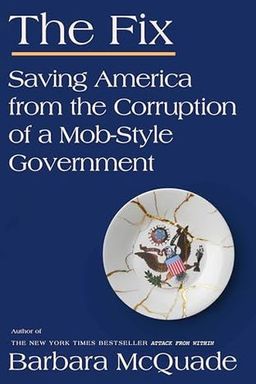
How do you defend a democracy when the main weapon against it is a flood of lies? In Attack from Within, Barbara McQuade argues that disinformation is the central tool of modern authoritarian politics. She shows how leaders don’t just win arguments; they seize power by hijacking emotions, splitting you into tribes, delegitimizing watchdogs, and bending institutions designed to keep them honest. The point isn’t persuasion alone; it’s to make you doubt, disengage, or accept a strongman as the only trustworthy source of truth.
The Authoritarian Playbook
McQuade distills a recurring pattern across history and today’s United States: elevate feelings over facts, divide people into loyalists and enemies, and muzzle or co-opt the referees. You’ve seen slogans sell declinism and nostalgia (think ‘Make America Great Again’), scapegoating cast neighbors as threats (immigrants, religious and racial minorities), and attacks on media and civil servants (‘enemy of the people,’ ‘deep state’). The same pattern appears in strongman studies (compare Ruth Ben-Ghiat’s Strongmen) and in Vladimir Putin’s ‘alternate truths’ that fracture public consensus.
A Disinformation Toolkit
The book unpacks the techniques: gaslighting (make you doubt your own eyes), the Big Lie (so audacious people assume it must be true), repetition (familiarity feels real), whataboutism (deflect, exhaust), reflexive control (feed adversaries narratives to provoke predictable errors), and the ‘Liar’s Dividend’ (after enough chaos, you can dismiss true negatives as ‘fake’). You watched ‘Stop the Steal’ iterate across rallies, cable shows, and social platforms long after courts rejected it, and you saw how a TV network’s Dominion settlement revealed the commercial logic behind amplifying a profitable lie.
Why It Works on You
Psychology tilts the field. Confirmation bias, myside thinking, and cognitive dissonance make it easier to accept what fits your identity than to rethink your team’s story. The backfire effect can harden false beliefs when confronted with facts. Conformity and social cost enforce silence (consider Liz Cheney’s ouster as a warning to dissenters). McQuade’s shorthand is blunt: ‘Hearts are bigger than minds’—and authoritarians train your heart at rallies and in online tribes until loyalty outmuscles evidence.
Technology as a Force Multiplier
Platforms optimize for engagement, not truth. As Facebook whistleblower Frances Haugen showed, outrage content gets algorithmic lift. Bots and troll farms fabricate consensus (e.g., Russia’s Internet Research Agency personas ‘Blacktivist,’ ‘TEN_GOP’). Microtargeting, showcased by Cambridge Analytica, lets operatives whisper tailored messages to just the right slice of voters. Generative AI now accelerates it all—auto-writing persuasive scripts and deepfaking voice or video (Microsoft flagged China-linked wildfire disinformation in 2023). The net effect: you live in a curated micro-reality where lies can outcompete facts.
American Structural Vulnerabilities
Free speech, Section 230 platform immunity, high bars for defamation, dark money, and a market-driven media—these strengths and choices also create openings. Calls for content rules quickly draw ‘censorship’ alarms (see the DHS Disinformation Governance Board blowback). Platforms act like the biggest publishers in history while claiming neutrality. Local news deserts and algorithmic echo chambers widen the gap between neighbors’ factual baselines. McQuade’s point is not anti–First Amendment; it’s about matching 20th-century laws to 21st-century technologies through process-focused guardrails.
Institutions Under Siege
Disinformation corrodes law and elections. Attack prosecutors as partisan, brand judges ‘so-called,’ and you turn neutral processes into tribal theater. After the Mar-a-Lago search, ‘planted evidence’ claims sparked threats and even an attempted FBI office breach. The Big Lie seeded pretextual lawsuits, sham partisan audits (Arizona’s Cyber Ninjas), and legislation restricting voting (Georgia’s 2021 law). Meanwhile, election deniers sought to run the very systems they aim to discredit. Undermine trust enough and people bypass lawful remedies.
From Rhetoric to Violence
McQuade charts how online narratives catalyze ‘stochastic terrorism’—public demonization that predictably yields random violent acts while leaders keep deniability. The result spans January 6 casualties, threats against poll workers like Shaye Moss and Ruby Freeman, plots like the Whitmer kidnapping, and hate crimes inspired by Great Replacement propaganda (Buffalo, El Paso, Pittsburgh). Domestic instability also invites foreign opportunism (note Russia’s SolarWinds hack while America looked inward) and erodes U.S. democratic credibility abroad.
Core Claim
Disinformation is designed less to persuade you of a full alternate reality than to flood you with doubt, degrade referees, and make raw power look like the only reliable truth.
What You Can Do
McQuade marries policy to practice. On the supply side: carve-outs to Section 230 for paid political and health content and for harmful algorithmic amplification; transparency for targeting and ad funding; identity verification at scale; and support for local journalism. On the demand side: media literacy (Finland-style), empathy-based engagement (see Broockman & Kalla’s persuasion research), civic reconnection to rebuild trust, and simple daily habits—verify before sharing, model respectful disagreement, and support election workers. You can’t delete every lie, but you can starve lies of oxygen and rebuild the institutions and norms they target.