
Idea 1
The Courage and Clarity of True Teamwork
Have you ever wondered why some teams seem unstoppable while others, despite talent and resources, struggle to get anything done? Patrick Lencioni’s Overcoming the Five Dysfunctions of a Team answers that question with striking simplicity: teamwork isn’t about technical brilliance—it’s about courage, vulnerability, and discipline. In businesses obsessed with strategy, finance, and technology, Lencioni argues that true collaboration remains the last untapped competitive advantage. It doesn’t just improve performance; it transforms relationships and builds organizations people love to work for.
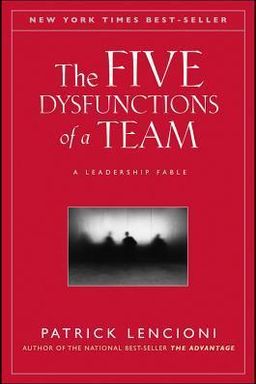
This book is a direct, practical companion to Lencioni’s earlier fable The Five Dysfunctions of a Team. Where the original illustrated the concept through story, the field guide turns the theory into action—a manual for team leaders, coaches, and managers who want to turn fragile groups into cohesive, high-performing units. Its core argument is that great teams resist five predictable dysfunctions: absence of trust, fear of conflict, lack of commitment, avoidance of accountability, and inattention to results. Each builds on the previous one, creating a pyramid of dependences: without trust, conflict becomes guarded; without conflict, commitment becomes flimsy; without commitment, accountability disappears; and without accountability, results fade.
Why Teamwork Still Matters
In an age of constant change and information overload, most competitive advantages are short-lived. Strategies can be copied, technologies replicated, and products improved upon overnight. But the ability of a group of people to work together with focus and mutual support—this, Lencioni argues, is almost impossible to duplicate. It’s the quiet edge that separates companies that thrive from those that unravel.
Yet, paradoxically, teamwork is rarely measured, rewarded, or even properly understood. Many leaders avoid it because, unlike profit margins, it’s hard to quantify. Lencioni pushes a stark truth: building a team takes emotional energy and courage, not MBAs or algorithms. It means creating an environment where people can admit fear, ask for help, and confront each other for the sake of excellence. That’s uncomfortable territory for many managers—and the very terrain where genuine teams are made.
The Book’s Structure and Flow
Lencioni divides the field guide into four sections that reflect a natural progression. First comes conceptual clarity about what makes a real team—a small, interdependent group willing to put collective goals above personal comfort. Then, he unpacks each of the five dysfunctions through practical advice, diagnostic tools, and vivid stories drawn from consulting with executive teams. He follows with detailed Q&A sections, addressing real-world objections like “We don’t have time for this!” or “This feels too touchy-feely.” Finally, he closes with templates and activity plans for implementing the process over six months, including exercises like the Personal Histories roundtable and the Team Effectiveness feedback loop.
Teamwork as a Human Endeavor
Lencioni’s view of teamwork is profoundly human. It starts with vulnerability-based trust—the willingness to say “I was wrong” or “I need help.” It thrives through conflict fueled by ideas, not egos. It demands decisions that everyone supports, even when they disagree. It relies on peer-to-peer accountability and ends with an unwavering focus on shared results rather than individual recognition.
Throughout, Lencioni reminds readers that teamwork isn’t a one-off initiative but a living system. Just like a marriage, it must be nurtured continually. This means revisiting trust, reclarifying goals, and confronting emerging dysfunctions before they calcify.
Ultimately, Overcoming the Five Dysfunctions of a Team isn’t just about better meetings or faster decisions. It’s about cultivating courage—the courage to be honest, to hold others accountable, and to care enough about results to put ego aside. When you finish the book, you don’t just know what great teams do; you’re equipped to start building one—one candid conversation at a time.