
Idea 1
From Orphan to Prophet: The Making of a Moral Vision
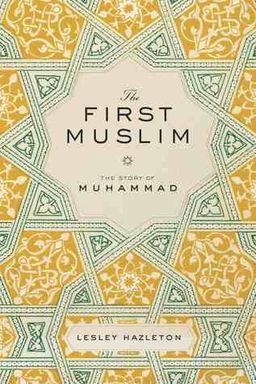
How does a child born fatherless in a mercantile city become the founder of one of the world’s major faiths? In her exploration of Muhammad’s life, Hazleton argues that you cannot understand the prophet’s moral revolution without tracing how early vulnerability, social exclusion, and a restless search for meaning shaped his capacity for empathy and reform. This is a story of transformation—from orphan to moral visionary, from marginalized youth to political architect.
Orphanhood and early resilience
Muhammad’s birth was marked by loss: born posthumously to Amina after his father Abdullah’s death, and soon orphaned again at six, he grew up in a society that valued lineage above all. That absence of clan inheritance created a permanent outsider status. Yet Hazleton shows that this very deprivation cultivated sensitivity and alertness—a habit of listening rather than claiming, of watching the dynamics of power and vulnerability. Fostered by Halima among Bedouins, he internalized desert virtues—endurance, hospitality, and oral poetry—that later colored his moral language and political creativity.
Through his guardians Abd al‑Muttalib, then Abu‑Talib, he navigated Mecca’s clannish hierarchies while remaining apart from its privileges. The “outsider within” identity became the moral muscle behind his later insistence that orphans, widows, and slaves deserved protection. The theme of justice, so decisive in the Quran, has its roots here.
City of idols and commerce
Mecca, his home, fused religion and economy. The Kaaba, surrounded by hundreds of tribal idols, was both holy center and tourist industry, its pilgrimage season a marketplace of profit. Hazleton depicts the Quraysh elite as sanctifying their monopoly through ritual—guarding the sacred precinct while managing caravans and fairs like Ukaz. Power derived from controlling both faith and trade. To call for ethical monotheism, as Muhammad later did, was thus a direct challenge to a system where piety justified inequality.
When the young Muhammad negotiated disputes like the placement of the Black Stone during Kaaba’s rebuilding, he displayed the arbitration skills that would one day make him a civic leader: inclusion over domination, consultation over arrogance. What appears as prudence here prefigures prophetic ethics later.
Khadija and moral partnership
Khadija, the independent merchant who both employed and married him, provided Muhammad with stability and confidence. Their marriage was a radical partnership of intellect and trust—she recognized in him not only integrity but moral imagination. When he came trembling from his first revelation on Mount Hira, it was her belief that anchored him. She sought validation from her cousin Waraqa, a hanif monotheist, whose interpretation placed Muhammad’s experience within the lineage of earlier prophets. That network—Khadija’s affirmation and Waraqa’s theological framing—turned private terror into public calling.
Revelation and self-doubt
The episode on Mount Hira replays an ancient archetype of encounter with the numinous. Alone in meditation, overwhelmed by a command to “recite,” Muhammad reacts with fear, even despair. Hazleton highlights the human aspect—the return to Khadija shaking, convinced of madness. Revelation here is not triumphant but agonizing—a process embodied through sweat and sound, not abstract dictation. The two years of silence that follow become a crucible of doubt, teaching that spiritual certainty must coexist with humility. Out of that tension arises a revelation that speaks both divine command and human anxiety.
Toward a new community
As Muhammad began preaching, the Quran’s rhythm of outrage and compassion drew directly from his social observation. He denounced accumulation, neglect of the poor, and exploitation of sacred ritual for wealth. Resistance from the Quraysh intensified his moral clarity. The persecution that followed—the boycott, public torture of slaves like Bilal, exile attempts—forced the early believers to practice steadfast, nonviolent endurance. Shared suffering deepened their cohesion and moral gravity. What began as personal conviction evolved into social movement.
From moral crisis to political vision
Seen across these opening chapters, Hazleton’s central thesis emerges: Muhammad’s authority grows from human doubt, not in spite of it. Orphanhood nurtured compassion, the marketplace taught mediation, revelation humbled his certainty, and persecution forged solidarity. The pattern is clear—each wound becomes a moral engine. By the time of the emigration to Medina, these early experiences have matured into political wisdom: faith as social contract, revelation as civic ethics, and humility as leadership strategy. The prophet’s mission, Hazleton suggests, is the moral transformation of vulnerability into vision.