
Idea 1
Facing America’s Fire: Baldwin’s Moral and Racial Reckoning
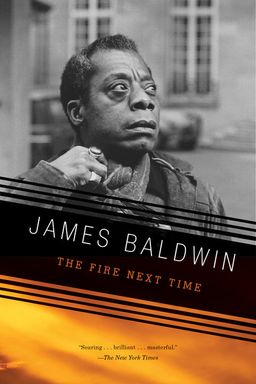
What does it mean to love a country that has denied your humanity? James Baldwin’s The Fire Next Time wrestles with this question, guiding readers through rage, faith, fear, and the possibility of redemption in America’s racial reality. Written as two powerful essays—one in the form of a letter to his nephew, the other a spiritual autobiography—Baldwin’s work burns with clarity about race, history, and moral responsibility. He contends that America stands on the edge of moral destruction unless it confronts its history of racial dominance and learns to love in a human and transformative way.
This book isn’t simply about racism—it’s a journey into the American soul. Baldwin’s argument centers on the need for mutual liberation: whites must confront their myths of innocence, and Black Americans must overcome the psychological poison of enforced inferiority. For Baldwin, the Civil Rights struggle is not merely political; it is spiritual. The real revolution happens when individuals confront their fears, illusions, and hatred to meet each other honestly.
The Letter to His Nephew: Love and Survival
In “My Dungeon Shook,” Baldwin writes to his teenage namesake on the hundredth anniversary of emancipation. His tone is intimate yet prophetic. He urges young James to reject the lies America tells about Black inferiority. The central message: you can only be destroyed if you believe what white people say about you. The letter transforms familial love into political resistance. Baldwin condemns white innocence—the false belief that whites, despite perpetuating oppression, remain “innocent” of the harm they do. This innocence is the true crime because it allows systems of oppression to flourish under the guise of goodwill.
Yet Baldwin’s letter does not stop with accusation. He asks his nephew to love white people—not with submission, but with the compassion that could save them. “We cannot be free until they are free,” he insists. That paradox—loving your oppressor to free yourself—is Baldwin’s most radical idea. It turns racial conflict into a spiritual test of America’s humanity.
The Region in His Mind: Religion, Power, and Revelation
In “Down at the Cross,” Baldwin expands his vision from personal to public. He recounts his youth as a teenage preacher in Harlem, exploring how the church offered both salvation and imprisonment. Religion became his first power—the “gimmick” that lifted him from despair. But soon Baldwin saw Christianity’s hypocrisy: churches preached love yet practiced fear and hatred, especially against the very people—Black Americans—who clung to faith most fiercely. This revelation shattered his belief in divine innocence.
From this moment, Baldwin began questioning not God but the moral architecture built in His name. Christianity, he argues, sanctified slavery, colonization, and racial hierarchy. “If the concept of God has any use,” Baldwin writes, “it can only make us larger, freer, and more loving; if not, it is time to get rid of Him.” In essence, he calls for a new spiritual authority rooted in truth rather than dominance.
Confrontation with Islam and Black Identity
Baldwin’s encounter with Elijah Muhammad and the Nation of Islam marks a turning point. Visiting Muhammad’s Chicago home, he sees men redeemed from addiction and despair, disciplined under a philosophy that declares whiteness evil and blackness divine. Baldwin recognizes the movement’s allure: a faith that restores dignity to the dispossessed. Yet he warns of the danger in replacing one racial hierarchy with another. To condemn white as devil and black as sacred perpetuates the same logic of separation.
This meeting exposes the desperate hunger for power among the powerless—a hunger Baldwin empathizes with but refuses to endorse. He insists the true liberation lies not in vengeance but in mutual transformation. The Muslim message of self-worth is vital; its hatred, fatal. “Whoever debases others,” he warns, “is debasing himself.”
America at the Crossroads
By the end, Baldwin’s vision extends beyond race. The struggle for equality mirrors the universal struggle for freedom, identity, and moral maturity. America’s racial nightmare reflects humanity’s fear of change and mortality. White Americans believe they can escape death through power and purity; Black Americans are forced to face it daily. Baldwin concludes that accepting death—and thus life—is essential for renewal. His message to all Americans: only by confronting reality, releasing illusion, and daring to love can the country avoid its own “fire next time.”
In this vast meditation, Baldwin makes racial reconciliation inseparable from spiritual rebirth. His work stands beside Martin Luther King Jr.’s Christian humanism and Malcolm X’s Black self-determination, yet it transcends both—it calls not for the victory of one group but for the enlightenment of all. His prophecy is grim yet hopeful: we must remake ourselves to remake our nation. And if we do not, the fire next time will consume us all.