
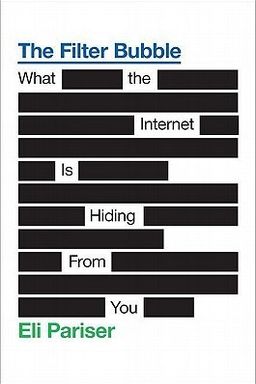
The Filter Bubble cover

The Filter Bubble

by Eli Pariser

The Filter Bubble exposes the unseen algorithms that shape our online experiences. Eli Pariser reveals how personalization affects our worldview, privacy, and even identity. This book is essential for anyone seeking to understand the digital landscape and the forces that influence what we see and believe online.

The Weaponization of Social Media

The Weaponization of Social Media

How did social media evolve from a neutral tool into a battlefield for power and ideology? In this book, Clint Watts argues that platforms like Twitter, Facebook, and YouTube transformed modern conflict—not just between armies but between stories. Social media became the engine through which terrorists, states, and ordinary users alike could amplify persuasion, deception, and emotional contagion. You learn that the true battleground isn’t territory; it’s attention.

From local insurgency to global brand

The book begins with how al-Qaeda’s password-protected forums morphed into ISIS’s multimedia empire. Technology democratized jihad: anyone could upload a martyrdom video or remix propaganda. Platforms lowered technical barriers, expanding recruitment and turning militants into global celebrities. ISIS’s al-Hayat Media Center mirrored videogame aesthetics—polished, fast, and multilingual—transforming violence into viral spectacle. Watts draws the key insight: social media turns insurgents into brands. Territory matters less than narrative.

Social engineering as influence tradecraft

Watts connects personal history to professional practice. At West Point he prank-called the meat plant manager “Carfizzi,” learning persuasion, escalation, and deception—the same techniques later used against extremists online. These skills matured into social-engineer methodology: reconnaissance, rapport, tailored messaging, and incremental nudging. When Watts interacted with Omar Hammami, an American-turned-jihadi in Somalia, he used cultural cues (Southern nostalgia, food references) to coax disclosures. It’s a clear lesson: the art of manipulation is timeless; only the medium changes.

Open-source intelligence and crowds

The internet made intelligence public. Through projects like West Point’s Harmony database, captured al-Qaeda records turned into open-source gold: payrolls, letters, and debates revealing human detail within terrorist groups. But open data also misleads. Crowdsourcing experiments showed that opinions herd; foxes (diverse thinkers) outperform hedgehogs (single-theory believers). The lesson: crowds are useful only when engineered for independence—not popularity.

From jihadists to trolls and states

What began as militant propaganda evolved into computational propaganda. Watts traces how Russia’s troll farms, bots, and cyber cutouts repurposed jihadist tactics for geopolitics. The Syrian Electronic Army’s hacking, Guccifer 2.0’s leaks, and the Internet Research Agency’s fake accounts illustrate the new ecosystem: automation meets ideology. Russia’s 2016 active measures fused hacking, leaking, and amplification to undermine U.S. confidence, not vote counts. The digital battlefield had matured.

Preference bubbles and social inception

Watts’s argument culminates with how manipulation moved inward—from hacking governments to hacking minds. Social platforms create preference bubbles where identity replaces evidence. Emotional memes and nationalism eclipse expertise. Emerging “social inception”—machine-learning-driven microtargeting (like Cambridge Analytica)—lets elites shape what citizens believe are their own preferences. The frontier of influence isn’t propaganda per se, but personalized persuasion disguised as free choice.

Human vulnerability and democratic defense

Watts closes on the human level. Through a personal anecdote about vaccine fears, he shows that emotion, not logic, drives belief formation. You realize manipulation works because it exploits universal shortcuts: repetition equals truth, outrage equals identity, social validation equals belonging. Defending democracy requires awareness—learning to slow down, verify, and diversify information consumption. Platforms must rebuild authenticity, governments must coordinate, and citizens must reclaim skepticism as civic duty.

Key insight

Information warfare now thrives on social ecosystems where attention is the prize, emotion the weapon, and truth the casualty. The only sustainable defense begins with the individual’s ability to question what feels intuitively right online.


From al-Qaeda to ISIS’s Digital Theater

From al-Qaeda to ISIS’s Digital Theater

Watts details how the digital revolution rewired terrorism’s organizational logic. Al-Qaeda once operated as a centralized command with ideological leadership; ISIS, born of Iraq’s chaos, weaponized spectacle. The internet became the new sanctuary after the physical collapse of Afghan safe havens.

The evolution of propaganda

Early jihad media relied on tapes and couriers—broadcast one-way messages. Forums introduced interaction; YouTube introduced virality. When Abu Musab al-Zarqawi uploaded executions from Iraq, recruits surged. Later, al-Awlaki reached Western audiences through Inspire magazine and sermons in English, transforming ideology into culture. ISIS’s professionalization of production—high-definition battle clips, governance scenes—created legitimacy through aesthetics. (Note: Watts compares ISIS’s videos to Hollywood trailers, contrasting them with bin Laden’s didactic tone.)

Brand competition and decentralization

Social platforms fragmented command: affiliates from Nigeria to the Philippines could self-brand. A single camera and Telegram account replaced courier lines. The result: narrative anarchy, but also innovation. Social media became jihad’s marketing department—rapid adaptation, linguistic diversity, and community management in real time.

Strategic implications

ISIS weaponized its media to recruit, coordinate, and govern. Watts highlights al-Shabaab live-tweeting attacks, ISIS using encrypted apps, and the hybridization of hacking with propaganda. The shift of battlefields from mountains to timelines means analysts must treat social platforms as geopolitical terrain. Understanding media is now counterterrorism’s central task.

Key insight

Digital spectacle replaced ideological discipline; groups that mastered storytelling outcompeted those that mastered strategy.


Influence and Social Engineering Online

Influence and Social Engineering Online

Watts’s influence tradecraft merges psychology and technology. He demonstrates that manipulation follows predictable steps—reconnaissance, rapport, tailored messages, incremental escalation. The old spycraft of human persuasion now happens in digital conversation threads and DM exchanges.

Omar Hammami case study

The author’s engagement with American-born jihadi Omar Hammami shows online interrogation in motion. Through humor and empathy, Watts validated Omar’s identity, drew out grievances, and exposed al-Shabaab’s brutality. By amplifying Omar’s tweets, he both documented insider conflict and deterred recruits. The operation demonstrates ethical complexity: manipulation may reveal truth but endanger lives.

Motivational analytics

Watts introduces CRIME—Compromise, Revenge, Ideology, Money, Ego—to decode why individuals leak, defect, or reveal information. Combined with RPM (Rationalize–Projection–Minimize), CRIME structures persuasion as self-justification rather than confrontation. (Note: compare with the CIA’s MICE model—Money, Ideology, Coercion, Ego.) These psychological lenses explain both terrorists and ordinary internet users driven by ego validation online.

Ethical boundaries

Watts warns you to weigh moral trade-offs. Digital manipulation can yield intelligence but warp perception. Every interaction risks misinformation or harm. Influence is a weapon; use it responsibly. Like cyber operations, persuasion affects ecosystems beyond direct targets.

Key insight

Social engineering works because people crave recognition more than facts. Online rapport can reveal truths—or create distortions—depending on the intentions behind it.


Open Sources, Leaks, and Transparency

Open Sources, Leaks, and Transparency

From Harmony archives to WikiLeaks, Watts contrasts curated transparency with weaponized leaks. Open-source intelligence when guided by expert redaction can illuminate; raw data dumps can destabilize.

Curated vs. careless disclosure

The Harmony Project exemplified responsible transparency—context, analysis, protection of innocents. WikiLeaks instead released massive datasets with narrative framing, empowering authoritarian actors. Assange’s evolution, from activist to Kremlin conduit, mirrors transparency’s corruption under geopolitical use.

Crowdsourcing lessons

Crowds fail when incentivized by popularity rather than diversity. Watts’s Twitter surveys often converged on wrong predictions, revealing herd effects. He turned failure into insight by isolating “foxes”—contrarian, experienced analysts—whose minority views proved predictive. Treat the internet as a noisy sensor: reward outliers, not averages.

Leak consequences

Manning and Snowden show how moral acts reshape geopolitics unpredictably. Information wants to be free—but freedom without context invites manipulation. When leaks intersect with troll amplification, ethical transparency mutates into chaos propaganda.

Key insight

Transparency becomes strategic only when paired with context, curation, and ethical foresight; otherwise, it feeds disinformation rather than enlightenment.


Computational Propaganda and Active Measures

Computational Propaganda and Active Measures

Watts demonstrates how state actors evolved digital influence. Russia’s campaigns combined hacking, leaking, and social amplification—redefining espionage for the internet age.

Mechanisms of manipulation

Bots simulate majority opinion. Cyborgs fuse human command with automation. Troll farms spearhead emotional amplification. These elements create computational propaganda—mass-produced persuasion. Events like the April 2013 @AP hack or the 2016 DNC leaks illustrate economic and political disruption achievable through tweets alone.

The 2016 campaign

APT28 and APT29 performed intrusions; Guccifer 2.0 provided narrative fronts; WikiLeaks timing amplified crises. False personas like @TEN_GOP drew mainstream attention. Russia’s objective was not changing votes, but eroding faith. Watts captures it sharply: they didn’t hack machines—they hacked minds.

Psychology and structure

Repetition creates “majority illusions,” making fringe views appear mainstream. Emotional resonance outperforms factual correction. Platforms’ design amplifies fear and outrage; adversaries exploit that bias systematically.

Key insight

In digital geopolitics, perception is power. The cheapest act—posting falsehoods—can achieve strategic disruption once repeated across networked audiences.


Preference Bubbles and Democratic Erosion

Preference Bubbles and Democratic Erosion

Social media doesn’t just connect—it polarizes. Watts expands Eli Pariser’s filter-bubble idea into “preference bubbles”: ecosystems of self-validation where emotional narratives rule. Algorithms amplify identity confirmation, birthing social-media nationalism and clickbait populism.

The death of expertise

Access to information creates illusion of expertise. Tom Nichols’s warning becomes Watts’s diagnosis: social validation beats credentialed argument. In preference bubbles, beliefs are shields of identity; correction feels like attack.

Social inception

Machine learning and microtargeting deepen manipulation. Campaigns like Cambridge Analytica turned behavioral data into psychological operations. The technique—social inception—tricks you into thinking the engineered preference is your own. When entire nations operate inside these bubbles, pluralistic democracy fragments.

Rebuilding reality

Watts urges you to reintroduce friction and diversity: follow dissimilar sources, question viral certainty, and pressure platforms for data transparency. Bridging truth requires deliberate information diet design.

Key insight

A democracy of preference bubbles loses shared reality; the fight for truth depends on engineering diversity back into our feeds.


Closing the Counter-Influence Gap

Closing the Counter-Influence Gap

Watts shows that U.S. institutions lag behind adversaries in the influence domain. After the disbanding of the U.S. Information Agency, coordination collapsed. Bureaucracy and contracting stifled innovation; government messaging lost authenticity.

Civil society as first responder

Projects like Hamilton 68 exposed Kremlin narratives faster than official outlets. Public dashboards, open data, and academic partnerships proved more agile than government tweets. Counter-influence thrives through transparency and distributed expertise, not central bureaucracy.

Lessons from counterterrorism

The Combating Terrorism Center’s Militant Ideology Atlas shows that open analysis can outsmart secrecy. Publishing methods and evidence changed adversaries’ strategies—proof that intelligent openness can outperform classified paralysis.

What must change

Watts proposes institutional reform: re-centralized authority with modern skills; contracting that rewards creativity; partnership with platforms; and proactive response planning to leaks and smear campaigns. Civil and private sectors must collaborate as defense layers.

Key insight

Countering influence requires public agility and transparency—a culture willing to reveal truth faster than adversaries can manufacture lies.

Dig Deeper

Get personalized prompts to apply these lessons to your life and deepen your understanding.

Go Deeper

Get the Full Experience

Download Insight Books for AI-powered reflections, quizzes, and more.