
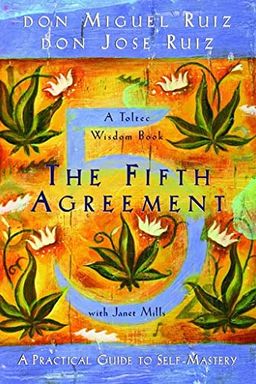
The Fifth Agreement cover

The Fifth Agreement

by Don Miguel Ruiz and Don Jose Ruiz

The Fifth Agreement reveals how societal norms obscure our true selves, introducing five transformative agreements to uncover your authentic identity. This practical guide empowers you to live freely, without self-judgment, and embrace the truth about who you really are.

Power and Fragility in Judicial Oversight

What happens when a small, underfunded state agency stumbles into a billion-dollar criminal enterprise? This book follows the Board on Judicial Conduct (BJC) — a real but lightly fictionalized oversight body — as it becomes entangled in a conspiracy that binds land development, judicial corruption, and organized crime. Through investigators Lacy Stoltz and Hugo Hatch, you watch the slow unraveling of a system where legality and criminality blur beneath the veneer of law.

A System of Paper Authority

The BJC is powerful in statute but frail in operation. Its offices, squeezed into a dingy corner of a state building, mirror its political neglect: bowed shelves, stained ceilings, and inadequate manpower define the workday. Six investigators must manage complaints from across a state of 20 million people. Lacy and Hugo, the heart of the field team, drive their own cars and fill out mileage reimbursements as they pursue leads that cross counties, tribal territories, and occasionally state lines. Subpoena power gives the office reach, but not safety — “We’re lawyers with subpoenas, not cops with guns,” Hugo quips, capturing the absurd imbalance.

A Complaint That Starts the War

The spark arrives as an anonymous complaint about Judge Claudia McDover: allegations of bribery, cash skims from an Indian casino, and suspicious offshore assets. The paper trail seems outlandish until a whistleblower circuit — a mole, an intermediary, and a front-man — filters evidence into BJC hands. When the complaint dirties a sitting judge, Michael Geismar, the BJC director, must walk a legal tightrope: act visibly and risk exposure, or delay and lose the trail. That tension — between duty and danger — defines every page of the story.

Corruption in Plain Sight

At the story’s center stands Vonn Dubose, the shadowy architect of the Treasure Key casino, built on sovereign Tappacola land. He fuses legitimate development with illicit financing. Partnering with tribal leadership and using Judge McDover’s influence, he turns a local casino into a global laundering mechanism. Offshore companies in Belize and the Bahamas hide millions. The money trickles into condos, jewelry, and campaign donations. McDover’s rulings — eminent-domain orders, injunctions that stifle opposition — make her an invisible shareholder in a vast criminal corporation.

Moral and Human Stakes

Through Junior Mace’s wrongful conviction for a double murder tied to these developments, you sense the cost in blood. A man sits on death row because the judicial system served economic power rather than justice. Two key witnesses vanish. A bribed bench ensures verdicts that keep Dubose’s empire intact. The book’s moral weight emerges here: legal corruption isn’t abstract — it kills. When Lacy and Hugo dig deeper, they don’t merely risk their careers; they risk becoming collateral for a truth that threatens to topple the casino, the judge, and possibly their own agency.

From Wreck to Revolution

A midnight collision on the Tappacola reservation shifts the narrative from slow-burn investigation to war. Hugo dies. Lacy survives. Evidence disappears — phones, files, vehicles — under tribal and political cover. What begins as tragedy exposes a murder plot. From there, forensic fragments — a bloodstained paper towel, stolen trucks, surveillance clips — trigger FBI involvement. The investigation transforms into a national case under RICO statutes. Witnesses flip, whistleblowers reemerge, and the syndicate unravels under federal siege. The human cost, however, remains: broken families, lost lives, and a scarred system. The book closes on a paradox — justice is achieved, but at a price too steep for triumph. It’s a story of fragile institutions confronting entrenched corruption, where oversight becomes both the weapon and the casualty of power.


Underfunded Watchdogs and Investigative Limits

The BJC frames a paradox of authority: endowed with subpoena power yet starved of resources. You see how this imbalance dictates its tactics, timing, and risks. Investigators work long hours under strict deadlines but with little protection. The statute allows forty-five days to review complaints, forcing speed over security. That timetable shapes how Geismar leads his team — cautious, procedural, always aware that haste can expose them to retaliation or tip off powerful targets.

Life on the Margins

Within this institutional neglect, Hugo and Lacy build careers defined by restraint. They cover a thousand judges across six hundred courtrooms with six full-time investigators. Cars are old, reimbursements late, tools minimal. Yet their work touches raw constitutional power: policing judges who can destroy reputations or investigations with a single ruling. Their challenge is psychological as much as procedural — to maintain morale inside a system seemingly designed to fail.

Strategic Choices in a Fragile System

Each investigation becomes a balancing act between statute and survival. Geismar must decide when to formally notify a judge, which triggers procedural protections for the target and strips secrecy from the inquiry. Delay yields more intel but courts risk objections for due-process violations. The team leans on creativity: informal interviews, property surveys, document gathering, and manipulation of public data sources. The price of precision is constant vulnerability — a system of thin lines and thinner shields.

Lesson in Institutional Fragility

This section builds your awareness of systemic fragility. Agencies like the BJC sit at the intersection of law, politics, and ethics, with neither police powers nor political immunity. Their legitimacy hinges not on resources but on persistence and integrity. As events unfold, you realize that an ethical investigator’s greatest weapon is endurance, not authority — and that every subpoena written against those who hold power invites personal jeopardy.


The Whistleblower Chain and Its Dangers

At the story’s heart lies a fragile chain of truth tellers — each essential, each endangered. The complaint against Judge McDover originates through three intermediaries: a mole within her circle, a burned lawyer named Cooley as middleman, and Greg Myers (living under the alias Ramsey Mix) as public accuser. This layered anonymity is deliberate: it protects the source but complicates verification. The structure mirrors espionage networks — high protection, low speed, and uncertain reliability.

Motives and Mechanics of Secrecy

The mole fears for life; Dubose’s reputation for violence justifies the paranoia. Photos of cash exchanges, travel logs, and property deeds arrive piecemeal through prepaid phones. Myers uses offshore mail drops and boat hideouts to keep distance. Each layer buys safety but increases the possibility of confusion or deceit. The BJC cannot demand disclosure without destroying the whistleblower chain, forcing investigators to work on partial information and shifting sands of credibility.

Whistleblowing as Moral and Tactical Game

This dynamic transforms investigation into chess. Every move carries moral and tactical weight — how much to reveal, whom to trust, when to verify. Geismar’s pragmatism meets Lacy’s moral urgency: expose corruption or protect lives? The narrative illustrates that whistleblowers bring both truth and chaos. They can ignite reform or implode cases by acting prematurely or under threat.

Violence as Feedback

The eventual ambush on Hugo and Lacy confirms the warnings: the moment information leaks beyond control, violence follows. Whistleblower networks operate as moral pressure valves in corrupt systems; when the valve fails, the system bursts. This part reminds you that truth seeking in an ecosystem ruled by power requires not only courage but infrastructure — secure channels, witness protection, and a legal plan to transform secrecy into verifiable evidence.


The Dubose Syndicate and Casino Empire

The Dubose enterprise is a masterclass in organized corruption. Vonn Dubose, a developer turned crime boss, builds a vertical operation mixing real estate, politics, and tribal sovereignty. The Tappacola reservation and its Treasure Key casino become his laundering machine. Around him forms a quasi-corporate structure — the “Cousins” — Hank Skoley, the Maton brothers, and Ron Skinner, each playing roles in violence, logistics, and finance.

Anatomy of a Criminal Corporation

Dubose’s genius lies in compartmentalization. Front companies mask ownership, middle managers like Clyde Westbay and dealers like Zeke Foreman handle dirty work, while offshore firms shelter funds. Violence is contracted out to enforcers like Delgado. Legitimate-seeming businesses — bars, hotels, even toll roads — become conduits for cash flow manipulation. It’s a criminal structure that looks like a chamber of commerce on paper.

McDover’s Judicial Leverage

Judge Claudia McDover gives the enterprise its legal foundation. Through favorable rulings, she fast-tracks land deals and suppresses lawsuits that could stall construction. Monthly deliveries of cash in brown satchels — filtered via trusts in Belize — keep her aligned. Her psychology is tragic: wounded pride, ambition, and fear of Dubose’s brutality keep her trapped. Her courtroom becomes a laundering station for legality itself.

A Fatal Intersection of Power

This network thrives because it nests inside gray zones — legal gambling revenue, sovereign tribal rights, judicial discretion, and offshore jurisdictions. It shows you how crime now dresses in policy’s clothes. For investigators, dismantling it requires not only criminal intelligence but geopolitical and financial literacy. Every corrupt transaction hides behind a document stamped “approved.”


Collision on the Reservation

The turning point comes with a wreck that is no accident. Late one night, a stolen Dodge Ram slams into Lacy and Hugo’s Prius on Tappacola land. Hugo dies instantly; Lacy nearly follows. Phones, computers, and files vanish. Jurisdictional fog over tribal territory allows perpetrators to disappear. This section blends forensic mystery with political commentary: how autonomy can be manipulated to obstruct justice.

Unraveling the Setup

Former constable Lyman Gritt gathers the first clues before being pushed aside—bloodied paper towels, vehicle tracks, and two surveillance clips. One shows the truck theft in Foley; another, captured at a convenience store, reveals suspects minutes after the crash. Gritt’s attic stash later saves the investigation: the videos and DNA sample he preserves become the case’s backbone once federal authorities join in. The deliberate tampering with seat belts and airbags exposes premeditation. What appears random is in fact surgical prevention of exposure.

Local Obstruction and Cover-up

The tribe’s leadership reacts by tightening control. Chief Cappel replaces Gritt with his son as constable, evidence vanishes, and the salvage yard quick-sells the vehicles for cash. Political self-preservation overtakes legal duty. For investigators, it’s a blueprint on how local politics and sovereignty can be weaponized to shield criminal partners. The wreck exposes not just corruption, but institutional capture — a system protecting its predators.

A Signal for Federal Action

The aftermath creates moral and political leverage. Hugo’s death forces Geismar and Lacy to escalate, transforming a quiet ethics probe into a homicide investigation. From that wreckage arises the justification for national intervention — the moment small-state oversight hands its case to the FBI. The cost of entry is blood.


From Forensics to Federal Power

The investigation’s second act is procedural mastery — how scraps of local evidence evolve into a federal RICO sweep. Everything pivots on forensic professionalism and the ability to transform street-level leads into courtroom exhibits. Lacy and Geismar, with tech help and persistent calls to reluctant agencies, push DNA and video analysis that unlock jurisdictional gates.

DNA and the Chain of Proof

The preserved paper towel yields DNA matching parolee Zeke Foreman, connecting the crash to Dubose’s syndicate. That single scientific link legitimizes FBI interest. With the tie established, federal prosecutors—Rebecca Webb and AUSA Paula Galloway—build grand-jury momentum. It’s a textbook example of how patient evidence curation converts tragedy into prosecutable truth.

The Turn and the Trap

Zeke flips for leniency, describing the syndicate’s hierarchy. Clyde Westbay, another mid-tier manager, follows, wearing a wired Timex watch to record Vonn Dubose’s incriminating statements. The operation — fed by surveillance vans, mic implants, and coordinated warrants — exposes layers of laundering. Each flipped witness magnifies pressure upward, illustrating the investigative axiom: catch the small fish quickly to net the predator later.

Technical and Legal Synergy

The FBI’s orchestration combines wiretaps, forensic data, and recorded confessions, forming a RICO pattern of racketeering. This section shows how local courage meets federal method: technology turns whispers into indictments. The success rests on one principle — evidence travels better than rumor. It transforms bereavement into leverage, leveling a small-town scandal into national justice.


The Grand Jury and Cleanup

When prosecutors seize momentum, the narrative becomes an administrative masterpiece. Galloway’s office runs parallel assaults: direct murder charges for immediate arrests and RICO indictments to dismantle the infrastructure. Timing is everything — move too soon, the syndicate hides assets; move too late, witnesses disappear. Coordinated warrants, account freezes, and asset receivership converge with arrests, creating a multi-front closure.

From Evidence to Indictment

A grand jury hears from Zeke, Clyde, and agents, indicting Vonn, Hank, the Maton brothers, and Ron Skinner for murder and racketeering. Simultaneously, federal receivers freeze eighty-four bank accounts and dozens of businesses. Search warrants lock down casinos, homes, and law offices. The precision recalls complex cartel takedowns — eradicate both the criminals and their cash flow to neutralize reemergence.

Asset Recovery and Moral Redemption

Through forfeiture, courts seize jets, real estate, and offshore funds, forming the “Whistler Fund.” Its proceeds partly compensate victims — Lacy, Verna Hatch, the Tappacola tribe — proving that financial justice can complement punishment. The name honors the whistleblowers whose perilous acts made prosecution possible. What began in fear ends in restitution, a symbolic reclaiming of accountability.

Strategic Takeaway

The legal strategy here underscores coordination: synchronize criminal, civil, and financial remedies from day one. In systemic corruption, freezing money is often more decisive than jailing people. Moral closure follows monetary transparency — an insight future investigators should engrave in their playbooks.


Trial, Reckoning, and Human Aftermath

The final act completes the arc: public trials, justice, and reckoning. On a golf green, the Cousins are arrested — a cinematic inversion of luxury and humiliation. Federal courts convert two years of unseen labor into verdicts that redefine accountability. But amid applause, you watch how justice exacts its own penalties on everyone involved.

Trials and Sentences

Vonn and Hank receive death sentences; the others, life without parole. McDover pleads to 25 years, Phyllis Turban to ten. Dozens of minor players accept deals. The outcomes feel judicially clean but emotionally draining, proving that prosecution ends crime but not trauma. The Tappacola tribe, with casinos shut and jobs lost, must rebuild civic trust under new leadership. Lyman Gritt becomes Chief in reform elections, a literal reclamation of integrity.

Recovery and Reflection

Lacy carries scars but completes the journey from bureaucrat to survivor-hero. JoHelen and Myers receive whistleblower awards; Verna Hatch secures compensation through civil suit. Justice disperses power back into community hands. Yet the book reminds you: every institutional fix leaves a personal wound. It ends not with triumph but with endurance — an investigation’s human residue and ethical echo.

Systemic Consequence

Beyond the courtroom lies reform. The BJC gains funding, new oversight laws arise, and public trust inches back. The story closes where it began — in the tension between law’s ideal and its frailty. The lesson: power abuses persist not because oversight is weak, but because it is human. Fixing institutions means protecting the people inside them.

Dig Deeper

Get personalized prompts to apply these lessons to your life and deepen your understanding.

Go Deeper

Get the Full Experience

Download Insight Books for AI-powered reflections, quizzes, and more.