
Idea 1
Building Fearless Organizations Through Psychological Safety
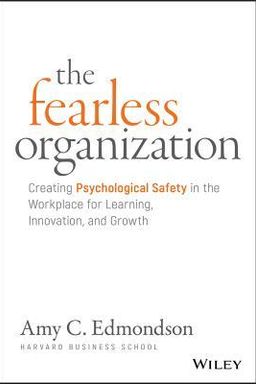
Have you ever held back a question or idea at work because you feared looking foolish or disruptive? In The Fearless Organization, Harvard Business School professor Amy C. Edmondson argues that those moments of silence carry far greater consequences than we realize. Through decades of research and vivid examples—from neonatal units to corporate boardrooms—Edmondson contends that psychological safety is the missing foundation for learning, innovation, and performance. When people feel safe to speak up, question, or admit mistakes, organizations thrive. When they don’t, fear takes root—and failure soon follows.
Why Psychological Safety Matters
Edmondson begins with a simple but powerful insight: all humans are constantly managing interpersonal risk. Whether you’re a nurse questioning a doctor, an engineer challenging a senior executive, or a manager giving tough feedback, your brain automatically weighs personal safety against potential benefit. This instinct for self-protection, she explains, is innate but maladaptive in modern workplaces. Fear of humiliation, punishment, or loss of standing leads people to stay quiet. That silence stifles innovation, hides problems, and erases learning opportunities—often with disastrous results.
Psychological safety creates a climate where interpersonal fear is minimized. In such environments, asking questions, admitting mistakes, or challenging ideas is not seen as risky but essential. Drawing on studies from hospitals, factories, and global corporations, Edmondson defines psychological safety as the belief that the workplace is safe for interpersonal risk taking. This isn’t about comfort or niceness—it’s about candor, curiosity, and trust that your contributions matter.
From Fearful Silence to Candid Voice
The story that launches Edmondson’s argument—a neonatal nurse who hesitates to question a doctor’s treatment order—illustrates a universal dilemma. We discount the future, she explains, overweighing immediate discomfort and underweighting long-term consequences. The nurse’s silence could jeopardize lives; yet speaking up might draw a rebuke. Across workplaces, similar calculations happen invisibly every day. Her point is clear: silence is not neutral—it’s actively dangerous to organizational health.
In contrast, psychological safety fosters open dialogue. When people feel safe, they raise concerns, share half-formed ideas, and learn from mistakes. Edmondson cites Google’s landmark “Project Aristotle,” where researchers found psychological safety was the most important factor distinguishing successful teams. It “underpinned everything else”—clear goals, dependability, meaning, and impact all depended on an environment where members could speak freely. Without it, even brilliant employees held back.
Learning Zones and Fear Zones
To make this tangible, Edmondson offers a powerful two-dimensional model contrasting performance standards with psychological safety. Low standards and low safety create an apathy zone—it’s safe but pointless. High standards with low safety create an anxiety zone—fearful people deliver short-term results but suppress learning. High safety with low standards leads to a comfort zone—friendly but stagnant. The sweet spot, she calls it, is the learning zone, where both standards and safety are high. Here, candor fuels excellence. People can collaborate across uncertainty and complexity, constantly improving through shared learning.
“Psychological safety takes the brakes off—but it isn’t the fuel.”
Leaders still must set high expectations and inspire meaningful purpose. Safety allows people to contribute their best thinking without fear of blame. The missing ingredient is not talent, Edmondson writes—it’s the environment that lets talent be used.
Why Fear Persists—and What Leaders Can Do
Despite overwhelming evidence that fear hurts performance, many leaders cling to old assumptions that fear drives results. Edmondson dismantles that myth, drawing on brain research: fear activates the amygdala, diverting resources away from learning and problem-solving. Under fear, people revert to self-preservation. This makes sense for survival—not for modern teamwork. In environments of volatility and interdependence (what she calls the VUCA world: Volatile, Uncertain, Complex, Ambiguous), fear sabotages adaptive performance.
Through decades of study, Edmondson shows that psychological safety consistently predicts better learning, engagement, and innovation. Teams with safety report more errors—but actually make fewer overall because they catch and correct them early. Safety doesn’t mean lowering accountability; it means raising transparency.
A Book About Courage, Not Comfort
Ultimately, Edmondson reframes courage through systems, not heroism. Telling people to “speak up” is ethical advice, not strategy. Building environments where they can and will speak up is the real work of leadership. In a fearless organization, communication is not an act of bravery—it’s a normalized habit. This shift, she insists, is mission-critical in knowledge-intensive work where ideas and insights drive value.
As you move through Edmondson’s guide—from the neuroscience of fear to the corporate failures that fear enabled—one truth becomes clear: organizations cannot thrive through talent alone. They thrive through trust, candor, and learning. The Fearless Organization is a manifesto for leaders who want to create workplaces where people bring their full selves—and where courage becomes a collective, not individual, capacity.