
Idea 1
Feeding the Future in an Age of Fragility
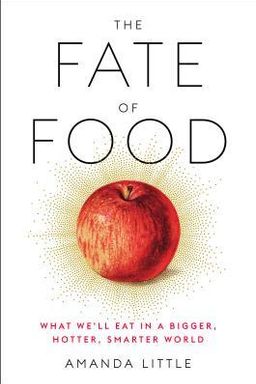
How will you eat when supply chains break, climates shift, and food systems buckle under their own success? Across this sweeping narrative, Amanda Little argues that modern food is both a miracle and a minefield: the very technologies that rescued humanity from starvation now threaten long-term survival. The book traces our trajectory from the Green Revolution’s abundance to a new age of ecological and logistical fragility—and follows a new generation of innovators searching for a “third way” that merges technology with ecology.
Little’s central argument is that your dinner plate tells the story of civilization’s greatest achievement and most dangerous gamble. Agriculture has multiplied yields, but at the cost of emissions, water depletion, and nutritional decline. As disasters, droughts, and supply-chain failures mount, the question shifts from how to produce more to how to produce smarter—balancing resilience, equity, and environmental repair.
The broken abundance machine
The starting point is the Green Revolution: hybrid seeds, synthetic fertilizers, and mechanization that fed billions and transformed cities. But its success came with rising pollution, monocultures, and cheap processed calories that caused obesity alongside hunger. Agriculture now consumes 70 percent of freshwater, emits more greenhouse gases than transport, and erodes soil faster than it forms. The abundance machine works only by burning the future to feed the present.
Little visits places where fragility is visible: freeze-dried meal factories in Utah packaging paranoia into pouches; Wisconsin apple orchards ruined by untimely frost; Kenya’s smallholders debating whether GMO maize saves or enslaves them. Each scene illustrates a new kind of risk—technological, climatic, political—that no generation has yet resolved.
From panic to possibility
The pandemic-era survival-food boom reflects not madness but a rational hedge. In the same breath, forward-looking farmers and scientists are reinventing the food system piece by piece. Robots spot-spray weeds to save nitrogen and protect soil structure; vertical farms reclaim city space for greens; microalgae supply omega‑3s without ransacking fisheries; and drought-tolerant seeds transform African plots once haunted by famine.
Little positions these stories as proof of a transition—not toward techno-utopia or agrarian nostalgia but toward synthesis. Think of Virginia’s Chris and Annie Newman, who merge permaculture with sensors and robotic weeders, or aquaculture labs feeding salmon with oil generated from algae and refinery CO₂. Such hybrids reveal that adaptation will depend on mixing old wisdoms—like polyculture and water recycling—with cutting-edge precision engineering.
The third way
Little borrows from Charles Mann’s “Wizards versus Prophets” dichotomy (techno-optimists versus ecological purists) and rejects both extremes. Her “third way” champions appropriate innovation—enough science to scale sustainability, enough humility to respect natural systems. Technology can shrink the ecological footprint of abundance only if guided by ethics, accessibility, and ecological literacy.
This path is not uniform. In Israel, data scientists detect leaks in vast irrigation networks; in Ethiopia, disaster planners invest more in logistics than miracle weather control; in the U.S. military lab at Natick, 3‑D‑printed rations anticipate personalized nutrition. All confront the same equation: feed more people with less harm and less waste.
Food as a map of resilience
Ultimately, Little’s journey shows that food mirrors civilization’s limits and ingenuity. The new frontier isn’t producing endless calories but building systems that persist through volatility—genetically, technologically, and culturally. It means thinking beyond consumer choice to infrastructure, seed policy, water pricing, and public R&D. The moral is clear: future food will be engineered and ecological, global and local, digital and biological. Your task is to decide which version of that hybrid world you will build and support.
A guiding insight
You can’t save the planet by romanticizing the past or worshipping innovation—you save it by designing a food system that learns, adapts, and feeds everyone within planetary limits.