
Idea 1
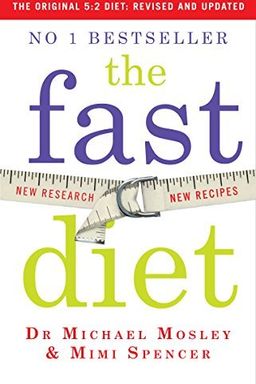
The FastDiet: Reclaiming Health Through Intermittent Fasting
Have you ever felt trapped by constant eating patterns—those endless cycles of snacking, heavy dinners, and dutiful calorie counting that never seem to stick? The FastDiet Cookbook by Mimi Spencer and Dr. Michael Mosley invites you to break free from that chorus of diet confusion. Instead of preaching deprivation or rigid restraint, it proposes something surprisingly simple: eat normally most of the time, and fast twice a week. This alternating rhythm—known as the 5:2 diet—has sparked a global health movement by showing that freedom, not restriction, can be the route to a leaner, more vital life.
A Revolution Born from One Doctor’s Discovery
The story begins with Dr. Michael Mosley, a BBC medical journalist who found himself staring down the barrel of lifestyle diseases: borderline diabetes and dangerously high cholesterol. Determined to reverse his health without the help of pills, he began exploring scientific studies on intermittent fasting (IF). His research revealed that cycles of eating and restriction lowered insulin and IGF-1 (insulin-like growth factor) levels—processes that trigger cell repair and metabolic reset. In Mosley’s hands, these discoveries transformed into a personal experiment; by eating one-quarter of his usual calories on two nonconsecutive days each week, he shed 19 pounds of body fat, normalized his biomarkers, and reclaimed his energy. This simple structure—five days of normal eating and two of light fasting—became known as the FastDiet.
From Science to Simplicity: Why Fasting Works
Spencer and Mosley argue that intermittent fasting isn’t a crash diet or ancient ritual. It’s a practical response to modern excess. Most of us eat continuously—keeping insulin elevated and forcing our bodies into permanent “go” mode. When insulin levels stay high, fat storage becomes the default, and metabolic disease follows. Fasting breaks this cycle by introducing controlled pauses, allowing the body to cleanse damaged cells through a process akin to biological refurbishment. Think of it as sending your body for regular tune-ups, extending its longevity and efficiency. (In this sense, their argument aligns with other longevity researchers such as Dr. Valter Longo, whose work on fasting mimicking diets emphasizes cellular renewal.)
Fat Loss, Not Just Weight Loss
The authors make a critical distinction between losing weight and losing fat. Any crash diet will make the scale drop—but often at the cost of muscle tissue, which is metabolically active and essential for health. Intermittent fasting, supported by human trials, produces weight loss that is almost entirely fat, particularly visceral fat—the dangerous kind that hugs internal organs and fuels chronic disease. Spencer and Mosley cite research showing that participants who practiced intermittent fasting lost over 13 pounds and trimmed 3 inches from their waistlines in six months, outperforming those who dieted continuously. The implication is clear: you can reshape your body composition without draining yourself emotionally or nutritionally.
The 5:2 Framework
So what does fasting look like in practice? On five days of the week, you eat normally—without guilt or restriction. On two nonconsecutive days, you cut intake to 600 calories if you are male or 500 if female. That’s it. No banned foods, no daily calculations, no moral judgment. The magic lies in the ratio. Your body enjoys the restorative benefits of fasting without the psychological strain of constant hunger. You can even tailor the schedule—back-to-back fasts or split days—as Mosley did initially on Mondays and Thursdays. Once you reach your target weight, maintain with a 6:1 approach: fast just one day per week. This flexible rhythm has earned the diet its reputation as sustainable, intuitive, and forgiving.
Psychology, Freedom, and the Food Culture Shift
Spencer, a seasoned food writer, emphasizes the psychology behind its success: freedom. Unlike restrictive fad diets, the FastDiet grants five days of joyful, mindful eating—creating a natural balance between indulgence and restraint. As she puts it, “five days a week, the diet should be an irrelevance.” You’re not shackled to a perpetual health crusade; you’re simply offering your metabolism an occasional moment of calm. This philosophy appeals to food lovers everywhere—especially “foodies” who crave both flavor and well-being. The accompanying recipes, from shakshouka breakfasts to monkfish suppers, prove that fasting food can be elegant, varied, and nutritionally dense.
A Diet for Modern Life
The book also connects intermittent fasting to modern realities: economic frugality, sustainability, and a growing focus on fresh, seasonal ingredients. Cutting food intake twice a week reduces consumption—and bills—by roughly 15%, a win-win for both your waistline and wallet. Moreover, it encourages engagement with real food, steering you away from processed, chemically dense meals. This subtle shift fosters long-term health behaviors—learning to savor rather than devour, to cook creatively within limits, and to see hunger not as an enemy but as a natural rhythm.
Why It Matters
Ultimately, The FastDiet Cookbook doesn’t just teach you what to eat; it reframes how you relate to food. It suggests a patient, cyclical approach to nourishment—one that aligns with how humans evolved to thrive in scarcity and abundance. The world has embraced this model precisely because it doesn’t demand perfection. It celebrates imperfection, forgiveness, and taste. If dieting has always felt punitive, this book proposes liberation through science and simplicity. The result is not just a slimmer body, but a calmer, better-tuned relationship with eating itself.