
Idea 1
Running Your Family Like a Firm
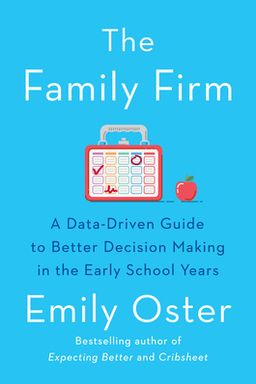
Have you ever wished family life came with an operations manual? In The Family Firm, economist Emily Oster argues that the chaos of parenting school-age children—from ages five to twelve—can be made calmer, smarter, and even more fulfilling if you run your household a little more like a business. Oster contends that while parenting babies is reactive and data-rich, parenting older kids is ambiguous, logistical, and deeply personal. In a world full of big decisions—what school to choose, which extracurriculars to prioritize, when to get your child a phone—this stage of parenting requires not more instinct, but more process.
Her bold idea? Treat your household as a miniature firm, complete with strategy meetings, mission statements, workflows, and metrics. That doesn't mean turning your home into a boardroom—it means borrowing tools that make businesses effective, so your family runs efficiently while staying true to your values. Oster invites you to shift from firefighting daily problems to managing deliberately, a promotion from employee to CEO. As she puts it, “We’re all in management now.”
Why This Shift Matters
Parenting an infant is about survival; parenting a third grader is about choices and coordination. A baby cries, you respond. But with school-age kids, you face questions—some indistinct, some monumental—that will shape your family’s future. Should you redshirt your five-year-old? Sign up for travel soccer? Add piano? Choose private over public school? These aren’t medical questions with clear answers; they’re human decisions with multiple right possibilities. Without structure, families drown in options—and logistics—leading to frustration, fatigue, and misalignment.
Oster’s business analogy captures this beautifully. Just as a firm aligns its operations with its mission, families need to define what matters most: Is nightly dinner sacred? Is family time on weekends non-negotiable? Defining this “Big Picture” becomes the backbone of household management. Once set, it cascades through smaller decisions—from bedtime routines to summer planning—creating consistency and calm.
From Data to Decisions
Oster’s earlier books, Expecting Better and Cribsheet, focused on data-driven parenting for babies and toddlers. But by the time her own children reached school age, she realized data alone couldn’t answer many pressing questions. Studies couldn’t tell her whether private school was better for her particular child, or when Penelope should get a phone. The data became fuzzier and less prescriptive.
So Oster evolved. She still believes data matters (“Where there’s evidence, use it”), but now it’s part of a broader framework that includes family values, time management, and structured deliberation. Big decisions need both evidence and alignment with your household’s priorities. In her view, parenting older children isn’t just about finding answers—it’s about creating a system to ask better questions.
The Family Toolbox: Big Picture and the Four Fs
Oster organizes her framework into two pillars. First, the Family Big Picture: a deliberate mission statement capturing what your family values—connection, education, spirituality, rest—and how those values play out in everyday life. It includes specifics like bedtime, mealtime, weekend rhythm, work arrangements, and chore division. Without shared clarity, she says, families default to reaction and miscommunication.
Second, the Four Fs: a structured process for major decisions. Frame the Question, Fact-Find, Final Decision, and Follow-Up.
Managing Complexity and Conflict
A core insight of The Family Firm is that conflict often stems from ambiguity. When partners aren’t on the same page about bedtime or snacks or activities, tiny disagreements balloon into frustration. Oster shows how structure cures chaos: decisions become transparent, roles defined, and priorities aligned. And while running your home like a firm may sound sterile, she writes with warmth and humor—from chaotic camp sign-ups to sandwich screwups at Zoo Camp. Her examples remind you that even Harvard-trained economists forget to submit peanut butter preferences.
Ultimately, Oster’s message is empowering. Parenting doesn’t have to feel overwhelming. Through deliberate planning, shared principles, data-informed decisions, and realistic scheduling tools, families can go from constant reaction to intentional living. The goal isn’t perfection—it’s confidence. As Oster puts it, systematic thinking doesn’t guarantee that you’ll make the right decision, but it does ensure you’ll make it well.
Central Idea
Good parenting isn’t about having all the answers—it’s about creating a reliable structure to find them. Treat your family with the same care, clarity, and purpose you’d give to a meaningful organization. You’ll make fewer reactive choices, experience less stress, and build more harmony across your home.