
Idea 1
When TV Becomes Politics
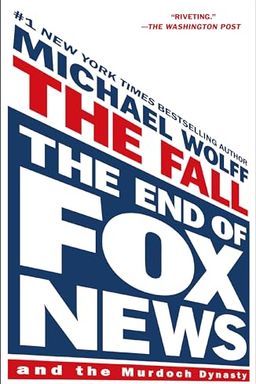
How do you make sense of a media empire that sways elections yet insists it is only chasing ratings? In The Fall, Michael Wolff argues that Fox is a television business first and a political project second, and that this commercial core explains nearly everything: the talent it elevates, the extremes it tolerates, the scandals it survives, and the national consequences it triggers. If you start with TV logic—outrage and personality as the surest way to keep you watching—you can see how Fox’s studio decisions became a political operating system, and why the network keeps crashing into legal, reputational, and family-governance walls.
In this synthesis, you’ll see that Wolff’s story runs along four interlocking rails. First, Roger Ailes engineered a profitable, personality-driven machine—an ecosystem calibrated around a specific cultural nostalgia he once summarized as “1965.” Second, Rupert Murdoch built and protected a sprawling dynasty whose contradictions (tabloid sensationalist and elite aspirant; ruthless controller and aging patriarch) and succession structure (a no–tie-breaker family trust) now dictate corporate choices. Third, the Republican conversation itself has migrated from policy to performance, with Fox’s primetime turning politics into theater. Fourth, the Dominion lawsuit exposed the costs of treating truth as a variable in a ratings formula, forcing a billion-dollar-scale reckoning and reshuffling the talent deck—most dramatically in Tucker Carlson’s sudden ouster.
TV-first economics and their political spillover
Wolff insists you read Fox as a TV product. Under Ailes, the network perfected a talk-radio cadence on cable: big emotions, crisp villains, and charismatic hosts like Bill O’Reilly, Sean Hannity, and later Tucker Carlson. Rupert Murdoch understood that formula’s cash flow and kept Fox News when he sold most entertainment assets to Disney in 2018. The result: a business incentive—keep you glued—that reliably favored narratives of grievance and spectacle over sober verification. Politics followed TV’s laws of attention, not the other way around.
Ailes’s creation and the culture it baked in
Ailes ran Fox like a showrunner and an autocrat. He hired, protected, and punished to preserve a single direction and an audience he imagined as the America of “1965”—socially conservative, anti-elite, grievance-ready. That vision made Fox coherent and dominant, but it also institutionalized gendered casting (Wolff recounts Ailes’s crude “American blow-job test”) and created a culture whose abuses made his 2016 ouster inevitable. The strongman kept the center of gravity; once removed, he left a vacuum that Fox never truly filled.
Rupert Murdoch: architect and hostage
Wolff’s Rupert is a bundle of contradictions: a tabloid baron who craves establishment legitimacy; a dealmaker who dislikes parts of the very empire he constructed; a patriarch trapped by the family-trust math he designed. His children—Lachlan (operational steward), James (reformer), Elisabeth (deal-driven pragmatist), and the more distant Prudence—sit on a trust that requires coalitions to act. Succession is thus strategy. Aging accelerates it. And because Fox News is now the profit engine and the political lightning rod, every family move doubles as a national media event.
Performance replaces policy
Parallel to the family saga, Wolff tracks how right-of-center politics has become stagecraft. You aren’t asked to parse white papers; you are invited into morality plays. Steve Deace’s Family Leadership Summit uses a deliverance-style trailer about a death-row demon to seal conversion through feeling, not facts. Hannity cultivates intimacy with Trump as a ratings engine. Tucker Carlson fuses Ukraine, abortion, and climate into a single aesthetic critique of modernity (Mailer and Vonnegut get name-checked) that makes disparate issues rhyme on cue. This is politics as entertainment, and Fox is the main stage.
Management drift, legal collision
After Ailes, Suzanne Scott presides over a delicate bureaucracy: talent fiefdoms, a “second floor” where decisions diffuse, and owners who want both fire and fireproofing. That drift collided with hard law in Dominion v. Fox. Discovery exposed private skepticism about election lies that still aired on screen. A Delaware judge let Rupert and Lachlan be named. Trial risks soared: an urban jury; hosts under oath; a patriarch’s shaky deposition. Settlement—$785 million—made business sense, even if Fox couched it as prudence, not culpability.
Talent power and the splintering right
Tucker Carlson personifies the arc: a cultural conservative who becomes Fox’s ratings colossus (an $80 million/year contribution) and, post-settlement, a liability to be cut. His exit signals a broader shift: Ben Shapiro’s $110 million media venture, Bannon’s War Room, and upstarts like Newsmax and OAN mean stars can carry audiences off-cable. In a fragmented ecosystem, Fox can no longer assume monopoly over the right’s attention. That weakens its political gatekeeping and scrambles Murdoch-family calculations about control, cash, and brand.
Core throughline
Treat Fox’s choices as TV-first decisions with political side effects—and then watch those side effects loop back to reshape the business through lawsuits, talent wars, and family succession.
Seen this way, you grasp Wolff’s bigger claim. A media company optimized for attention can transform a party, radicalize audiences, and empower stars—until law, governance, and changing markets snap the rubber band. The fall, in Wolff’s telling, isn’t a single event; it’s the inevitable stress fracture when television economics try to carry the weight of national politics.