
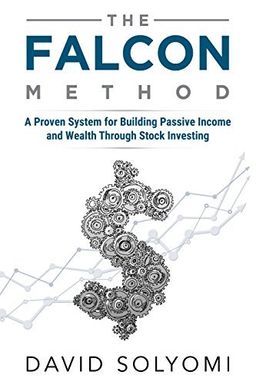
The FALCON Method cover

The FALCON Method

by David Solyomi

The FALCON Method by David Solyomi offers a reliable, numbers-driven strategy for building passive income and wealth through stock investing. This method helps investors objectively evaluate assets, focusing on consistent dividend payers and minimizing psychological biases with a structured approach, making it a perfect guide for both novice and experienced investors.

Building Wealth Through the FALCON Method

Have you ever wondered why so many investors fail to build lasting wealth, even when they follow seemingly sound advice? David Solyomi’s The FALCON Method argues that the missing piece isn’t more information or market insight—it’s a disciplined, structured process that filters emotion out of decision-making. Solyomi contends that successful investing isn’t about luck, timing, or speculative genius—it’s about having a replicable system grounded in quality, valuation, and patience. His FALCON Method delivers just that: a systematic, data-backed, largely mechanical process for identifying and holding the very best dividend-paying stocks for long-term wealth and income.

At its heart, the book is a roadmap to achieving financial independence through intelligent stock selection, by learning to think like a business owner rather than a gambler. Solyomi combines quantitative rigor with common sense, aiming to help readers build buy-and-hold portfolios that generate passive income while steadily appreciating in value. The tone is friendly and personal—Solyomi achieved financial freedom himself at age 33—and his humor and stories help demystify what many find intimidating about investing.

Why a System Matters

Solyomi begins with an important claim: most investors fail because they lack a system. Without a repeatable process, decisions are ruled by emotion—fear, greed, or impatience—which leads to buying high and selling low. The FALCON Method acts as an antidote to this chaos, using strict filters and proven quantitative factors to separate good companies from bad investments. It’s about letting logic lead and ego step aside. “You either have a process,” Solyomi says, “or you’re gambling.”

The structure of the method is deceptively simple: narrow the universe to top-quality, dividend-paying companies with consistent cash generation. Buy them when they are undervalued. Hold as long as they keep performing. Each step is guided by precise criteria, spanning company fundamentals, valuation, capital allocation, and dividend performance. The aim is to take what Warren Buffett calls “sensible investing” and package it into a straightforward, teachable model.

Stocks, Not Speculation

The book insists that stocks aren’t “lottery tickets” but ownership stakes in real businesses. This simple shift in mindset changes everything. Instead of chasing price swings or trends, you’re evaluating companies as if you were buying them whole: Do they generate free cash flow? Do they reinvest wisely? Do they treat shareholders fairly? These operational hallmarks—combined with prudent valuation—determine whether you’re buying into a wealth-producing engine or a mirage.

Drawing from Buffett, Graham, and Jeremy Siegel (author of Stocks for the Long Run), Solyomi demonstrates that stocks outperform all other asset classes over time, and that dividend-paying equities—especially those with long, unbroken payment histories—deliver both stability and returns. To the author, this data proves that investors must focus on productive, cash-generating businesses, not speculative fads or macroeconomic predictions. As he puts it: “We spend essentially no time thinking about macro factors. Focus on what you can control—the process—and results will follow.”

From Businessman to Investor

Solyomi’s credibility stems from personal experience. He built and sold companies before turning full-time investor, learning firsthand that understanding business operations—and particularly how cash flows through them—is the secret to good investing. His “black box” model shows a company as a network of money pipes: revenues flowing in, expenses and investments flowing out, and free cash flow left over for shareholders. The FALCON Method focuses on these visible “pipes” rather than the opaque inner workings of a firm, allowing you to judge performance even as an outsider.

This businesslike mindset also leads to the book’s core criteria: companies must produce abundant free cash flow, allocate it wisely (paying fair dividends, repurchasing undervalued shares, and reinvesting profitably), and be available at fair or below-average valuations. When all three dimensions—operations, capital allocation, and valuation—are aligned, the result is a “wonderful company at a fair price.”

The FALCON Framework

As the acronym implies, the method’s philosophy is sharp and focused. It involves several stages: filtering for long-history dividend payers (“Premium Dividend Club”), finding those trading below historical valuation norms (the “double-dip” benefit), testing for absolute thresholds such as free cash flow yield, and finally ranking the survivors by yield-plus-growth attributes. The quantitative portion (roughly 90% of the process) is complemented by a final qualitative layer—human judgment that checks for factors like dividend safety, capital efficiency (ROIC), cyclicality, and a conservative estimate of total return.

The result is a monthly shortlist of the best investment candidates, which Solyomi also shares through his newsletter. But he stresses that the power lies not in stock tips but in grasping the system itself. Knowing the “Top 10 Stocks” is less important than understanding why they deserve to be there. Once you internalize the process, investing becomes less emotional and more mechanical—in the best sense of the word.

Financial Freedom Without Frenzy

The ultimate promise of the FALCON Method is peace of mind. Solyomi calls it SWAN investing—Sleep Well At Night. You’re not chasing market excitement but building durable wealth through steady compounding. By focusing on consistency, long-term dividends, and undervalued quality, you can achieve what he did: financial independence at a remarkably young age. As Benjamin Graham might say, this approach is less about predicting markets and more about being “approximately right than precisely wrong.”

To the reader, the message is clear and empowering: you don’t need to be a Wall Street insider to invest intelligently. You just need a disciplined, evidence-based process that aligns with how wealth is truly created in business. In Solyomi’s words, “Without a system, you’re gambling.” With it, you’re building freedom—one dividend at a time.


Understanding Why Stocks Win Long Term

Before diving into his system, Solyomi wants you to believe—deeply—that stocks are the best vehicle for wealth creation. Quoting Warren Buffett, he frames investing as “forgoing consumption now to consume more later.” The idea isn’t about speculation but ownership of productive assets—businesses that generate goods, services, and profits across decades. Unlike bonds or gold, stocks grow because the underlying companies create real value.

Three Categories of Investments

Solyomi draws on Buffett’s famous 2011 shareholder letter dividing investments into three categories. First are currency-based assets—bonds, bank deposits, and similar instruments—which seem safe but silently lose purchasing power over time. Inflation ensures that even if you receive regular payments, the money buys less each year. As Shelby Cullom Davis quipped, “Bonds that promise risk-free returns now deliver return-free risk.”

Second are speculative, non-productive assets like gold or cryptocurrencies whose value depends on someone else paying more later. These don’t generate cash flows, so owning them is pure speculation. Finally, Buffett—and Solyomi—champion the third group: productive assets like businesses, farms, and real estate. They produce goods and services that retain value through economic cycles and inflation. Stocks are simply fractional ownership of these assets, offering the highest chance to preserve and grow purchasing power.

Backing by Centuries of Data

Solyomi cites Jeremy Siegel’s canonical research in Stocks for the Long Run: from 1802 to 2012, U.S. stocks delivered real (inflation-adjusted) returns far above all other asset classes—multiplying purchasing power by over 700,000 times. Compare that to bonds’ mere 1,778 and the case becomes overwhelming. Stocks, simply put, are unbeatable in the long run. Despite short-term volatility, they’re the only asset class consistently aligned with human progress and productivity.

The key lesson? Volatility isn’t risk. Risk is the probability of permanent capital loss. Confusing the two is a psychological mistake that pushes investors toward “safe” bonds that quietly erode wealth. When you learn to ignore price swings and focus on long-term compounding, stocks become not only the most rewarding but the safest place for your money.

Why This Foundation Matters

Conviction is psychological armor. Solyomi insists that unless you’re absolutely convinced that stocks are the superior path, you’ll abandon any strategy—including the FALCON Method—during downturns. Understanding these fundamentals prepares you to stay invested when fear dominates headlines. “Be fearful when others are greedy,” Buffett says, “and greedy when others are fearful.” Solyomi’s version: trust the process, because history is on your side.


The Black Box of Business and Cash Flow

To invest like an owner, you need to understand how a company actually functions financially. Solyomi introduces the metaphor of the “black box” to simplify what might otherwise feel overwhelming. You can’t see everything inside a corporation, but you can analyze the visible inputs and outputs—the money pipes that sustain it. This model becomes the analytical foundation of the FALCON Method.

Input Pipes

Money flows into the black box in three ways: revenues from customers, borrowed funds, and equity sales. The healthiest companies rely mostly on revenues, using debt prudently and avoiding unnecessary share dilution. Solyomi warns against firms that issue new shares simply to fund dividends—“robbing Peter to pay Paul.” Buffett’s skepticism of such behavior—hugely dilutive and promotional—reinforces the lesson: always watch how the money comes in.

Output Pipes

Money also flows out through operating expenses, capital expenditures, debt payments, and taxes. What remains after these is profit, and more importantly, free cash flow—“no strings attached” money that management can allocate freely. That allocation is crucial: wise executives use this cash for dividends, share buybacks, or reinvestment in growth. Poor stewards destroy value by spending recklessly or making bad acquisitions.

Three Uses of Profits

Profit can be paid as dividends, used for repurchases, or retained for reinvestment. Each outlet tells a story. A company with decades of rising dividends signals healthy, recurring cash flow. Buybacks are welcome only if done at reasonable prices. Reinvested earnings, when efficient, fuel compounding. The interplay of these three “pipes” reveals management competence. As Buffett says, “Some companies turn retained dollars into fifty-cent pieces; others into two-dollar bills.”

This simple model keeps your focus where it belongs: not on market noise, but on how money moves through the business. By insisting on quantifiable evidence—cash generation and allocation efficiency—Solyomi bridges Buffett’s philosophy with the systematic discipline of modern factor investing. The FALCON Method is built to measure these forces precisely, using numbers, not narratives.


Designing a System: The FALCON Process

For Solyomi, investing without structure is like flying blind. The FALCON Method replaces randomness with a repeatable framework that marries quantitative precision to common sense. He outlines five main phases that create a funnel, guiding you from a universe of thousands of stocks to a concentrated list of the best opportunities.

1. Identify Quality

The first step is to target proven, high-quality companies—the “Premium Dividend Club.” These are firms that have paid uninterrupted dividends for at least 20 years. Such longevity signals robust earnings power and shareholder-friendly management. This screen alone weeds out the pretenders and forms the psychological backbone of buy-and-hold discipline. It’s easier to sleep well when you own household names like Johnson & Johnson or Procter & Gamble, not obscure penny stocks.

2. Buy on the Cheap (The Double-Dip)

Buying quality isn’t enough; price matters. Here Solyomi introduces the “double-dip benefit,” inspired by Buffett’s 1991 letter describing how valuation reappraisal amplifies returns. When a strong business is temporarily undervalued, your upside doubles—profits grow internally, and the market eventually revalues the stock upward. Using examples like CVS Health, Solyomi shows how buying below fair value (say, at a P/E of 10 instead of 15) can dramatically increase long-term returns without additional risk.

3. Apply Threshold Criteria

Before investing a single dollar, the company must pass three absolute filters: a minimum dividend yield, acceptable free cash flow yield, and positive shareholder yield (dividends plus net buybacks). This step ensures every purchase has real, measurable value. As a result, “dividend traps”—high yields with weak fundamentals—are swiftly excluded. This phase aligns the investor’s expectations with the company’s proven capacity to return capital.

4. Rank and Compare

Next comes multifactor ranking. Using metrics like the Chowder Rule (dividend yield + growth rate) across multiple timeframes, the system compares stocks to see which offer the best yield-plus-growth potential. Solyomi enhances this concept by weighting factors differently, providing a more robust picture than traditional dividend screens.

5. Add Human Judgment

Finally, the “human” phase checks what algorithms can’t—business cyclicality, dividend safety, ROIC, and conservative return expectations. This qualitative filter catches nuances machines miss, such as whether high payout ratios are sustainable in context. The result is a systematic yet flexible model—90% quantitative, 10% human—that systematically reduces bias while preserving informed judgment.


Why Dividends and Capital Allocation Matter

Dividends are the heartbeat of the FALCON Method. Solyomi sees them not merely as income but as signals of corporate health and management discipline. Quoting John D. Rockefeller—"The only thing that gives me pleasure is to see my dividends coming in"—he argues that consistent dividends reveal consistent cash generation. Unlike earnings, dividends can’t be faked; you either have the cash or you don’t.

Dividends as Reality Checks

Long-term dividend payers—so-called Dividend Aristocrats—have already survived recessions, proving resilience and strong internal economics. But Solyomi avoids fetishizing streaks. A company that pauses dividend growth during tough years (like Boeing) but later delivers significant increases may be wiser than one that raises its dividend by 0.1% yearly just to maintain a record. Quality outweighs cosmetics.

Capital Allocation: The “What Will They Do With the Money” Factor

The second pillar is efficient capital allocation. Companies generate free cash flow, but only managers determine whether it’s used productively. Share repurchases, when done below intrinsic value, boost compounding. Reinvesting in growth projects is worthwhile only if the return exceeds the cost of capital. Poor decisions here—acquiring overpriced firms, wasting cash on empire-building—destroy shareholder wealth. The FALCON Method indirectly measures capital discipline via shareholder yield and return on invested capital (ROIC).

Understanding these patterns helps you identify “cash cows” that convert revenues into durable wealth. Dividends, buybacks, and smart reinvestment all show that the company values its owners. When these are aligned with attractive valuation, you have the trifecta of a high-quality investment.


Psychology, Patience, and the Investor’s Edge

Solyomi dedicates several chapters to something most investing books ignore: the psychology of staying the course. He’s clear that even the best system fails if you abandon it when markets fall. Behavioral biases—overconfidence, loss aversion, herd mentality—are every investor’s true adversary. The FALCON Method is partly designed to defend you from yourself.

Structured Discipline Beats Emotion

The author contrasts emotional investing with what he calls “structured decision-making.” Indexes like the S&P 500 outperform most active managers precisely because they are emotion-free—they simply follow a rule and never flinch. The FALCON Method works the same way, executing quantitative rules with human review only after numbers have narrowed the field. This ensures bias enters only when it can’t do real harm.

Sleep Well at Night (SWAN) Investing

Solyomi emphasizes emotional comfort as a success factor. SWAN investing means owning quality businesses whose dividends pay you even during downturns. Knowing companies like Coca‑Cola or Johnson & Johnson have endured crises for decades gives psychological stability—and makes you more likely to hold. He warns that frequent trading, market timing, and chasing “exciting” stocks lead to “return-free risk.”

Ultimately, sustainable wealth creation is a behavioral game. As Solyomi reminds readers through the analogy of poker: you can play perfectly and still lose individual hands, but the odds favor you if you stick to a good process. The main key to success isn’t perfection—it’s consistency.


Building and Using a FALCON Portfolio

In the final chapters, Solyomi moves from theory to practice, guiding you on how to implement and manage a portfolio built on his principles. The FALCON Method isn’t about non-stop trading but deliberate accumulation and patient holding of top-tier businesses bought below fair value. Implementation focuses on simplicity and discipline rather than prediction.

Portfolio Construction

Solyomi advises investors to own 20–30 equally weighted positions spanning various sectors—enough diversification for safety without diluting performance. New investments can be added monthly, either from savings or a gradual deployment of lump sums. Dollar-cost averaging over 24 months removes the emotional pain of market timing and steadies long-term returns. The FALCON “Top 10” list serves as a practical guide for these additions, providing you the best candidates based on current valuation and fundamentals.

When to Sell (Rarely)

The Method has only two sell rules: when a company cuts its dividend or becomes extremely overvalued. Otherwise, inactivity is a virtue. Citing Fidelity’s research that the best investors are often the dead or “forgotten” ones, Solyomi underscores that doing less—and letting compounding do more—is the secret to outperformance. As Buffett put it, “We make more money when snoring than when active.”

The Human Factor

In his closing reflections, Solyomi reminds readers that even the most scientific approach depends on emotional maturity. Process, not prediction, is the path to success. By following structured rules for selection, valuation, and patience, you tilt probability in your favor. That probabilistic mindset—embracing uncertainty but sticking to sound principles—is the essence of intelligent investing. In the end, the FALCON Method’s greatest promise is freedom: financial, emotional, and intellectual.

Dig Deeper

Get personalized prompts to apply these lessons to your life and deepen your understanding.

Go Deeper

Get the Full Experience

Download Insight Books for AI-powered reflections, quizzes, and more.