
Idea 1
Rethinking Risk, Uncertainty, and Decision Quality
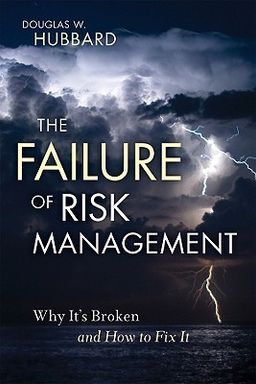
What if most organizations misunderstand the very thing they are supposed to manage: risk? In this book, Douglas Hubbard argues that confusion about what risk and uncertainty actually mean leads directly to poor measurement, misguided investments, and systemic fragility. His central claim is radical yet practical: you can and must measure uncertainty better—and doing so does not require perfect data, just calibrated thinking and simple models.
Hubbard’s perspective cuts against both fatalism (the idea that uncertainty cannot be quantified) and false precision (the use of pseudo-quantitative tools like risk matrices). He contends that nearly every organization can improve its decisions if it replaces ambiguous labels with explicit probabilities and measurable financial impacts. That shift transforms risk management from ritualized compliance to genuine decision science.
Why Definitions Matter
The book begins by distinguishing two words most professionals blur: uncertainty (not knowing which outcome will occur) and risk (uncertainty with negative consequences). You measure uncertainty with probabilities and risk with the probability-weighted distribution of loss. This vocabulary might sound academic, but its absence leads to misused tools, inconsistent metrics, and poor alignment between mitigation, insurance, and investment decisions. As Hubbard reminds you, “language is measurement.”
He also insists on the subjectivist or Bayesian interpretation of probability. In practice you cannot gather infinite samples for every unique decision, but you can elicit judgments and calibrate people so that their 80% confidence statements really prove accurate about 8 times out of 10. This operational view of probability is the foundation for every later concept, from calibration to Monte Carlo simulation.
A Problem of Lineage: The Four Horsemen
Hubbard maps modern risk practice into four intellectual lineages he calls “The Four Horsemen”: actuaries, war quants and engineers, financiers, and management consultants. Each tradition brought useful tools—actuarial rigor, probabilistic risk assessment, financial pricing, or accessible frameworks—but each also introduced blind spots. Consultants, for instance, promoted colorful heat maps that dominate corporate reporting but rest on mathematically invalid foundations. Hubbard’s message is to borrow across lineages: combine actuarial discipline and operational research realism with communication clarity, but never let simplicity replace empirical validity.
Why Common Practices Fail
Most industries still rely on risk matrices and scoring tables that turn words like “High,” “Medium,” and “Low” into numbers and colors. These methods look scientific but collapse vast numeric ranges into arbitrary categories, ignore dependencies, and distort priorities by factors of ten or more. Empirical studies confirm that organizations using such qualitative schemes often perform worse than if they had used simple probabilistic models. Hubbard’s critique is not merely theoretical—he documents real disasters (Baxter’s heparin recall, financial crises, software defects) where untested risk methods acted as a common‑mode failure across organizations.
The greatest danger, he warns, is when the risk-management process itself becomes the systemic weak point—the ultimate common-mode failure. If everyone uses a misleading tool, entire sectors share the same blind spot. Hubbard’s remedy is to test and validate your risk methods just as you would test any other critical system component.
From Heat Maps to Measurement
To replace vague scoring, Hubbard offers an approachable but rigorous alternative: the one-for-one substitution model. Instead of rating each risk from 1 to 5, you ask for an explicit annual probability and a 90% confidence interval for financial impact. With those two pieces you can run simple Monte Carlo simulations—even in Excel—and produce a loss exceedance curve (LEC) showing your portfolio’s distribution of losses and the probability of exceeding each threshold. With this graph you can visually compare organizational risk tolerance curves (what management deems acceptable) to actual quantified exposures. It preserves the communicative simplicity of a heat map but anchors it in measurable reality.
Crucially, these models enable comparison of return on mitigation: how much expected loss reduction you get per dollar spent. Decisions stop depending on red‑yellow‑green boxes and start reflecting real tradeoffs.
Human Limits and Calibration
Hubbard emphasizes a humbling fact: untrained experts are unreliable instruments. Studies from Kahneman, Tversky, and Lichtenstein confirm that overconfidence and inconsistency dominate human judgment. But calibration training—simple feedback on confidence intervals and true–false probability tests—can make people far more accurate. You can measure an expert’s performance, weight forecasts by calibration scores, and even use simple regression models (Brunswik’s “lens model”) to smooth inconsistencies. Properly trained experts are the best measurement tools organizations have when data are sparse.
Beyond Algorithms and Black Swans
A later theme confronts two cultural biases. The first is algorithm aversion—our tendency to abandon models after a single visible error even though their long-run error rates are lower than human judgment. Hubbard calls this the “beat the bear” fallacy: a model doesn’t have to be perfect, only better than your current alternative. The second is the Black Swan critique popularized by Nassim Taleb. Hubbard agrees that extreme events are more frequent than Gaussian assumptions imply, but he counters that acknowledging fat tails is no reason to abandon probabilistic analysis. Instead, you should broaden data, model heavy tails explicitly, and design systems robust to outliers.
Building a Quantitative Culture
The final chapters move from models to culture. Real improvement requires Bayesian updating, transparent assumptions, model sharing (through a Global Probability Model or SIPMath libraries), and incentive systems that reward accuracy over optimism. Firms that adopt proper scoring rules (like Brier scores) and calibration tracking improve prediction quality measurably. Case studies such as Trustmark show that executives found loss exceedance curves far clearer than static risk registers.
Ultimately, Hubbard’s argument is not about mathematics but about decision quality. Quantifying uncertainty—through calibrated judgment, small data, and simple simulations—improves any decision process. The practical message: stop worshipping the heat map, measure what matters, test your methods, and make uncertainty explicit rather than decorative.