
Idea 1
The Power of the Facebook Effect
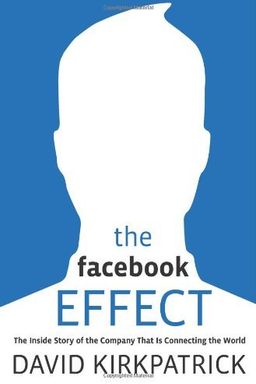
Why did a simple student directory evolve into one of the world’s most transformative technologies? In The Facebook Effect, David Kirkpatrick argues that Facebook didn’t just revolutionize communication—it redefined identity, mobilization, and governance in the digital age. Kirkpatrick calls this underlying phenomenon the Facebook Effect: the chain reaction that occurs when networked identities and automated sharing turn private actions into global movements.
At its heart, Facebook’s story is about how technology reshapes human connection. You’ll see how a Harvard dorm idea became an organizing tool for millions, how verified identity fueled trust and accountability, how a culture of risk enabled lightning-fast innovation, and how the company struggled with privacy, monetization, and global governance as it grew.
Real Identity as the Social Engine
Facebook’s breakthrough was its real‑name system. Mark Zuckerberg’s founding principle—users should present their true selves online—created a digital mirror of real social life. You accept a friend request, you validate someone’s identity, and that connection makes content more trusted and potent. This real‑name architecture produced safety and intimacy but also permanent visibility, raising privacy scrutiny worldwide.
Chris Kelly, Facebook’s early privacy chief, believed this identity model built safer communities (“identity plus friend graph equals trust network”). Yet controversies, from Facemash’s invasion of student privacy to later features like News Feed and Beacon, revealed how intimacy and exposure were inseparable in this design.
From Dorm Room to Global Mobilization
Oscar Morales’s 2008 campaign “Un Millón de Voces Contra Las FARC” exemplified Kirkpatrick’s thesis. A single group post triggered viral mobilization when each new join notified their friends. The ripples turned into millions marching across Colombia. Facebook’s architecture—real identities linked through friendship networks—made emotional contagion possible at scale.
This demonstrates what Kirkpatrick calls “automatic amplification”: actions you perform are silently distributed to others who trust you. Movements in Iran, Egypt, and beyond echoed the same structure—as digital trust replaced traditional broadcasters.
Design Philosophy and Growth Discipline
Product minimalism anchored Facebook’s success. Zuckerberg described the product as a “utility,” favoring clear interactions over decoration. Early choices—photos, tags, News Feed—simplified use and exploited validated social graphs. Dustin Moskovitz paced expansion school‑by‑school to prevent the system collapse that killed Friendster.
Each design element expressed a consistent principle: low friction, controlled growth, and trust‑based virality. The closed-to-open registration shift broadened participation but tested cultural limits—when Yahoo’s billion‑dollar acquisition offer emerged, Zuckerberg chose independence, privileging influence over short‑term wealth.
From Feed to Platform
The 2006 News Feed revolution changed Facebook from a static site to an active broadcaster of life. The backlash (“Stalkerbook”) proved users equated exposure with surveillance. Yet engagement doubled, underscoring how design reshapes social norms. Facebook’s response—granular privacy fixes—became its playbook for future crises.
Later, the Platform and Connect initiatives extended this model beyond Facebook. f8 opened APIs to developers, spawning Zynga, Scrabulous, and a new app economy powered by Facebook’s distribution graph. Connect and Stream APIs carried identity and sharing across the web, positioning Facebook as an operating system for social interaction.
Governance, Monetization, and Transparency Tensions
Corporate drama underpinned product evolution. Saverin’s ouster, Parker’s restructuring, and investor battles mirrored Facebook’s struggle to mature without surrendering founder control. Monetization—ads, Microsoft partnership, Beacon—tested how far trust could stretch. Beacon’s exposure of user purchases sparked a global privacy revolt and prompted the hiring of Sheryl Sandberg to professionalize operations.
Zuckerberg’s philosophy of “radical transparency” clashed with human complexity. The idea that “you have one identity” encouraged authenticity but ignored context collapse—where your boss, parent, and friend see the same behavior. Privacy activists like Marc Rotenberg and theorists like James Grimmelmann exposed these structural contradictions, reframing Facebook as a social experiment on disclosure and control.
Global Scale and Cultural Friction
Facebook’s crowdsourced translation tool enabled worldwide adoption—Spanish completed in weeks, French in days. But global scale heightened cultural and political tensions. Freedom of expression in one region could mean censorship or violence in another. As nations wrestled with Facebook’s influence, the company negotiated between openness and regulation, revealing that connectivity magnifies both empowerment and vulnerability.
Core message
Facebook’s power lies in its double helix of identity and distribution. Real names lend trust; automated sharing turns trust into power. The same system that mobilizes democracy can amplify misinformation. Kirkpatrick’s book reveals that the Facebook Effect is not only technological—it is sociological, ethical, and increasingly political.
If you take one lesson forward, it’s this: a network built on authenticity scales human potential and human risk simultaneously. Understanding that balance—between openness and protection, innovation and governance—is how you grasp the full reach of the Facebook Effect.