
Idea 1
Paul Newman’s Relentless Search for Authenticity
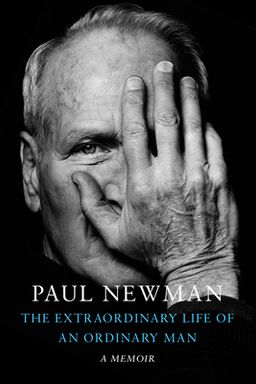
Have you ever looked at your life’s successes and wondered if they truly belonged to you—or to the image others built around you? In The Extraordinary Life of an Ordinary Man, Paul Newman invites you into that uneasy space between who we are, and who the world sees. Compiled from years of raw, unfiltered conversations with screenwriter Stewart Stern, the memoir captures Newman’s ongoing struggle with identity, insecurity, and the quiet war between his public legend and private self. The book’s title is fitting: Newman spent his life trying to bridge the gap between an “extraordinary” myth and an “ordinary” man who constantly doubted his worth.
At its core, the book is less about Hollywood glamour and more about the lifelong pursuit of authenticity. Newman doesn’t tell the story of a movie star—he tells the story of a man haunted by perfectionism, fractured family love, addiction, and the moral question of how to atone for what he calls his “luck.” From his troubled childhood in Shaker Heights, Ohio, to global fame and humanitarian renown, the memoir reads like a self-investigation. Every chapter—whether about his icy mother, his clandestine affair with Joanne Woodward, or his grief over his son Scott—peels away another layer of decoration to reveal the orphaned core underneath.
Public Myth vs. Private Reality
Newman positions himself as both the protagonist and the unreliable narrator of his life. He insists, again and again, that the public version of Paul Newman—the smiling, blue-eyed hero of Cool Hand Luke and Butch Cassidy—is a fiction, an accidental construct of good looks and circumstance. The real Paul, he contends, was an insecure, emotional fugitive—running from the shadow of his mother’s affection and the weight of his father’s disappointment. His motivations weren’t confidence but doubt, not mastery but survival. The book opens with his own confession: “If I had to define ‘Newman’ in the dictionary, I’d say: ‘One who tries too hard.’” It’s a line that echoes throughout the memoir.
The memoir frames success not as redemption but as a smoke screen. Newman’s belief in himself, he says, came not from talent but from tenacity. He was never the most innate actor in the room—his classmates at the Actors Studio, he recalls, made him feel like a fraud among true artists. Even after global fame, he found mirrors of his own torment in Brando’s mercurial genius and James Dean’s doomed recklessness. His self-doubt became his creative fuel. It’s almost Buddhist in its fatalism: the image everyone loves is a byproduct of suffering.
The Family Crucibles That Forged Him
Early chapters paint Newman’s genteel, Jewish-Christian household as a battleground of appearances. His father, the pragmatic businessman, modeled decency but drank himself numb. His beautiful, overbearing mother demanded perfection—her son was not a child but a decoration, an extension of her taste. Their dinner table was silent; their affection was aesthetic. In one vivid image, young Paul and his brother literally bang their heads against the wall, their secret ritual of repressed fury. That image, he later admits, became a metaphor for his emotional life: violence contained within manners, outrage buried under control.
That early repression shaped all his later relationships—with women, with fame, with alcohol. He confesses that his mother “never saw the dogs themselves, only her own kindness.” The line is devastating: it describes not only her love but his own lifelong blindness to how his actions hurt others. Newman’s emotional vocabulary was marked by restraint and reaction; he would spend decades, and two marriages, trying to feel anything fully.
From Acting to Self-Interrogation
For Newman, acting was both an escape and an exorcism. “Acting gave me a sanctuary,” he says, “where I could create emotions without being penalized for having them.” He thrived on method work but distrusted its vulnerability; even at the height of his fame, authenticity frightened him. Onstage, vulnerability was art. Offstage, it felt like danger.
Yet, as the memoir progresses, fame itself becomes his teacher. The sheer absurdity of Hollywood success forces him to confront the gap between myth and man. Whether in The Hustler, Hud, or The Verdict, he finds himself drawn repeatedly to damaged, self-sabotaging loners who mirror his inner fractures. In this way, acting became his form of therapy—a process of speaking unspoken truths through other men’s scripts. What started as mimicry evolved into mastery, and ultimately, self-understanding.
Love, Loss, and the Long Arc of Redemption
The affair with Joanne Woodward—his muse, co-star, and eventual wife—marks the memoir’s emotional center. Their marriage, spanning fifty years, emerges as both an epic partnership and a laboratory for growth. He credits Joanne with awakening his sensuality, calling her “the inventor of the sexual creature I became.” Yet he never sanctifies their union; it was stormy, honest, and human. Together they transformed infidelity, guilt, and rivalry into intimacy and creative collaboration.
The tragic death of his son Scott, however, stripped away Newman’s last illusions about control. His grief spills onto the page with raw immediacy—he blames himself, his absence, his own addiction, his inheritance of pain. That loss triggers perhaps the book’s quietest but most profound shift: from self-importance to service. Out of guilt and empathy, he builds the Hole in the Wall Gang Camp for critically ill children and donates his food-company profits to charity. The emotional arc completes itself—not through stardom, but through surrender. Giving becomes his final act of atonement and authenticity.
Why His Struggle Still Matters
Newman’s memoir is less a Hollywood rags-to-riches tale and more a mirror for anyone wrestling with identity and illusion. Like Viktor Frankl’s Man’s Search for Meaning or Michelle Obama’s Becoming, it explores how adversity shapes empathy and how self-doubt can be both curse and compass. He reminds you that the extraordinary is often just persistence dressed as grace, and that celebrity—like any success—means nothing if it isn’t grounded in humility. In reading Newman’s story, you’re not meeting an icon; you’re meeting a man still learning, late in life, how to feel real.