
Idea 1
Becoming an Everyday Hero
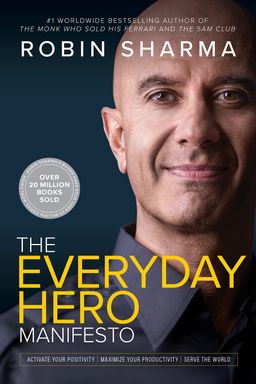
How do you live an extraordinary life in ordinary circumstances? Robin Sharma’s The Everyday Hero Manifesto argues that heroism isn’t reserved for firefighters, revolutionaries, or famous leaders—it’s found in the everyday choices of people who commit to integrity, discipline, compassion, and the pursuit of mastery. The central argument of the book is that anyone can become an everyday hero by living intentionally, mastering themselves, and aligning daily actions with higher ideals. Your power lies not in luck or fame, but in the consistency of your character and the purity of your purpose.
Rediscovering Inner Heroism
Sharma challenges you to redefine what heroism means. He contends that society glamorizes external success while neglecting the quiet acts of courage that build true greatness: rising early to grow, persevering through pain, showing kindness when it’s inconvenient, and taking personal responsibility rather than blaming others. According to him, heroism begins inside you—through your Mindset (how you think), Heartset (how you feel), Healthset (how you care for your body), and Soulset (how you connect spiritually). These four “interior empires” serve as the foundation for mastery, and mastery is the gateway to an extraordinary life.
The Manifesto’s Core Promise
The book’s overarching promise is transformation through discipline and compassion. It teaches that being great isn’t genetic—it’s a learned behavior. Through stories of famous figures and everyday people—like Nelson Mandela’s perseverance, J.K. Rowling’s resilience, and a humble chestnut seller’s optimism—Sharma demonstrates that struggle is the raw material for greatness. Pain, if used wisely, serves as a classroom; trauma, if processed deeply, becomes a teacher. As he writes, “Everyone experiences trauma; the fact that you’re alive means you’ve gathered it.” By healing inner wounds, you clear the path to creativity, peace, and peak performance.
Why Ordinary Matters
Sharma insists that changing the world doesn’t require fame or fortune. It requires service. Heroes are those who lead by virtue in everyday situations—parents who nurture children, employees who perform with honor, creators who uplift others through their art. He encourages you to “lead without a title,” reminding readers that influence begins not with authority but with example. Small acts—sending kindness to a stranger, forgiving someone who wronged you, or protecting your standards when everyone else relaxes theirs—carry heroic weight.
The Journey From Victim to Creator
Everyday heroism means crossing the “Victim-to-Hero Leap.” Victims blame circumstances and retreat into excuses. Heroes reclaim agency, refusing to delegate responsibility for their happiness or success. They move from scarcity thinking to abundance, from complaint to contribution, from busyness to productivity. Sharma uses real-life examples—from the musician Gord Downie, who sang through brain cancer, to Muhammad Ali’s graceful humility—to illustrate how courage transforms ordinary moments into legacy-making events. The message: you can’t inspire if you’re de-inspired, and true heroism begins with fueling your own spark.
A Call to Rehumanize Life
Finally, Sharma urges readers to “return to human.” His manifesto closes by reminding you that joy resides in simplicity—real conversations, mindful work, integrity, and service. In a world of distraction and digital noise, the everyday hero is the unapologetically present soul who lives with humility, playfulness, and purpose. As he writes, “Give more than you take, be more helpful than necessary, and treat each person you meet with dignity.” The book is both philosophical and practical—a map for those who wish not just to succeed, but to shine. Through self-mastery, resilience, and kindness, you transform your everyday into extraordinary.