
Idea 1
Riding the Entrepreneur Roller Coaster
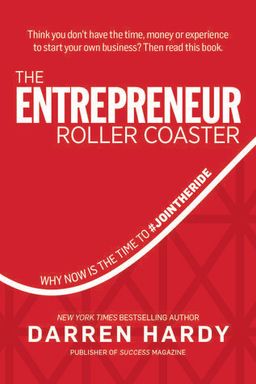
Why do some people thrive on chaos while others crumble under pressure? In The Entrepreneur Roller Coaster, Darren Hardy argues that entrepreneurship is not a linear or smooth journey—it is a wild, emotional, and unpredictable ride filled with exhilarating highs and terrifying lows. Hardy contends that to survive—and ultimately enjoy—the ride, you must build the right mindset, master essential business skills, and learn to find joy even in the fear and uncertainty.
A successful entrepreneur, former publisher of SUCCESS magazine, and author of The Compound Effect, Hardy uses a mix of memoir, metaphor, and mentorship to guide readers through what he calls the 'entrepreneur’s ride.' Drawing from his own beginnings selling water filters at age eighteen, he highlights the emotional volatility of entrepreneurship—the excitement of the first sale, the despair of failure, and the lesson that both feelings are part of the same journey. His goal is to prepare readers not just to survive the ride, but to love it.
The Greatest Era of Opportunity
Hardy insists that right now is the best time in human history to be an entrepreneur. Technology has shattered the traditional barriers to starting a business. The 'ivory tower' corporations that once monopolized resources, supply chains, and media are being toppled by small, nimble individuals with Wi-Fi and willpower. He calls this the 'Connected Age,' where tools, resources, and global audiences are at every person’s fingertips. If you miss this era, Hardy warns, you may miss the single greatest opportunity to shape your future and legacy.
To seize this opportunity, though, you must overcome fear, apathy, and external discouragement. Hardy describes this decisive moment as standing at the 'ticket booth' of the roller coaster—the point where you commit to buy your ticket, step onto the ride, and accept the emotional turbulence to come.
The Emotional Ride of Entrepreneurship
Entrepreneurship, Hardy explains, will test every emotional fiber of your being. You will feel euphoria when customers say yes, and heartbreak when your plans collapse. Hardy compares his early experience—flooding his grandmother’s apartment with a misinstalled water filter—to the cycle of hubris and humility every entrepreneur faces. Success, rejection, and recovery are not exceptions; they are essential ingredients.
He teaches that these moments are not meant to discourage you but to season you. In his words: “You will be thrashed about—severely at times—but that’s the beauty of the ride.” Resilience becomes the entrepreneur’s muscle, and emotional composure the ultimate differentiator between those who quit and those who succeed.
Why Mindset Is the Safety Bar
Hardy emphasizes that success in business is less about resources and more about internal fortitude. Many fail because they underestimate the psychological cost of entrepreneurship. Fear, doubt, and criticism from friends—the 'crabs in the bucket'—can drag you back into mediocrity. Hardy’s advice is to stop being a “likable” people-pleaser and instead redefine rejection as evidence that you’re shaking up the status quo. As he puts it, “If everyone likes you, you’re not doing great work.”
He introduces several core 'safety bars' that will keep your ride on track: a hunger for growth, emotional resilience, and the unwavering belief that failure is tuition. Like Jim Rohn and Napoleon Hill before him, Hardy maintains that attitude, consistency, and personal responsibility are the entrepreneur’s greatest assets.
Building the Skills to Survive
In addition to mindset, Hardy insists you develop concrete competencies—sales mastery, leadership, productivity, and people management. Being passionate isn’t enough; love for your idea must be matched by disciplined execution.