
Idea 1
Unlocking Leadership Through Self-Awareness and the Enneagram
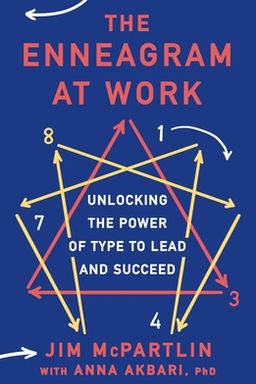
What if the key to transforming your career and leadership style wasn’t found in a strategy manual or MBA curriculum, but inside you? In The Enneagram at Work, Jim McPartlin—drawing on decades of hospitality leadership and mentorship at world-class brands like Disney, Kimpton, and the W Hotels—argues that the single most powerful currency in leadership isn’t charisma or authority, but self-awareness. Through the lens of the Enneagram, a centuries-old personality framework, McPartlin demonstrates how understanding your patterns, motivations, and blind spots allows you to connect deeply with others, lead authentically, and unlock sustainable success.
McPartlin’s central contention is that effective leadership starts from within. Before leading teams, managing conflict, or influencing others, you must understand your own emotional, logical, and instinctual drivers—the three centers of intelligence that govern all behavior. The Enneagram, with its nine types, offers a roadmap to discover these inner dynamics, identify your dominant patterns, and begin the lifelong process of transformation. He believes leadership isn’t about being in charge; it’s about being in tune.
Why Self-Awareness Is Leadership’s Hidden Superpower
McPartlin opens the book with stories from his time as a hotel general manager—moments when his authority was challenged, his insecurities surfaced, and he had to act decisively under pressure. In one crucial encounter, two senior employees tested his authority by refusing to sit where directed. Instead of reacting emotionally, McPartlin drew on his “three centers of intelligence”—asking himself, What do I feel? What do I think? What can I do? That moment of conscious integration of emotion, logic, and action changed the trajectory of his team and earned their lifelong respect.
He argues that such clarity doesn’t come naturally—it’s cultivated through tools like the Enneagram. Leaders who understand their habitual patterns of thought, emotion, and behavior are able to communicate more effectively, inspire teams, and create cultures of trust. For McPartlin, this self-awareness is not just a soft skill; it’s a replicable practice—a leadership methodology grounded in centuries of human understanding.
The Enneagram: A Compass for Human Understanding
At the heart of the book is the Enneagram, a framework of nine interconnected personality types, each representing a different worldview and motivation. Types range from the perfection-seeking Type 1 (“Strict Perfectionist”) and the empathy-driven Type 2 (“Considerate Helper”) to the authoritative Type 8 (“The Boss”) and diplomatic Type 9 (“Adaptive Peacemaker”). McPartlin emphasizes that these aren’t boxes to limit you—they’re mirrors to reveal how your personality patterns serve or sabotage you. (In contrast to tools like Myers-Briggs, which classify personality by traits, the Enneagram explores why you behave the way you do.)
McPartlin discovered the Enneagram early in his career at Kimpton Hotels, and it proved to be a revelation. Recognizing himself as a Type 6 “Loyal Skeptic,” he saw how his anxiety and constant over-preparation shaped his leadership—both his strengths (preparedness, strategic foresight) and weaknesses (worry, distrust). This awakening redirected his professional trajectory, transforming fear into mindfulness. He encourages readers to undertake the same journey, using their type’s patterns as a map to authenticity, not judgment.
Leadership as a Human Practice
The book weaves together McPartlin’s storytelling, psychology, and practical exercises to form a comprehensive guide for modern leadership. He reframes the professional world as an ecosystem where emotional intelligence, pattern awareness, and compassion drive results. As he writes, “Leaders are brokers of self-awareness.” From cleaning toilets at Disney to running luxury hotels, he’s witnessed firsthand that authority without empathy collapses—and that teams thrive when leaders combine competence with emotional resonance.
Across eleven chapters, McPartlin offers a toolbox for leaders: cultivating self-awareness and feedback, balancing the three centers of intelligence (heart, head, and gut), learning from failure (“Triumphant Failure”), mentoring others through “wing” relationships, navigating conflict by recognizing stress patterns, and finding your authentic voice as a public communicator. Each chapter builds toward integration—the ability to think, feel, and act in harmony, independent of ego or fear.
Why These Ideas Matter Today
McPartlin’s approach emerges as especially relevant in a world where leadership often equates to burnout and disconnection. He contends that productivity divorced from consciousness leads to dysfunction—what he calls “managing without leading.” The Enneagram offers leaders across all industries—from hospitality to tech—a path toward authenticity, empathy, and resilience. When you understand both your own and others’ worldviews, collaboration ceases to be a buzzword and becomes an act of unity.
Ultimately, The Enneagram at Work is a manifesto for human-centered leadership. It invites you to stop performing success and start living awareness. You’ll learn to dismantle autopilot patterns, integrate emotional intelligence with logic, give and receive feedback with grace, and build cultures rooted not merely in efficiency, but in shared humanity. McPartlin’s message is simple yet revolutionary: when you understand yourself, you understand everyone.
Core takeaway
Leadership is not a title, but a lifelong practice of self-examination. As McPartlin proves through his career stories and mentorships, the most transformative leaders are not those who command, but those who connect—from their core.