
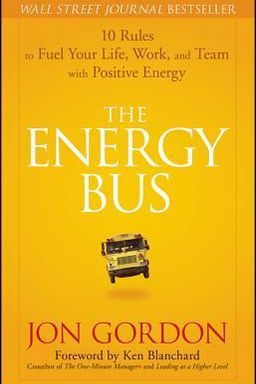
The Energy Bus cover

The Energy Bus

by Jon Gordon

The Energy Bus is your guide to infusing life with positive energy, driving success, and transforming challenges into opportunities. Discover ten actionable rules that will help you eliminate negativity, harness enthusiasm, and foster a supportive team to fuel both personal and professional growth.

Fuel Your Life with Positive Energy

Have you ever felt like life keeps throwing flat tires your way — mornings that start wrong, projects that feel doomed, and relationships that seem stuck? Jon Gordon’s The Energy Bus begins with just that: a flat tire that derails George’s Monday morning and sets him on an unexpected journey of transformation. Gordon argues that every setback, frustration, and challenge can be fuel for growth when you learn to drive your own “bus” with positive energy. He contends that success — in work, leadership, and relationships — isn’t about luck or circumstance, but about the energy and purpose you bring to each mile of your ride.

Through a vivid business fable, Gordon introduces ten simple yet profound rules for “the ride of your life.” Each rule builds upon the idea that energy — emotional, spiritual, and mental — determines your direction. The book invites you to reframe negativity, take control of your choices, and surround yourself with people who lift you up rather than drain you. Joy, the radiant bus driver who guides the protagonist George, embodies Gordon’s message: every person broadcasts energy like a frequency, and you can choose whether yours creates trust, enthusiasm, and joy or breeds stress, fear, and resentment.

Positive Energy as the Ultimate Fuel

In Gordon’s view, positive energy is not “rah-rah” optimism but a tangible force that influences everything you do. Scientific references from sources like the Institute of HeartMath reinforce this idea — proving that emotions and heart energy literally radiate outward and affect the people around you. When George, a struggling middle manager at NRG Company, learns to fuel himself with gratitude and enthusiasm instead of complaint and self-pity, his team’s performance — and his life — transform.

The key, Gordon explains, is responsibility: realizing that you are the driver of your bus. This means choosing your attitude, steering toward your vision, and refusing to allow others’ negativity to hijack your ride. Much like Viktor Frankl in Man’s Search for Meaning, Gordon emphasizes personal agency — even when external circumstances seem uncontrollable. You can’t change every event, but you can change your perception and response, creating dramatically different outcomes.

The Story Behind the Lessons

George’s transformation is both practical and emotional. He starts as an exhausted, cynical man whose marriage, career, and hope are faltering. Meeting Joy and her vibrant bus passengers becomes his turning point. With humor and warmth, Joy teaches him the ten rules — from Fuel Your Ride with Positive Energy to No Energy Vampires Allowed. Along the way, George learns to lead with heart, cultivate enthusiasm, love his passengers (his team and family), and drive with purpose.

These principles reflect Gordon’s own experiences speaking in corporations, schools, and teams. The bus becomes a metaphor for life’s journey where everyone has passengers, challenges, and potholes. The energy you bring determines how smoothly you travel and whether others want to come along. When George infuses his team with positivity rather than fear or criticism, creativity blossoms, morale soars, and even skeptical colleagues transform into allies.

Why It Matters Today

In an era of burnout, cynicism, and constant connectivity, The Energy Bus offers a refreshing antidote. Gordon’s argument is simple but radical: positivity isn’t soft; it’s strategic. Emotional intelligence (as Daniel Goleman also insists) drives 80% of success because it creates trust, engagement, and resilience. Gordon reframes leadership as emotional broadcasting — what leaders radiate from their hearts affects every member of their team. It’s less about managing tasks and more about cultivating contagious enthusiasm and love.

Key Principle

“Your positive energy and vision must be greater than anyone’s and everyone’s negativity.” Joy tells George this is the ultimate rule — one that allows you to transcend setbacks, difficult people, and fear itself. It’s the law of mental physics for success: energy flows where your focus goes.

Across its ten rules, Gordon combines storytelling, spirituality, and behavioral science into a framework for thriving in work and life. It’s about creating your own momentum through gratitude, purpose, enthusiasm, and love. The journey begins with a flat tire — a symbolic wakeup call — and ends with George realizing that lasting success isn’t about controlling everything; it’s about enjoying the ride. By the end, the reader, like George, is ready to take the wheel, fuel up, and lead with joy.


You Are the Driver of Your Bus

Jon Gordon begins with one powerful truth: You’re the driver of your own bus. This rule is the foundation of all the others because it places responsibility and choice squarely in your hands. Life may throw obstacles — flat tires, broken relationships, demanding bosses — but at every moment, you decide how to react, where to go, and what kind of ride you’ll have.

Reclaiming the Wheel

In the story, George initially feels powerless. His car breaks down, his marriage is failing, and his job is hanging by a thread. When Joy tells him he came on her bus for a reason, she means it literally: it’s time for him to take control. Too many people, she says, “feel like they have no say where their bus is going.” Gordon uses statistics to drive the point home — more people die Monday at 9 a.m. than any other time because they’d rather die than go to jobs that drain their spirit. It’s a shocking reminder that surrendering control of your life kills your energy and motivation.

Being the driver means taking ownership of your attitude. You may need advice or support, but the direction is yours alone. Joy coaches George to literally smile — an act that changes his physiology and energy instantly. Every choice of thought or emotion turns the steering wheel of your bus. (Note: Similar to Mel Robbins’s “5-Second Rule,” this idea emphasizes action as a choice that rewires mindset.)

Vision and Direction

When George finally admits he doesn’t know where he’s going, Joy gives him a “children’s book” exercise — a deceptively simple tool to rekindle vision. He writes down his goals for life, work, and relationships. That act of clarity becomes the map for his journey. Gordon reminds us that without a destination, you can’t navigate challenges or measure progress. Whether you want a better marriage, a motivated team, or personal confidence, it starts with articulating your direction.

“First, decide what you want, George. Then you can start creating it. Don’t let the world create you — you create your world.”

Joy’s insistence on self-direction echoes Stephen Covey’s The 7 Habits of Highly Effective People, where personal vision and proactivity define effective living. Once George writes down his vision — for his family’s happiness, health, and career — his mindset shifts from victim to creator.

Why This Rule Transforms Everything

Taking responsibility turns fear into freedom. When you stop blaming circumstances and recognize that it’s your bus, your choices, you reclaim creative power. You can adjust your route instead of waiting for someone else to do it. Gordon’s message is that external control numbs you; self-control revives you. Once George takes the wheel of his thoughts and direction, his energy — and eventually his life — begins to accelerate forward.

By internalizing Rule #1, you learn that every smile, every decision, and every ounce of gratitude becomes steering power. Life’s bumps no longer define your ride — your attitude does. Once you’re in the driver’s seat, the rest of the journey becomes possible.


Fuel Your Ride with Positive Energy

After establishing that you drive your own bus, Gordon’s Rule #3 teaches you how to keep it moving: Fuel your ride with positive energy. Energy, he writes, is the currency of success. It’s what transforms possibility into progress and determines whether your bus stalls or soars. You can either fill your tank with negativity — fear, resentment, complaint — or choose high-octane positivity, fueled by gratitude, faith, purpose, and enthusiasm.

The Formula That Changes Outcomes

Gordon introduces a formula from Jack Canfield’s success principles: E + P = O, meaning Event + Perception = Outcome. You can’t control the events (E) that occur, but your perception (P) determines your outcome (O). When George hears this, he realizes that his flat tire — something he viewed as another curse — was actually a blessing that led him to Joy’s bus. The same applies to every challenge: perception drives reality. This concept mirrors Stoic philosophy (as in Marcus Aurelius’s Meditations), reminding readers that power lies in how we interpret adversity, not in avoiding it.

Feed the Positive Dog

Joy illustrates the lesson with the story of two dogs inside us — one positive and kind, the other negative and angry. They fight constantly, and the winner is whichever you feed more. Gordon calls this an energy law: Where there is a void, negativity fills it. To avoid sludge buildup in your life’s gas tank, you must intentionally cultivate gratitude and optimism each day.

George begins practicing “Thank-You Walks,” counting blessings while he walks to work. This blend of motion and gratitude floods his body with endorphins and reprograms his mindset. His transformation shows that positivity isn’t just emotional — it’s physiological. It changes chemistry, focus, and behavior.

The Daily Discipline of Energy

Joy warns George that one day of positivity isn’t enough. “Positive energy is like muscle,” she says. “The more you use it, the stronger it gets.” Practice repetition — through affirmations, visualization, and gratitude. When negativity strikes — from colleagues, customers, or family — your energy becomes the shield that protects your bus. Gordon’s deeper insight is that positivity requires practice, not circumstance. It’s built through daily habits that focus your attention on love, trust, and opportunity.

(Contextual note: This mirrors Shawn Achor’s The Happiness Advantage, which links daily gratitude and optimism practices to measurable performance increases. Both authors show that positivity isn’t fluffy sentiment — it’s strategic chemistry for success.) George’s journey proves that when you fuel your ride with gratitude and purpose, your life accelerates — not magically, but because you’ve tuned your inner engine to run smoother and stronger.


Invite the Right People on Your Bus

Rule #4 introduces a truth every leader must learn: success requires a positive team. You can drive your bus alone, but it won’t go far without passengers who share your vision and energy. Gordon uses this metaphor to explore collaboration, communication, and team culture. George learns that inviting people onto his bus means sharing his goals openly and inspiring others to join the journey.

Communicate Your Vision Clearly

Joy urges George to articulate a clear vision for his team and product launch. When vision isn’t shared, confusion reigns. She illustrates this through a metaphor from NASA: when one group of airplane designers understood the larger mission, they worked twice as hard and finished twice as fast compared to those who didn’t know what the final design looked like. Vision unites people around purpose — it shows them what their work contributes to.

To help George, Joy’s passenger Janice demonstrates an online tool where leaders can send “e-bus tickets” — literal invitations explaining their vision and direction. George adopts this approach, personally meeting with each team member and asking them to return their tickets by Monday 9 a.m. if they choose to be onboard. The process makes participation voluntary, not imposed. Those who commit bring energy, not resistance.

Focus on Willing Passengers

Joy’s next lesson follows logically: Don’t waste energy on those who don’t get on your bus. George learns this painfully when some colleagues — the “three wolves” — reject his invitation. Instead of obsessing over them, Joy reminds him that energy spent on resistance depletes momentum. Like salespeople who recover quickly from rejection to find new customers, leaders must focus on those who are ready to move forward.

By Monday, George sees who’s onboard. Those choices reflect commitment and culture. Positive teams self-select through energy alignment, and negative ones leave themselves out. Once George stops chasing reluctant passengers, the bus finally begins to move.

(Note: Jim Collins’s Good to Great uses a similar “get the right people on the bus” metaphor, emphasizing that culture and vision depend on alignment first, then execution. Gordon adds the crucial emotional dimension — people join because they feel inspired, not commanded.)


Ban Energy Vampires and Lead with Heart

Every leader faces negativity — colleagues who drain energy, complain, or sabotage morale. In The Energy Bus, Joy calls them Energy Vampires and teaches George how to protect his ride. Rule #6 says: Post a sign that says “No Energy Vampires Allowed” on your bus. This rule is both symbolic and strategic, showing that negativity must be confronted head-on.

Dealing with Negativity

When George’s team begins to crumble under cynicism, Joy helps him understand that negativity is the true enemy — not individual people. “They just represent the negativity that exists in the world,” she says. By depersonalizing conflict, George can act decisively instead of emotionally. He meets with energy-draining employees and gives them clear choices: contribute positively or get off the bus. Though difficult, this step transforms the work culture.

One employee, Larry, chooses to stay and improve. Another, Tom, refuses and gets fired. These actions, while uncomfortable, signal a new standard: positive energy is non-negotiable. George learns that leadership means protecting the team’s spirit even when it’s hard.

Lead with Heart

After removing negativity, George learns to replace fear-based control with compassion and heart. Joy introduces research from HeartMath showing that the heart’s electromagnetic field is 5,000 times stronger than the brain’s — meaning emotions broadcast energy that others feel. When you lead with love, trust, and empathy, your team synchronizes to your frequency. When you lead with fear or anger, they mirror resistance and stress.

Joy reminds George that struggles often break our hearts until they open. Every challenge becomes a chance to rediscover connection and humanity. By shifting from managing to leading with heart, George begins to inspire his team rather than instruct them. His emotional openness becomes contagious.

This blend — boundaries against negativity and authentic emotional leadership — creates cultural balance. Gordon’s insight echoes modern emotional intelligence research: teams thrive not under pressure but under presence. When leaders pulse positive energy through empathy and vision, organizations prosper.


Enthusiasm, Love, and Purpose

The latter rules on Gordon’s list — enthusiasm, love, and purpose — deepen the emotional foundation of success. Joy’s bus becomes a living classroom where George learns how authentic passion, heartfelt connection, and meaningful vision create unstoppable momentum.

Rule #7: Enthusiasm Attracts Passengers

Jack, a business leader and Joy’s former passenger, explains that being a Chief Energy Officer means radiating extraordinary enthusiasm. The word “enthusiasm” comes from the Greek entheos, meaning “inspired” or “filled with the divine.” When you’re genuinely excited about your work, others feel it and want to join. George realizes that enthusiasm once helped him land his first job and his wife’s heart — and reclaiming that spark reignites his leadership.

Joy cautions that real enthusiasm isn’t fake hype. It’s a quiet, magnetic energy. As Walt Whitman said, “We convince by our presence.” When George’s positive energy rises, his team responds, productivity flourishes, and even customers feel drawn in. Research cited by Marty — Daniel Goleman’s studies of emotional intelligence — show that positive corporate cultures always outperform negative ones in revenue and retention.

Rule #8: Love Your Passengers

Love, Joy says, “is the answer.” It might sound soft, but Gordon’s message is bold: the most powerful emotion in business is genuine care. George learns five ways to love his passengers — making time for them, listening with empathy, recognizing their efforts, serving their growth, and bringing out their best. When leaders love people, loyalty and creativity flourish. Joy makes this tangible with a metaphorical golden rock: beneath the dirt on every person lies gold. The leader’s job is to wipe away dust and reveal value.

Rule #9: Drive with Purpose

The ninth rule provides the “ultimate fuel.” Joy sends George a letter explaining that purpose prevents burnout and boredom. She recalls a NASA janitor who said, “I helped put a man on the moon.” Even small jobs become meaningful when tied to a bigger vision. George applies this insight by helping his team craft a shared purpose — not just making lightbulbs, but “sharing the light.” That simple reframing unites them emotionally and spiritually.

Rule #10: Have Fun and Enjoy the Ride

In the final chapter, Joy’s elderly passenger Eddy shares wisdom: “The goal in life is to live young, have fun, and arrive at your final destination as late as possible — with a smile.” Gordon closes with this reminder that success isn’t a destination; it’s the energy of the journey. Gratitude, reflection, and joy make the ride worthwhile.

Across these final lessons, enthusiasm attracts people, love sustains them, purpose fuels them, and joy ensures the trip is unforgettable. The result is not just professional success but deep fulfillment — a bus that carries you toward a life powered by spirit, service, and smiles.

Dig Deeper

Get personalized prompts to apply these lessons to your life and deepen your understanding.

Go Deeper

Get the Full Experience

Download Insight Books for AI-powered reflections, quizzes, and more.