
Idea 1
The Great American Shift: Why Suburbia Is Fading
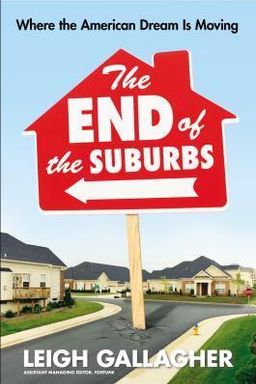
Have you ever noticed how the once-dreamy promise of suburban life—wide lawns, two-car garages, quiet streets—has begun to feel a little hollow? In The End of the Suburbs, Leigh Gallagher argues that the great American ideal of suburban sprawl, which defined our country's identity for over half a century, is being redefined—and in many ways, dismantled. Her central claim is that the suburbs, once the beating heart of the middle class and the symbol of the American Dream, are undergoing a slow but irreversible transformation driven by economic shifts, generational values, and a profound change in how we want to live.
Gallagher contends that suburban decline is not just a byproduct of the 2008 housing crash—it’s the cumulative result of long-term social, cultural, and spatial trends. The forces reshaping our landscape include rising fuel costs, urban revitalization, demographic aging, shrinking families, and a generation that values connection and walkability over isolation and asphalt. Where postwar America once prized space and privacy, today’s citizens are rediscovering density, community, and convenience. In other words, suburbia’s dominance wasn’t overturned by one dramatic bust—it’s being undone by millions of quiet choices.
The American Dream Reimagined
Gallagher opens with the symbolic image of Aron Ralston, the man who cut off his own arm to survive—a metaphor for America’s housing industry after the Great Recession. Just as Ralston faced a life-or-death decision, homebuilders faced their own: adapt or perish. Builders at the 2012 International Home Builders’ Show, once confident icons of suburban expansion, fainted (literally) at the prospect of reinventing their business for a world where sprawling subdivisions and six-bathroom McMansions were no longer viable. Gallagher argues that this cultural convulsion signals the end of suburbia as an unquestioned ideal.
But the core of her book isn’t just about failure—it’s about evolution. The suburban model that propelled post–World War II prosperity was made possible by policy (Federal Housing Administration loans, low interest rates, tax deductions for mortgages) and technology (automobiles and highways). Yet the same structures that enabled that dream now inhibit growth. Our car dependency, energy consumption, and sprawling infrastructure have become liabilities rather than luxuries. Gallagher draws on historians like Kenneth T. Jackson (Crabgrass Frontier) and urbanists like Jane Jacobs (The Death and Life of Great American Cities) to show how suburban design ignored centuries of human wisdom that favored compact, walkable environments linked to economic activity.
The Tipping Point
So what changed? Gallagher identifies 2011 as the inflection year: for the first time in a century, population growth shifted from the suburbs back to cities. Construction permits, home values, and migration data all reflect this reversal. The suburbs aren’t just shrinking—they’re aging and fraying. Poverty and crime, once urban issues, have migrated outward. Meanwhile, cities are booming with young professionals, revitalized neighborhoods, and cultural reinvestment. This inversion is bigger than economics—it’s psychological. The next generation doesn’t dream of picket fences; it dreams of loft apartments, local coffee shops, and walking to work.
Gallagher examines developers like Toll Brothers, who are trading their sprawling suburban estates for sleek urban condo towers in Manhattan and Brooklyn. Even big-box retailers like Walmart and Target are downsizing to fit into dense downtowns. Companies are abandoning corporate campuses for urban offices to attract younger workers. These shifts show that suburbia’s “centerless” model—isolated homes, strip malls, long commutes—is being replaced by integrated, human-scale environments.
Why It Matters
Gallagher’s book isn’t just a history lesson; it’s a blueprint for what comes next. Understanding suburbia’s decline helps explain broader transformations in how Americans connect, consume, and create. As she writes, we’re hitting “peak suburb”—a moment when growth patterns, cultural preferences, and market incentives all converge toward something smaller, closer, and more sustainable. Her argument is neither cynical nor nostalgic; instead, she invites readers to imagine a new version of the American Dream—one less defined by square footage and more by shared space, access, and meaning.
In the chapters ahead, Gallagher traces the long arc of suburban history, from its aristocratic origins to its mass-production heyday; explores the financial and cultural illusions that made it unsustainable; reveals how cars, zoning, and federal policies shaped our geography; and celebrates movements like New Urbanism, which seek to design better, more walkable communities. This isn’t the “death” of the suburbs so much as a radical reinvention—one built on empathy, efficiency, and interconnection. As Gallagher promises, the story has a happy ending: fewer boulders, more bridges.