
Idea 1
The End of the Frontier and the American Reckoning
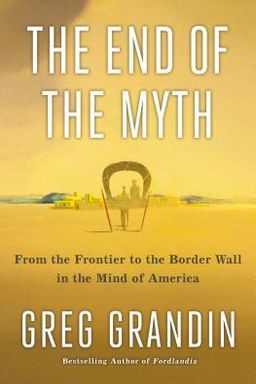
How does a nation built on the promise of endless expansion cope when it runs out of land to conquer? In The End of the Myth, historian Greg Grandin argues that the American frontier—the open horizon that once absorbed violence, inequality, and political tension—has finally closed. For centuries, the idea of the frontier functioned as both a story and a safety valve: it justified expansion, excused inequality, and promised that freedom and opportunity could always be found somewhere new. When that myth collapses, Grandin shows, the energies once directed outward turn inward as resentment, cruelty, and racialized politics.
Grandin traces this evolution from the early republic to the present, following how the notion of limitlessness shaped policy, war, race, and the state itself. You begin with Jefferson, Franklin, and Madison, who sacralized expansion as liberty. You move through wars of conquest and slavery, where expansion became both an economic system and a racial project. Then you reach the 20th century, where Frederick Jackson Turner, FDR, and Ronald Reagan each reinterpret the frontier myth for changing times—until its exhaustion produces new forms of exclusion, culminating in Trump’s wall.
From Myth to Mechanism
In early America, the frontier was not just space—it was policy. Jefferson imagined free land as the foundation of democracy; Franklin and Madison thought its abundance would equalize society. Frederick Jackson Turner later codified that logic in his 1893 “Frontier Thesis,” suggesting that free land made the United States dynamic and democratic. The myth of the frontier thus served a dual purpose: it diagnosed American vigor and prescribed continual motion as medicine for unrest.
But this freedom depends on conquest. The same expansion that created opportunity for settlers also required indigenous removal, slavery, and war. The frontier’s “safety valve” function—its ability to diffuse class tension by exporting conflict—depends on the suffering of others. (Note: Grandin aligns this insight with scholars like Richard Slotkin, who tracked how American identity fused with frontier violence.)
Expansion as Escape—and Illusion
Grandin describes how the safety-valve metaphor justified almost every form of expansion: for workers, it meant land or migration; for planters, new slave territories; for generals, foreign wars. The logic never changed—when social conflict boiled, policymakers looked outward. Yet that expansion was always partial and unequal. Speculators, corporations, and the military defined the terms, turning freedom’s promise into dispossession. As Grandin notes, “the valve was clogged by privilege.”
After 1898, the safety valve shifted overseas: through imperialism in the Philippines, trade wars, and finally the global spread of neoliberalism. Expansion became economic and ideological—a way to export turbulence and sustain faith in American exceptionalism. But each new frontier contained its own collapse.
The Closure and Its Consequences
Vietnam revealed the breaking point. Martin Luther King Jr.’s 1967 “Beyond Vietnam” speech, calling the war a “demonic suction tube” draining justice, marks a moral turning. Violence once directed outward now contaminated domestic politics. The imperial frontier, Grandin argues, “came home.” Veterans returned from Vietnam to a country they barely recognized, often channeling trauma into vigilantism and right-wing movements. Economic stagnation and racial polarization magnified these effects.
By the 1980s, Ronald Reagan revived the myth rhetorically—telling Americans that limits were illusions and that markets themselves were the new frontier. For a time, this renewal disguised the social costs of inequality. Globalization under NAFTA later promised another limitless horizon through trade, but instead produced displacement, wage erosion, and militarized borders. The supposed economic frontier thus created the very crisis—mass migration—that political leaders now treat as a threat to contain.
From Infinite Expansion to Hard Borders
Grandin’s final chapters expose the inversion of the national myth. Instead of expansion without end, Americans now confront literal walls and legal enclosures. Trump’s 2015 campaign slogan “Build the Wall” marks a symbolic reversal: the country that once imagined itself freeing others now defines itself by exclusion. The wall embodies a broader cultural shift—an admission that there is no longer an “elsewhere” to absorb discontent, combined with a refusal to share the burdens that come from living within limits.
Grandin contrasts this wall-bound politics to the social-democratic moment of the New Deal, when Roosevelt recognized that the frontier’s closure demanded a new ethics of mutual care. Today, the U.S. faces the same choice FDR did—whether to meet limits with solidarity or with cruelty. The frontier is gone; only the myth remains, repurposed as both nostalgia and weapon.
Grandin’s central claim
For centuries, America sustained its democracy through expansion. When the frontier ended, violence, inequality, and mythic faith in limitlessness turned inward, producing today’s politics of walls, resentment, and repression.
You can read The End of the Myth as a cautionary genealogy: a chronicle of how the quest for infinite growth built both the U.S. and its undoing. Grandin’s insight is simple but profound—you cannot escape limits forever, and a nation that tries must eventually face what it has long deferred.