
Idea 1
The Decay and Diffusion of Power
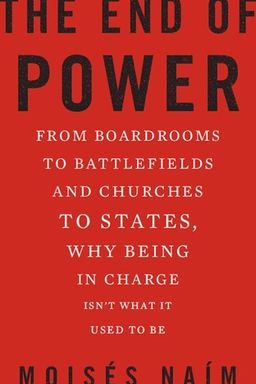
Why does power seem to slip faster from hands that once held it securely? Moisés Naím’s central argument is that power is not disappearing—it is decaying. In the twenty-first century, power is becoming easier to acquire, harder to use effectively, and much easier to lose. You can see it in the boss who struggles to enforce loyalty, in presidents unable to convert mandates into results, and in corporations that rise and fall faster than ever.
The essence of power and its new fragility
Following Robert Dahl’s definition, Naím treats power as the ability to direct or prevent the actions of others. It’s relational—never absolute. The twenty-first century has made those relationships more fluid. Digital transparency, global connectivity, and cultural change mean elites must navigate environments populated by empowered, skeptical, and mobile actors who can veto, leak, protest, or innovate independently.
Chess serves as Naím’s metaphor. Where once 88 Grandmasters ruled from atop their discipline, now over 1,200 exist worldwide. Computers and databases dissolved the barriers that protected mastery. The same applies to politics, commerce, religion, and warfare. Expertise and authority still matter—but duration and dominance have collapsed.
The forces dismantling old hierarchies
Three revolutions drive this decay: More, Mobility, and Mentality. There are more capable people; they move more freely; they think more independently. Rising literacy, income, and health create citizens harder to control. Migration and digital connectivity de-anchor populations from geography. And changing expectations—gender equality, individuality, skepticism—make obedience rare. Together, these revolutions erode barriers that once preserved order and concentrated influence.
Whether in corporations or states, barriers once acted like dams against challengers. As those weaken, new “micropowers” surge forward: insurgents, hackers, NGOs, small political parties, and niche entrepreneurs who exploit agility over scale. The book insists that the decisive advantage now lies not in resources but in adaptability. Big still matters, but only when leveraged through networks and coalition, not through monopolies or command structures.
Consequences across domains
Naím’s narrative stretches across politics, business, diplomacy, religion, warfare, and media. In politics, mandates crumble and coalitions fracture. In business, global competition and rapid technological churn shorten corporate tenure. On the battlefield, insurgents defy armies with improvised devices and viral footage. In diplomacy, ambassadors yield to NGOs and online platforms. In faith, Pentecostals challenge centuries of institutional authority. Across all, the same blueprint repeats: barriers fall, incumbents weaken, newcomers improvise.
Risk and opportunity in the decay
Naím doesn’t glorify this diffusion. Power’s fragmentation invites “vetocracy”—a world where many veto players block action. The multiplication of voices doesn’t always mean better decisions; it can mean paralysis. Yet it also democratizes opportunity. For you as a citizen, entrepreneur, or policymaker, understanding the mechanics of power decay helps you act strategically. Ask: what barriers once protected a dominant actor? How might new mobility, technology, or mentality changes undercut them? And how can you form coalitions or networks that exploit the openings left behind?
Core message
Power’s return has diminished. You can still accumulate it—but its shelf life shortens, its exercise faces constraints, and its loss accelerates. To thrive, learn to function not as a titan defending fortresses but as a connector exploiting new openings.
(Note: Naím’s thesis echoes Alvin Toffler’s “Future Shock” and Francis Fukuyama’s “The End of History” era analysis, but instead of predicting stability, he describes continuous turbulence—a permanent power marketplace where incumbents must fight for attention as much as authority.)