
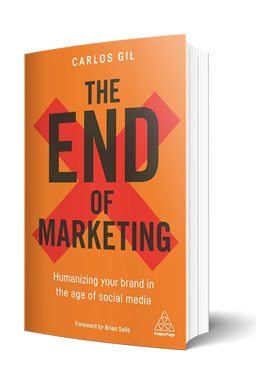
The End of Marketing cover

The End of Marketing

by Carlos Gil

The End of Marketing by Carlos Gil reveals how brands can thrive in the social media age by humanizing their presence and fostering authentic connections. Discover powerful strategies to engage audiences and transform your marketing approach for genuine growth.

Marketing Is Dead, Long Live Human Connection

When was the last time you bought something because of an ad you saw online? If you’re being honest, probably never. But you’ve likely purchased something your favorite YouTuber recommended, joined in on a viral TikTok challenge, or supported a cause promoted by a celebrity. In The End of Marketing: Humanizing Your Brand in the Age of Social Media, award-winning marketer Carlos Gil argues that traditional marketing has lost its power. The age of broadcast messaging is over; now, relationships, authenticity, and community drive results.

Gil’s central claim is bold yet timely: marketing as we know it is dead. In its place, brands must become human—real, emotional, and socially connected. Instead of shouting from digital billboards, companies have to engage in conversation, tell stories, and turn their employees and customers into advocates. The book positions this shift not as a choice but as a survival strategy for brands in an attention-starved, AI-driven world.

Why Traditional Marketing Fell Apart

Once upon a time, TV commercials, print ads, and celebrity endorsements were enough to build brand awareness. Today, those tactics feel tone-deaf. Audiences swipe, scroll, and skip anything that smells of hard selling. Gil points out that while pandemic lockdowns stopped traditional commerce in its tracks, they reignited a deeper human need—to connect. Consumers still buy things, but they are more responsive to empathy than to a discount code. “People don’t want to be sold to,” Gil writes. “They want to be part of something bigger.”

From Brands to People: The Humanization Imperative

The book’s thesis revolves around the idea that people, not logos, are the new marketing department. Whether it’s Nike championing Colin Kaepernick’s social stance, Ben & Jerry’s speaking out on racial justice, or Wendy’s trolling McDonald’s with wit on Twitter, the brands that win are the ones that act—even misstep—like humans. Gil’s mantra, “Be real, not robotic,” urges marketers to abandon corporate polish in favor of authenticity. He demonstrates this shift by examining how influencers have eclipsed corporations in credibility. What traditional marketers called “word-of-mouth” is now content sharing, remixed memes, and viral TikToks—all of it human-driven.

The Power of Attention and Community

In the digital “ocean” of infinite content, attention is the new currency. Gil emphasizes that followers don’t matter if no one listens; what counts is engagement—comments, shares, real conversation. Social networks are noisy marketplaces, but attention can still be earned by telling captivating stories and interacting directly. He compares modern marketing to dating apps: people swipe until something authentic catches their eye. Just as attraction grows through consistent effort, trust between a brand and audience builds through repeated, genuine interactions.

Marketing’s New Playbook: Community Over Campaign

Gil proposes a new model in which marketing resembles community building more than broadcasting. Brands must stop chasing vanity metrics and start rewarding depth. The “super fan” matters more than millions of passive likes. Coca-Cola, Whole Foods, or American Airlines need digital faces—employees or advocates who personify the brand’s values. Gil calls this “old-school rules with new-school tools”: relationships remain the foundation, but the interactions are digital. Facebook becomes the “hotel bar,” Twitter the “golf course.” Social media is where modern business is done.

Why This Matters Now

Gil’s argument couldn’t be more urgent. In an era of distrust, cancel culture, and algorithmic overload, the brands that thrive will be those that whisper when others shout, that speak to hearts instead of feeds. AI and bots may automate replies, but they can’t emulate empathy. By embracing humanity—through stories, humor, and dialogue—companies not only survive but lead. As Gil says, “Marketing is manipulation, but connection is motivation.”

Through a mix of personal narrative, tactical guidance, and case studies—from DJ Khaled’s Snapchat empire to Nike’s activism—The End of Marketing reframes the profession. It’s not about algorithms or ad budgets. It’s about people. And if brands evolve accordingly, they’ll discover that marketing isn’t truly dead—it’s finally alive with human emotion.


Everyone Is an Influencer—and a Competitor

Gil opens with a startling revelation: the playing field of marketing has flattened. A teenager on TikTok can influence millions more effectively than a corporation with a multimillion-dollar ad budget. In the social age, everyone is both an influencer and a competitor. The result? A massive redistribution of power—from brands to individuals.

How the Balance of Power Shifted

Pre-social media, corporations owned the megaphone. Ads on TV, print, and radio dictated public attention. Now, your neighbor’s Instagram story has more credibility than your local brand’s press release. As Gil recounts, viral movements like the Fyre Festival fiasco and the r/WallStreetBets “GameStop to the moon” campaign illustrate how digital tribes can mobilize overnight. A collective of users can elevate—or annihilate—a brand within hours. These aren’t marketing campaigns; they’re psychological waves powered by FOMO, trust, and emotion.

Influence Is Human, Not Hierarchical

Gil warns marketers not to idolize influencers for their follower counts but to understand why they influence. People follow creators who make them feel seen. A small-business owner who shares behind-the-scenes frustrations might connect more deeply than an influencer flaunting success. This dynamic has changed the marketing game forever. The line between “customer,” “employee,” and “influencer” is blurring. Your customers talk to more people than your PR department ever could—so empowering them to tell your story authentically multiplies your reach.

The 0.1 Percent Rule

Gil illustrates this concept with math that many CMOs resist: even for a major brand with tens of millions of followers, only about 0.1 percent truly care. That sliver of “super fans” is your gold mine. Nurture them with conversation, acknowledgment, and gratitude. A small circle of passionate advocates can outmaneuver a giant brand voice. (Seth Godin’s Tribes offers a similar view—that deeply engaged micro-communities drive movements more powerfully than mass audiences.)

Old-School Rules, New-School Tools

In the past, relationships were built over golf and cocktails. Today, relationships bloom in DMs, retweets, and LinkedIn comments. Gil encourages you to stop viewing social media as a broadcast platform and treat it as a relationship engine. Just as one handshake could lead to a business deal, one authentic reply can create a lifelong advocate. He calls this “less selling, more listening.”

The takeaway is clarifying: you cannot outspend your competition anymore—you can only outconnect them. When every individual holds the same digital microphone, your advantage lies not in volume but in sincerity. Being human is now your fiercest business weapon.


Attention Is the New Currency

If you’re stranded in what Gil calls the “noisy digital ocean,” it’s not followers you need—it’s attention. In the distraction economy, attention is the commodity. He argues that marketers obsess over metrics that don’t matter: likes, impressions, clicks. What matters is whether someone stops scrolling long enough to care.

The Attention Economy

Gil compares modern brands to Tom Hanks’s character in Cast Away, talking to a volleyball named Wilson—posting endlessly but hearing nothing back. With billions of posts circulating daily, most companies are invisible. Algorithms favor engagement, not existence. That’s why real-time interaction—not scheduled posts—determines survival. Gil’s equation is simple but profound: engagement is oxygen; without it, your message suffocates.

Be Where Your Customers Are

One of Gil’s most practical pieces of advice is to focus where your customers live digitally. Don’t chase every platform. A B2B firm belongs on LinkedIn, not Snapchat. A beauty brand thrives on Instagram and TikTok, not Twitter. By concentrating your social energy where your audience interacts, you compete for fewer eyeballs but earn stronger connections. It’s a strategy of relevance, not ubiquity.

Social Media Is About Being Social

Gil repeatedly hammers this point: you can’t call it social media if you’re not social. Too many brands talk at audiences, not with them. Instead, comment back, DM followers, and jump into trending conversations as a participant, not an advertiser. When British Gas taught homeowners DIY fixes during lockdown or Wendy’s playfully roasted fast-food competitors, they weren’t pushing product—they were showing personality. That’s what grabs attention and keeps it.

Engage Like a Human, Not an Algorithm

To hack attention, Gil recommends disruptive authenticity: memes, questions, humor, even vulnerability. Posts that make people feel something spark replies; replies feed the algorithm; conversation fuels visibility. It’s less about perfection, more about presence. As he puts it, “Facebook is the hotel lobby bar, and Twitter is the golf course—they’re just digital versions of the same old relationship spaces.”

In short, attention is earned through human energy, not automation. Every like means someone chose you over a million distractions. Treat that attention like gold, because in this economy, it’s the only currency that matters.


The Savage Brand: Authenticity Wins

What does professional wrestling have to do with marketing? Everything, according to Gil. Drawing on his childhood obsession with wrestlers like Randy “Macho Man” Savage, Gil argues that successful brands need what wrestling calls a gimmick—a larger-than-life personality that captures attention. “Be savage AF,” he urges, meaning unapologetically authentic, entertaining, and bold.

Entertainment as Strategy

The secret sauce of influencers and celebrities is entertainment. DJ Khaled doesn’t just sell music; he sells moments. His catchphrases (“Major key!” “They don’t want you to win!”) became cultural mantras because they were genuine extensions of his personality. Corporate brands, by contrast, sanitize everything and wonder why no one engages. Gil says, “Your content should read less like a billboard and more like a text to a friend.” The more relatable you sound, the more fans treat you like one of their own.

Listen Like a Savage

Being “savage” isn’t about aggression; it’s about keen observation. Set up search streams for mentions of your brand, competitors, and industry phrases. Listen for complaints about rivals—that’s your cue to engage. When food chains like Wendy’s or Tesco Mobile clap back at trolls with wit, they turn negativity into virality. If your competitors’ customers are frustrated, swoop in helpfully. It’s not ruthless; it’s smart empathy. Social media rewards quick, human responses more than polished ads.

Personality Beats Perfection

In wrestling, over-the-top personas made stars shine. In social marketing, personality does too. Gil celebrates brands that embrace humor or candor—even self-deprecation. McDonald’s tweeting its own “copy-paste” error humanized it more than a million-dollar commercial would. Audiences don’t expect flawlessness; they crave personality. So whether you’re playful like Taco Bell or dramatic like Nike, pick your “gimmick” and own it.

Gil sums it up memorably: “It’s better to be hateable than forgettable.” The goal isn’t bland approval; it’s emotional connection. The savage brand dares to sound human, even imperfect, because that’s what earns fans in a world drowning in artificial content.


The Tinder Effect: Marketing as Digital Courtship

Swiping right isn’t just for dating—it’s modern marketing. Gil likens social selling to matchmaking: in both cases, connection beats coercion. The brands that thrive understand that customers don’t want to be “sold to”; they want to be wooed. Every post, reply, and DM is a flirtation that builds trust.

Storytelling as Seduction

To catch and keep your audience, you need a narrative arc. Gil calls this digital “storyboarding.” Every story should have a clear beginning, middle, and end, just like a short film. Use questions to invite dialogue (“What’s your favorite emoji?”) and captions that hook quickly (“Watch until the end!”). The first three seconds of your video are make-or-break—the equivalent of a first impression on a dating app.

Authenticity Over Aesthetics

Forget stock photography. Real-life, user-generated images outperform perfect shots. Why? Because real is sexy. When customers or employees share candid moments, their credibility rubs off on your brand. Gil points to companies like American Airlines and REI that built intimacy by letting real staff interact with followers. Social proof from humans beats perfect branding every time.

Engagement Is the New Attraction

Like dating, relationships require ongoing effort. Respond to comments, send DMs, surprise loyal fans. Each small action compounds into emotional loyalty. Gil proposes a relationship funnel: Attention → Engagement → Advocacy → Revenue. Selling, he insists, is just the natural outcome of consistent connection. “You can’t post once a day and walk away.” Successful brands treat social engagement the way romantic partners treat communication—with care and curiosity.

In essence, Gil’s “Tinder principle” reframes marketing as empathy in motion. When customers feel seen, they don’t just buy; they commit. Swipe right on relationships, not sales.


Growth Hacking Without Faking It

Gil draws a sharp line between cheating and growth hacking. Buying followers or engagement may inflate numbers, but fake clout doesn’t convert to cash. Growth hacking, however, is strategic experimentation—testing creative ways to reach real humans faster.

Cheating Doesn’t Build Trust

Many of today’s so-called influencers chase vanity metrics. They buy followers, join “like pods,” and hope brands won’t notice the hollowness behind the numbers. Gil dismantles this illusion with candor: “You can’t buy influence. You have to earn it.” He recounts his own experiments with automation—bots liking posts overnight—and concludes that no quick hack replaces sincere engagement. Trust, not trickery, scales communities.

From Hustle to Hack

Gil’s favorite example comes from his pre-author days running JobsDirectUSA. With zero budget, he leveraged LinkedIn Groups, cold DMs, and email lists to build a 100,000-member community during the recession. His insight was simple but powerful: hack systems, not morals. Use available tools creatively—automate distribution, but personalize the message. (Comparable strategies appear in Ryan Holiday’s Growth Hacker Marketing, though Gil’s tone is grittier and grounded in social commerce.)

Modern Growth Hacks

  • Facebook Groups: create genuine communities of customers or fans instead of relying solely on brand pages.
  • Native Blogging: publish directly on LinkedIn or Medium to boost SEO without building a new website.
  • Watch Parties and Lives: host videos that feel local, not corporate.
  • Automation with Care: bots can schedule or clean data—but never replace conversation.

Gil’s core rule remains: every hack must ultimately make your brand more human, not mechanical. If your method compromises authenticity, it’s no longer a hack—it’s hypocrisy.


The Celebrity Blueprint for Brands

What do DJ Khaled, Kim Kardashian, and Neil deGrasse Tyson have in common? They’ve mastered the art of turning personal lives into marketing platforms. Gil’s 'celebrity effect' chapter explores how brands can adopt this playbook without millions of dollars or paparazzi.

Be Real or Be Irrelevant

Authenticity, not aesthetics, makes stars. DJ Khaled’s Snapchat success came from sharing his breakfast, workouts, and little mantras, not ads. Kim Kardashian’s fans feel they “know” her because she shows both glamour and chaos. Brands hide behind polish and lose relatability. Gil advises: lift the corporate veil—show the messy office, celebrate the intern, reveal the bloopers. “People follow people, not marketing departments.”

Ambassadors, Not Influencers

Gil argues that one-off influencer deals are modern snake oil. They buy attention but not loyalty. Instead, partner long-term with authentic advocates—employees, customers, or creators who genuinely care. When Hertz hired Gil to document road trips for small business owners, the content worked because it looked lived-in, not scripted. That’s ambassadorship: influence backed by trust.

Ten Steps to Storytelling Stardom

Summing up celebrity storytelling, Gil offers a ten-step guide: define purpose, keep it entertaining or educational, identify storytellers, stay concise, cross-promote, invite community sharing, and end with a subtle call to action. Every post should feel like a peek behind the curtain. His advice mirrors Simon Sinek’s principle—start with WHY. When people understand your reason for creating, they’ll follow your journey, not just your product.

Ultimately, Gil wants brands to become relatable stars in their own right. You don’t need Kim Kardashian’s millions; you need her vulnerability. You don’t need DJ Khaled’s beats; you need his joy. The formula is replicable: be seen, be social, be sincere.


Employees and Customers as Brand Storytellers

If people trust people more than corporations, then your employees and customers are your most powerful media channel. Gil’s eighth chapter shows how to turn these insiders into brand storytellers—a strategy that scales authenticity without ads.

Humanizing from the Inside Out

Gil argues that true humanization starts at home. Employees already post about where they work; instead of policing them, empower them. At BMC Software, his “BeSocial” program gave staff pre-written posts and easy tools for sharing company news, creating 1,000+ global advocates. The result: more reach and more pride. “Give your employees tools, not rules,” he insists. Encouragement feels trustful; control feels robotic.

Why It Works

  • People believe employees more than CEOs—they’re peers, not pitches.
  • Employees extend your digital presence far beyond branded accounts.
  • Empowered teams build company culture as they build community.

Advocacy Meets Storytelling

Employee advocates aren’t just megaphones; they’re storytellers. Gil spotlights creators like Shaun Ayala, a Best Buy marketer who became a Snapchat artist. By letting staff like Ayala take over social feeds, brands gain creative energy and relatability. Starbucks baristas, Walmart clerks, and Nike trainers all have stories more compelling than a press release. Turn them loose, and each one becomes a mini-influencer inside your ecosystem.

This strategy feeds Gil’s thesis perfectly: authenticity can’t be outsourced. When employees and customers become narrators of their shared experience, marketing transforms from persuasion to participation.


Humans vs. Machines: The Future of Marketing

In one of his most sobering chapters, Gil warns that automation is coming for marketing jobs. With artificial intelligence, predictive analytics, and machine learning, many traditional tasks—from customer service chats to copy creation—can already be done by algorithms. His response, however, is hopeful: humanity is our last competitive advantage.

The Machines Are Learning

AI now writes ad copy, bots answer customers, and predictive analytics knows when you’ll reorder Tide Pods. Companies like Marriott and Domino’s have experimented with chatbots that book rooms or take pizza orders—often with mixed results. When the bot fails to understand a simple “hello,” it highlights the gap machines can’t close: empathy. “You can automate tasks,” Gil writes, “but you can’t automate relationships.”

Friend or Foe?

Gil doesn’t demonize technology. Instead, he advocates collaboration over replacement. AI can free marketers from repetitive chores, allowing them to focus on storytelling and connection. The key, he says, is to pair data intelligence with emotional intelligence. Use bots for speed; use humans for soul. (In a similar spirit, Brian Solis—who writes the afterword—calls this the dawn of “human-centered innovation.”)

The Human Edge

Gil proposes three practices to future-proof your relevance: personalize interactions, send video or voice messages instead of templates, and spotlight real employees in campaigns. Technology can amplify your voice, but only authenticity gives it resonance. As AI floods feeds with robotic content, audiences will crave what machines can’t replicate—emotion, humor, empathy, and imperfection.

Ultimately, Gil reframes the “AI apocalypse” as an invitation. Marketing isn’t ending because of machines—it’s evolving back to its original purpose: connecting human to human. In the face of algorithms, being real is revolutionary.


Post-Pandemic Marketing and the Power of Empathy

The book’s updated 2022 edition dives deeply into the aftermath of COVID-19 and the global reckoning with social justice. Gil shows how the crisis reaffirmed one timeless truth: in isolation, people didn’t crave ads—they craved empathy. This chapter serves as both a reflection and a roadmap for brands in a fractured world.

Empathy Is the New Strategy

During the pandemic, online communities became lifelines. Brands that adapted to this mood—like British Gas teaching homeowners how to fix things, or Schick hiring furloughed barbers for virtual lessons—illustrated that caring sells better than shouting. Gil’s rule: Sell less, engage more. Every message must answer, “How are we helping people right now?”

From Campaigns to Conversations

2020 also awakened brands to diversity and inclusion. Companies like Ben & Jerry’s, Nike, and Glossier spoke up on racial justice, while others fumbled, as when Burger King’s misguided “Women belong in the kitchen” tweet backfired. Gil argues that tone-deaf messaging is worse than silence. Empathy requires listening—not performance. Today’s audiences fact-check brand values instantly; they demand purpose, not posturing.

Community Is the Future of Commerce

Gil offers five post-pandemic pillars: lead with empathy, be honest, humanize your tone, personalize your channels, and cultivate community. Engagement isn’t just a metric—it’s mutual support. Initiatives like Verizon’s #PayItForwardLIVE concerts and Miller High Life’s doorstep weddings showed how brands can uplift rather than exploit. “Marketing didn’t stop in the pandemic,” Gil concludes, “it rediscovered its humanity.”

If marketing died decades ago, the pandemic helped write its eulogy—and also sparked its rebirth. The end of marketing, Carlos Gil reveals, was never about endings. It’s about beginning again—as people first.

Dig Deeper

Get personalized prompts to apply these lessons to your life and deepen your understanding.

Go Deeper

Get the Full Experience

Download Insight Books for AI-powered reflections, quizzes, and more.