
Idea 1
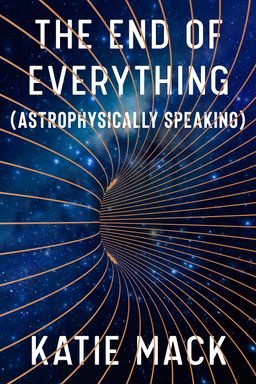
The End of Everything: How the Universe and Our Meaning Will Vanish
What if the universe itself had an expiration date? In The End of Everything (Astrophysically Speaking), theoretical astrophysicist Katie Mack invites you to peer into the abyss of cosmic finality—and somehow, find joy in it. She argues that understanding how the universe will end is not just a scientific pursuit; it's a deeply human inquiry into meaning, existence, and our fleeting place in a vast and indifferent cosmos. Mack contends that when you fully grasp the end of the universe—from fiery collapse to eternal cold—life itself takes on a sharper, more luminous significance.
Cosmic Eschatology: Science Meets Philosophy
Eschatology—the study of the end of all things—was once the territory of prophets and poets. Mack reclaims it for science. She balances scientific precision with existential wonder, exploring how the universe may die and what those endings reveal about time, matter, and value. Like a physicist-philosopher hybrid, she connects cosmological models to human reflections about death and purpose, asking: If everything ends, what does it mean to live now?
Through this lens, Mack builds the bridge between science’s quantitative truths and human qualitative meaning. If philosophers like Friedrich Nietzsche and poets like Robert Frost have long debated how the world ends, Mack expands their conversation with equations, dark energy, and vacuum bubbles. The result is both cosmic and intimate—a mix of humor, awe, and quiet existential dread.
The Five Possible Deaths of the Universe
Mack organizes the book around five scientifically plausible apocalyptic scenarios:
- The Big Crunch: The universe’s expansion reverses into a catastrophic collapse.
- Heat Death: Space stretches endlessly until everything cools and decays.
- Big Rip: Dark energy grows unstable, tearing apart galaxies, atoms, and even space itself.
- Vacuum Decay: Reality’s underlying quantum field changes abruptly, destroying the laws of physics.
- Cosmic Bounce: The universe collapses and re-expands, beginning an endless cycle of rebirths.
Each scenario serves both as scientific explanation and existential parable. The Big Crunch warns of unavoidable collapse, the Heat Death of entropy’s tyranny, the Big Rip of unchecked expansion, the Vacuum Decay of quantum fragility, and the Bounce of possible renewal.
Science as a Mirror for Human Existence
Mack draws personal meaning from these cosmic fates. Her humor balances the horror: she can quantify a universe evaporating into nothing yet see beauty in it. When you truly understand how insignificant our species is in deep time, she argues, you may paradoxically feel more alive. Her writing evokes the “overview effect” reported by astronauts—the sudden understanding of Earth’s fragility and unity when seen from space. Thinking cosmically is a way to transcend the trivial; to find hope even in annihilation.
Why It Matters
Why does contemplating the universe’s end matter to you? Because it redefines meaning itself. Mack’s central thesis is that knowing everything will end gives our lives context. Just as knowing you will die makes time precious, knowing the cosmos will vanish makes existence all the more vivid. Her book is not a warning—it’s an invitation to awe, humility, and wonder in the face of ultimate extinction.
Key idea
“Acknowledging an ultimate end gives us context, meaning, even hope, and allows us, paradoxically, to live more fully in the moment.” —Katie Mack
Across chapters, Mack combines rock-solid physics (Einstein’s equations, Higgs fields, dark energy) with poetic reflection, guiding you from the Big Bang’s spark to the abyss of entropy. The universe, she reminds us, will definitely end—but within that inevitability lies a profound call to curiosity, creativity, and compassion. To understand our end is to better cherish our now.