
Idea 1
Designing Organizations Where People Want to Work
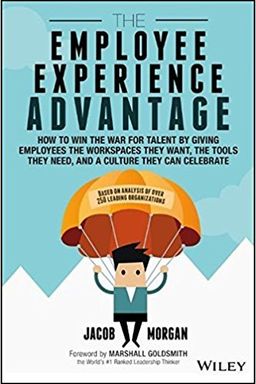
Have you ever wondered why some companies feel energizing, even magical, while others drain every ounce of creativity the moment you walk through the door? In The Employee Experience Advantage, futurist Jacob Morgan argues that the future of work isn’t about perks, ping-pong tables, or free snacks—it’s about intentionally designing organizations where people actually want, not need, to show up to work. His central claim is bold: improving employee engagement alone is not enough. Engagement is the short-term adrenaline shot; employee experience is the long-term redesign of the organization’s “engine.”
Morgan draws a compelling parallel between human life and organizational design, asking why society invests so much in memorable personal experiences but so little in workplace ones. His research—spanning 252 companies and interviews with over 150 executives—reveals that excellent employee experiences emerge from three integrated environments: culture, technology, and physical space. These dimensions aren’t separate boxes to check; they amplify one another, producing what Morgan calls Experiential Organizations: companies that outperform competitors in profit, innovation, and employee happiness.
From Utility to Experience: A Historical Shift
Morgan charts the evolution of work from simple utility—offering employees only the bare tools to perform—to productivity optimization epitomized by Frederick Winslow Taylor’s stopwatch management, and then to the engagement era, where organizations sought to motivate rather than merely instruct. Today, we stand at the dawn of the experience era, demanding that companies move beyond short-term mood boosters to systemic redesign. Engagement asks, “How do we make employees happier?” Experience asks, “How do we design the organization so its people can thrive?”
This mindset requires rejecting the idea that employees are cogs in a corporate machine. Instead, it treats them as co-creators of workplace reality—a shift Morgan compares to moving from The Truman Show-style control to genuine collaboration. The organization’s goal becomes crafting the overlap between what employees expect and how the company designs to meet those expectations.
The Foundation: A Purpose Beyond Profit
Every great employee experience, Morgan argues, begins with a Reason for Being: a purpose that connects the organization’s impact to the world. Traditional mission statements focus on market share and shareholder value. A real Reason for Being transcends business—it’s moral, aspirational, and unattainable enough to rally people around continuous growth. Airbnb’s “Belong Anywhere” or Google’s “To organize the world’s information and make it universally accessible and useful” exemplify this thinking. Salesforce’s “1-1-1 model,” pledging 1% of technology, people, and resources to community improvement, reflects Morgan’s belief that when companies embed philanthropy into their core structure, employees align work with meaning.
Without this moral anchor, investments in culture and technology are superficial. People want to join movements, not machines. The Reason for Being becomes the umbrella guiding all initiatives beneath it—the physical layout of the office, the technologies employees use, and the behaviors that define culture.
The Experiential Organization: Beyond Engagement
Only 6% of the organizations Morgan analyzed qualified as true Experiential Organizations. These leaders—Facebook, Google, LinkedIn, Airbnb, Microsoft, Cisco, Accenture, and others—excel simultaneously in cultural, technological, and physical domains. Their workplaces are not random collections of perks but finely tuned ecosystems built on trust, flexibility, and purpose. Comparing them to less experiential companies reveals measurable business advantages: 4.4× higher profit, 2.9× more revenue per employee, and drastically lower turnover. The message is clear—employee experience pays off in human and financial capital.
Yet Morgan warns: while improving engagement metrics might look good on paper, reinventing experience demands courage. It requires re-engineering outdated corporate systems designed for obedience and control. He encourages leaders to treat their organizations like laboratories rather than factories—testing, iterating, and learning from employees themselves (a point reminiscent of Daniel Kahneman’s System 2 thinking: slow, deliberate, purposeful design instead of instinctive box-checking.)
Why This Matters to You
If you’ve ever dreaded going to work, questioned your sense of purpose at your job, or struggled to balance ambition and well-being, Morgan wants you to see that your workplace experience isn’t just personal—it’s systemic. The book’s insights arm executives, managers, and employees alike with a playbook: create environments that respect people’s full humanity. Whether you lead a small start-up or a multinational giant, the same question applies—are you designing a place where people want to show up, or one where they merely need to?
In the chapters ahead, you’ll discover how employee experience emerges from three intertwined environments, the measurable variables that shape them, and the methods luminary organizations use to build unbeatable cultures. You’ll explore the exponential logic of combining technology, culture, and space; how purpose anchors it all; and how feedback loops, transparency, and people analytics keep the cycle alive. By the end, you’ll see that treating people well isn’t just ethical—it’s the smartest business strategy of the 21st century.