
Idea 1
Mind, Mathematics, and the Limits of Computation
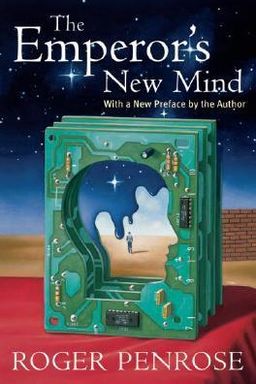
Can the human mind be reduced to computation? In this book, Roger Penrose argues that while machines and algorithms can perform extraordinary feats, genuine understanding, consciousness, and mathematical insight exceed any purely algorithmic process. His central claim is that the mind operates partly through non‑computable processes, possibly rooted in new physical laws linking quantum mechanics, gravity, and the structure of reality.
To support this thesis, Penrose weaves together mathematics, logic, physics, and neuroscience. He begins with Alan Turing’s framework for defining computation and moves through Gödel’s incompleteness theorem to show that formal systems—and, by extension, all algorithms—contain intrinsic limits. He then broadens the inquiry to the structure of physical law, exploring how determinism, computability, and quantum mechanics converge around the mystery of consciousness.
The architecture of thought and computation
Penrose’s journey begins where computer science began: Turing’s machines and the operational test for intelligence. He notes that computational systems can simulate conversation, solve equations, and mimic reasoning, but mimicry is not understanding. The Turing test measures external performance; it does not penetrate inner awareness. Searle’s Chinese Room amplifies this gap, showing how symbol manipulation can appear meaningful while lacking genuine comprehension. Penrose’s focus, however, goes deeper: even perfect symbol manipulation cannot capture mathematical insight itself.
Mathematics as a window into non‑algorithmic knowing
Mathematics, for Penrose, offers the purest test case for the mind’s powers. Gödel’s incompleteness theorem reveals that mechanical formal systems inevitably leave out truths that the human mathematician can see to be true. When you comprehend Gödel’s self-referential sentence (‘This statement is not provable’), you are exercising an intuitive, reflective capacity no program can match. The same holds for recognizing patterns like the Mandelbrot set or appreciating the conceptual beauty of non‑Euclidean geometry—these feel discovered, not invented. They reflect a Platonic realm of truths that minds access but machines only calculate.
Physics and the question of mind
Having established that brains are physical systems, Penrose asks whether current physical law—classical or quantum—can support non‑algorithmic activity. He surveys the hierarchy of theories: classical mechanics (Newton, Hamilton, Liouville), field theory (Maxwell), relativity (Einstein), and quantum mechanics. Each shows increasing subtlety about determinism, probability, and information. Yet no current framework explains consciousness or the subjective unity of experience.
Crucially, deterministic systems can still be non‑computable. Turing and later logicians proved that some predictions, even in rule‑bound universes, require uncomputable information. In parallel, physical models like the Fredkin–Toffoli billiard machine or Pour‑El and Richards’s non‑computable wave equation underline that predictable laws can yield uncomputable outcomes. Penrose uses these examples to show that physics allows—but does not yet harness—such non‑algorithmicity.
From the cosmos to the neuron
Penrose connects cosmology and brain science through entropy and time’s arrow. The universe began with an extraordinarily low‑entropy configuration described by his Weyl Curvature Hypothesis. That special geometric condition (Weyl = 0 near the big bang) endowed the cosmos with directionality—the same asymmetry you find in thermodynamics and perhaps in consciousness itself. In both, irreversible processes mark the transition from potential to actual, from quantum superposition to definiteness.
The same logic underpins his proposal for quantum state‑vector reduction (the R process), where wavefunction collapse is not merely perceived but physically real, triggered by gravity when alternative mass‑energy distributions differ by about one graviton. This objective reduction, he suggests, might occur inside neurons—perhaps even at the level of microtubules or synaptic spine rearrangements—linking brain dynamics to quantum gravitational processes.
The philosophical synthesis
All strands converge on one proposal: the mind bridges three realms—the Platonic (mathematical truth), the physical (laws of nature), and the mental (subjective awareness). None can be reduced to the others, but each interacts with the rest. Mathematical truth guides physical theory; physical structures support mental states; and minds discover mathematics. Computation threads through all three but does not exhaust them. Thus, true understanding—and perhaps consciousness itself—depends on a non‑algorithmic process woven into the fabric of the universe.
Key takeaway
You finish the book seeing that limits to computation mirror limits to mechanistic explanations of mind. Penrose invites you to look beyond algorithms toward new physics—perhaps quantum‑gravitational—to understand thought, creativity, and consciousness as physical yet non‑computable manifestations of the universe’s deep order.