
Idea 1
What Nature Teaches Us About Living Well
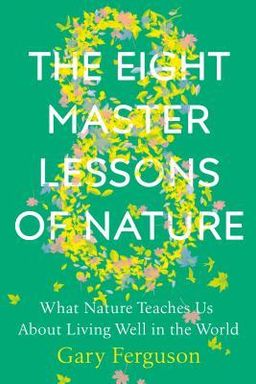
What if the answers to how to live well, think clearly, and heal the planet were already written into the living world itself? In The Eight Master Lessons of Nature, Gary Ferguson invites you to look again at nature—not as a scenic backdrop or resource to be managed, but as an ancient teacher. Drawing on science, myth, and personal narrative from decades in the wilderness, Ferguson argues that nature offers eight timeless lessons that can help us mend our lives and our relationship with the Earth.
Ferguson’s central claim is both humbling and empowering: humans are not separate from nature; we are nature. Every insight about the natural world—connection, diversity, resilience, balance—mirrors what we need to thrive as individuals and as a society. But to learn from these lessons, we must shed our illusion of control and rediscover awe, interdependence, and belonging.
Relearning the Language of the Earth
The book begins with a “coming home” story. Ferguson remembers capturing lightning bugs as a child and feeling joined to something vast and alive—the same emotion he finds later hiking Yellowstone or the Arctic tundra. That sense of unity fades in modern life as we are taught to see nature as “out there” and ourselves as observers or masters. Ferguson calls this our cultural amnesia, a forgetting of the billions of years of intelligence in our cells.
Nature’s lessons unfold through eight themes—mystery, connection, diversity, balance, kinship, energy, resilience, and elder wisdom—each reinforced by science and Indigenous knowledge. Through them, Ferguson shows that to be fully human is to participate in the same creative, adaptive forces that shape forests and rivers.
Mending a Broken Relationship
Over centuries, Western thought separated humans from the natural world. From ancient Greece’s celebration of reason and objectivity to the mechanistic worldview of René Descartes and Isaac Newton, nature became a clock to dissect and control. This narrow rationalism, Ferguson suggests, has disconnected us from emotional, feminine, and relational modes of knowing. The cost is ecological crisis—and personal alienation. Healing begins by recognizing that science and spirituality need not be opposites; both can honor mystery, connection, and reciprocity.
Much like Robin Wall Kimmerer in Braiding Sweetgrass, Ferguson blends modern biology with Indigenous insight. He describes traditional scientists joining with Native elders, such as Hopi geneticist Frank Dukepoo, to form a richer, relational science that sees the world as process rather than product. “By changing what we ask,” Ferguson writes, “we change the world.”
The Eight Lessons: Nature’s Master Curriculum
Each lesson illuminates a facet of life mirrored in the environment:
- Mystery: Real wisdom begins when we embrace what we cannot fully know.
- Connection: Every living thing exists through a vast network of relationships, from fungi beneath forests to the emotional bonds among humans.
- Diversity: Life’s strength and resilience come from variety—in genes, species, and perspectives.
- Balance and the Feminine: Healing requires honoring relational, cooperative energies alongside assertive, competitive ones.
- Kinship with Animals: Our fellow creatures reveal both emotional intelligence and ethical responsibilities.
- Energy and Efficiency: Nature demonstrates how abundance survives through elegant economy and gratitude.
- Resilience: Like fire-adapted forests, life regenerates after trauma through connection and adaptation.
- Elder Wisdom: Maturity and longevity—whether in trees or people—anchor the health of communities.
Why These Lessons Matter Now
Ferguson writes with urgency. In a time of climate disruption and social fragmentation, we are in what he calls a “planetary adolescence”—technologically powerful but spiritually unrooted. Nature, however, demonstrates the qualities we most need: patience, generosity, and renewal. Each lesson contains a mirror for human life, showing how to cultivate humility, empathy, resilience, and wonder.
Ultimately, The Eight Master Lessons of Nature is both an invitation and a map. It’s a call to “come home” to a more ancient, embodied knowing—a creative intelligence that has been thriving for 4.6 billion years. By restoring this kinship, Ferguson believes, we can heal the world and ourselves, rediscovering that the wisdom we need has always been right beneath our feet, in the leaves, tides, and wind that whisper: you belong here.