
Idea 1
Mastering the Human Side of Project Management
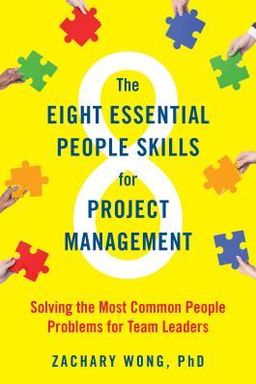
How can you lead projects with brilliant technical execution and still fail because of people? That’s the uncomfortable question at the heart of Zachary Wong’s The Eight Essential People Skills for Project Management. Wong argues that project success rarely hinges on scheduling or budgeting, but on human behavior, emotion, and relationships—the unpredictable elements that make leadership both difficult and beautiful. He contends that project leaders must become human experts, not just task managers. To do that, they must master eight core people skills that turn technical managers into inspiring leaders.
In a world where work has become faster, flatter, and more collaborative, Wong explains that yesterday’s pyramid organizations—those run from the top down—no longer fit reality. Today, leaders operate in what he calls the “wedge,” a horizontal, fluid structure linking individual contributors, teams, and management. In this environment, your challenge is not enforcing compliance but aligning attitudes, behaviors, and performance across all three levels. Wong provides tools that help you diagnose people problems, facilitate cooperation among diverse personalities, and motivate the right behavior rather than punish mistakes.
Why People Skills Matter Now
Wong observes that organizations have been delayered into fast-moving teams that require leaders to blend psychology, communication, and process management. With more educated and autonomous workers, power has shifted downward—team members now want engagement, not commands. Yet many project leaders were never taught how to lead people; they were taught how to manage tasks. The result is frustration and burnout. Learning the human side of leadership is therefore not optional—it’s the cornerstone of success.
Eight Essential Skills for Real-World Leaders
Wong distills four decades of research and consulting into eight people skills:
- Diagnose and Correct People Problems (The Wedge): Learn to spot whether an issue is individual, team, or management-driven.
- Be Tough on Problems, Not People (The Three Hats): Balance your roles as manager, supervisor, and teammate without losing authenticity.
- Build Highly Successful Teams (The Loop): Use trust, accountability, transparency, and individuality to foster inclusiveness.
- Boost Attitudes and Happiness (The Ice Cream Cone): Recognize good work and treat people with positivity instead of criticism.
- Turn Around Difficult People and Underperformers (Roll the Ball Forward): Help low performers move from fear and inertia to progress.
- Motivate the Right Behaviors (The ABC Boxes): Apply behavioral science to trigger and sustain desirable team actions.
- Succeed During Change and Challenges (The Black Box Effect): Manage fear and risk aversion to keep teams moving forward.
- Gain Favor and Influence with Your Boss (Be More Visible): Manage up with integrity, competence, and proactive communication.
The Emotional Journey of Leadership
The book’s emotional truth is that leading people isn’t clean or predictable—it’s messy and deeply human. Wong tells stories about real managers, from the compassionate leader who found alcohol under an employee’s desk to the young project head whose strict rules alienated her team. These stories aren’t about efficiency—they’re about the inner struggle of wanting to do the right thing while preserving trust and motivation. He teaches that authentic self-expression, emotional transparency, and empathy are not weak traits but leadership power sources.
Why It Matters
In an era of automation, artificial intelligence, and virtual collaboration, people skills remain irreplaceable. They are what make teams resilient and projects sustainable. Wong’s eight essential skills remind you that graphs and charts don’t lead people—attitudes, trust, and empathy do. As he says in his epilogue, projects come and go, but helping, coaching, and inspiring others are the moments you’ll remember most. Leadership in the wedge world is human work, and it’s what makes teams—and you—flourish.