
Idea 1
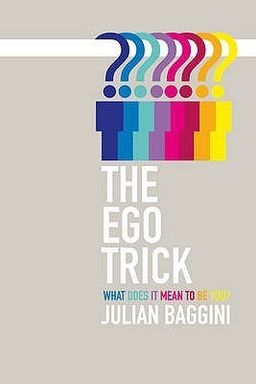
The Ego Trick: How the Self Holds Together Without a Core
Who are you—really? Strip away your memories, your body, your name, even your social roles, and what remains? Julian Baggini’s The Ego Trick explores one of life’s most compelling riddles: how you can feel like a single, continuous self even though neither science nor philosophy can find anything solid at your core. Through philosophy, neuroscience, and real human stories, Baggini argues that your sense of self is not an eternal pearl hidden inside you, but a remarkably stable illusion—a construction assembled by your body, brain, and memories over time. This “ego trick” is not deception but function: it allows you to live as a coherent being in a world of constant change.
The Problem of the Pearl Self
Baggini opens with the “pearl view”—the popular idea that each of us has an unchanging inner essence that defines who we truly are. Yet as he shows, when you look for this essence, you find nothing solid there. The child you once were can feel like a stranger. People with dementia remain physically alive even when their memories and personalities dissolve, challenging our sense that a biological body equals a person. Through these paradoxes, Baggini invites readers to question what selfhood really means: is continuity the same as identity, or is the self something that merely gives the impression of being one and the same?
From Bodies to Minds to Memories
Across the book’s first section (“Pearl Diving”), Baggini examines where people have tried—and failed—to locate the self. Some point to the body: we identify people by their DNA, fingerprints, or face. Yet real stories—like model Katie Piper, whose face was disfigured by acid, or historian Tony Judt, imprisoned by paralysis—show that physical change, even radical change, need not dissolve the person. Others tie identity to the brain, but neuroscience finds no “central control room,” no single seat of self-awareness. Memory, too, defines us but falters under scrutiny: patients like H.M., who lost his ability to form new memories, or dementia sufferers, show how identity can unravel even while personality remnants persist. Each candidate for the self turns out partial and unstable.
Beyond the Soul: Science versus Spirit
Because neither body nor mind yields a “pearl of self,” some traditions appeal to the soul—a nonphysical essence that survives death. Baggini challenges both religious and secular dualism. Even theologians like Richard Swinburne defend soul theory based on thought experiments, yet when tested, the soul seems redundant: if mental activity depends on the brain, and brains can be damaged to erase memory and personality, then “soul” explains nothing. When Baggini interviews religious figures from Buddhism to Christianity, he finds that even they wrestle with reconciling rational ideas of “no-self” with moral notions of responsibility and life after death. Buddhism’s “anattā” or “not-self” and Christian resurrection both illustrate our struggle to make meaning from the impermanence of personhood.
The Trick, Not the Pearl
The book’s central claim emerges: you are not a “thing” at all. You are a process—a bundle of perceptions, actions, and relationships unified by brain and memory. This is the Ego Trick: the natural, evolved capacity to create from flux a coherent sense of “I.” Like the illusion of a spinning wheel creating constant motion, selfhood feels stable because perception and memory stitch together fragments of experience into one narrative. It’s no deception to think of “you” as an individual—it’s simply how the human mind balances change with continuity.
Why This Matters to You
The implications are profound. If the self is a construction, then questions of free will, ethics, and mortality all look different. “Living without a soul,” as Baggini puts it, doesn’t mean living without meaning—it means embracing life’s fragility, its plasticity, and its interdependence. What connects your past to your future isn’t an immortal core, but the ongoing work of your mind making sense of its own experiences. Understanding the self this way dissolves fear of death, clarifies responsibility, and opens compassion for others whose personalities, memories, or roles have changed. The trick doesn’t diminish you—it explains how you can be many and still one.
As you follow Baggini’s journey—from gender transition stories to Buddhist temples, from brain scans to philosophical debates—you discover that there is no “you” hidden inside. And yet, something undeniably real endures: a narrative, embodied, mindful being always becoming itself. That’s the paradox the Ego Trick solves—and it’s one that quietly redefines what it means to be human.