
Idea 1
Mastering Effectiveness in a Knowledge-Driven World
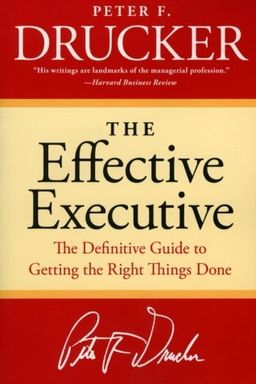
How can you consistently get the right things done when every day bombards you with emails, meetings, and fires to fight? In The Effective Executive, Peter F. Drucker argues that effectiveness—not intelligence, charisma, or even leadership style—is the essential skill of every knowledge worker and executive. While talent and effort are helpful, Drucker contends that only disciplined practices turn potential into results. He positions effectiveness as a learned discipline, a set of repeatable habits that allow ordinary people to achieve extraordinary outcomes.
Drucker wrote this classic in 1967, long before the age of laptops and Zoom meetings, but its principles resonate even more today. As organizations fill with specialized experts—engineers, analysts, educators, doctors, and managers—effectiveness becomes a shared necessity. No longer can we rely solely on hierarchy or inherited authority; individuals must direct themselves, manage their energy, and make a contribution beyond their job title.
A New Definition of the Executive
Drucker redefines what it means to be an executive: anyone whose decisions have a significant impact on organizational performance. You don’t have to occupy the corner office. A nurse leading a department, a software developer deciding on architecture, or a teacher designing a new curriculum all act as executives in Drucker’s sense. Their effectiveness—or lack of it—determines whether their organization thrives or just survives.
He warns that modern executives face unique traps: their time is constantly preempted by others; they confuse activity with results; they drown in meetings and data while neglecting real priorities. Yet none of this is destiny. Effectiveness can be learned through consistent self-management. In fact, Drucker sees it as the vital professional ethic of the modern era.
From Talent to Discipline
Natural gifts, Drucker insists, are only the raw material. The difference between brilliant failures and steady performers lies in a handful of disciplined practices. He simplifies executive excellence into five core habits:
- Knowing where your time goes and managing it ruthlessly
- Focusing on outward contribution rather than inward effort
- Building on strengths—your own, others’, and those in the situation
- Concentrating on first things first and doing one thing at a time
- Making effective decisions using clear principles and feedback
These interlocking disciplines form what Drucker calls the habits of effectiveness. Practiced together, they convert intelligence into performance. They are the executive equivalent of a pianist’s scales—a routine that, though simple, enables mastery.
Why Effectiveness Matters Today
When Drucker published this book, he was already known as the father of modern management. But here, he turned his attention inward: to how each person must manage themselves. His argument anticipated today’s age of information overload. In a society where technology increasingly automates routine work, the quality of human judgment and focus becomes the ultimate advantage.
Effectiveness isn’t simply a personal virtue—it’s a moral duty, Drucker argues. Organizations depend on knowledge workers who can define priorities, make responsible choices, and produce results that matter. Without it, companies stagnate and societies suffer. It is how organizations turn intelligence into survival, and how individuals turn ambition into achievement.
“Knowledge is useless to executives until it has been translated into deeds.” —Peter F. Drucker
In the chapters that follow, Drucker walks us through each of these five fundamental dimensions—time, contribution, strength, priority, and decision-making—showing how they interlock. From managing your calendar to mastering decision-making logic, he offers not management theory but a practical philosophy of personal productivity. Whether you lead a multinational corporation or a nonprofit team, Drucker’s question remains your compass: Are you getting the right things done?