
Idea 1
The Rise and Rule of Economists
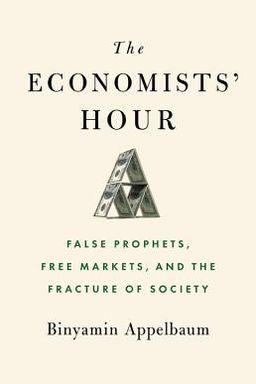
If you have ever worried about inflation, job stability, or the cost of your flight ticket, you are living in the world built during what the author calls The Economists’ Hour—an era between roughly 1969 and 2008 when market-oriented economists moved from the academic margins to the center of political power. For four decades, economists reshaped taxation, trade, regulation, and monetary policy in the United States and far beyond. The book tells this story not as an abstract intellectual history but as a portrait of how ideas became institutions and everyday realities.
Economists enter the arena
Midcentury governments once trusted lawyers and administrators over theorists. At the Federal Reserve, William McChesney Martin famously placed economists in the basement. By the late 1970s, their numbers in Washington tripled, and they occupied key posts—Arthur Burns and Paul Volcker at the Fed, George Shultz and later Larry Summers at Treasury, and Alfred Kahn at the Civil Aeronautics Board. The intellectual center of power shifted, transforming policy making into a technocratic enterprise.
Markets as policy and ideology
Economists advocated market solutions to policy problems once handled by bureaucratic planning. They argued that prices, not politicians, carry superior information. The creed, borrowed from Hayek and Friedman, was simple: wherever it is feasible to create a market, a policymaker should not do without one. This principle became a justification for privatization, deregulation, and trade liberalization worldwide—from Thatcher’s Britain to Chile’s shock therapy and China’s reform experiments.
Institutions and persuasion
Think tanks like the Hoover Institution and the American Enterprise Institute, university departments, and corporate sponsors formed a dense ecosystem that carried economic expertise into government. Milton Friedman’s charisma amplified this process: he turned abstract equilibrium models into public television lessons, helping to sell policies that changed taxes, central banking, and even military service (as in the end of the draft). Economists became storytellers capable of making technical logic sound moral and democratic.
The trade-offs
Economic policy became measured and quantifiable, but also narrower. Efficiency began to outrank equity, and consumer prices were prioritized over producer wages. This shift improved living standards for many but also deepened inequality, weakened labor power, and strained the social fabric. The era lifted billions globally through open trade yet left many domestic workers exposed to shocks and stagnant incomes.
Core moral tension
Economists convinced politics to treat market prices as moral facts. But once efficiency became the supreme value, distribution, security, and fairness often slipped out of policy design. The book demands that you recognize economics not just as science, but as governance with built-in moral judgments.
By the end of the Economists’ Hour, the balance between market freedom and social responsibility was unstable. The 2008 financial crisis exposed the limits of technocratic faith and forced governments back into activist roles. The story that unfolds teaches you how ideas, networks, and values assembled an era of economic authority—and why those same forces continue to shape how democracy manages prosperity today.