
Idea 1
Escaping The Echo Machine
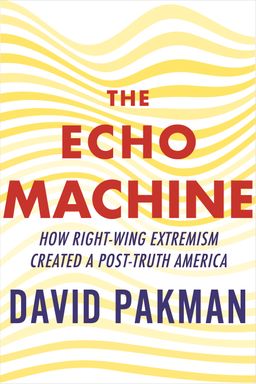
Do you ever feel like every political conversation around you dissolves into shouting past one another—while nothing in your actual life changes? In The Echo Machine, David Pakman argues that this isn’t an accident. He contends that a decades-long right-wing project has hollowed out the tools citizens need to think clearly (critical thinking, philosophy, media literacy), flooded the public square with misinformation, and replaced policy with endlessly viral culture-war fights. The result is an echo machine that keeps you angry, distracted, and—most of all—inactive.
Pakman’s core claim is twofold: first, the United States’ current political dysfunction is the logical product of specific decisions—Reagan’s dog-whistle politics, Newt Gingrich’s scorched-earth Congress, Fox News’s business model, Bush-era anti-intellectualism, and the Trump movement’s post-truth ethos—amplified by social media and declining civic education. Second, progress is still possible, but only if you rebuild the habits of mind that resist propaganda, re-anchor debates in facts (not vibes), choose pragmatic left-of-center policy frameworks that actually work, and practice incremental, real-world activism rather than online hobbyism.
What broke—and why it matters to you
Pakman traces a line from the civil-rights backlash to Reagan’s “welfare queen,” to Gingrich’s “Contract with America,” to Bush’s celebration of “common-sense” anti-intellectualism, to Palin’s proud incuriosity, to Trump’s conspiracy-laced populism. Layer on Citizens United’s flood of money, a Supreme Court recast by Trump’s three appointees, collapsing local journalism, algorithmic echo chambers, and an education system that sidelines logic and media literacy—and you get our moment: more outrage, fewer shared facts, and stalled solutions. This matters because when time and energy are diverted to performative fights over drag story hours or “critical race theory” that isn’t even taught in K–12, you’re not talking about health care, wages, housing, or climate—issues that touch your rent, your doctor’s bill, and your kid’s future.
Inside the echo machine
At its core, the echo machine confuses what counts as a fact. Pakman shows how TV segments stage “both sides” of settled science (climate change, vaccines), how social media feeds learn your biases and feed them back to you, and how political actors exploit this by seeding doubt (“maybe ivermectin works?”), rallying a base with micro-scandals, then using the fog to justify policy rollbacks (on climate, voting, rights). Crucially, he notes the Left’s small but real contribution to confusion—when everything becomes “my truth,” truth itself becomes negotiable (compare Neil Postman’s warning in Technopoly about technology’s power to reorder culture).
Principles over problems—and why that stalls progress
Pakman dissects a seductive trap: swapping policy for abstract principles. “States’ rights,” “parents’ rights,” “economic freedom,” and “Second Amendment absolutism” play great on cable hits and 4-hour podcasts—but they rarely resolve concrete tradeoffs. “Parents’ rights” collides with public health and children’s rights during pandemics. “Economic freedom” becomes a shield to delay climate policy. “Guns stop bad guys” dodges evidence on gun deaths and common-sense safety rules. Meanwhile, media incentives reward long theoretical debates over practical fixes.
What works: choose left-of-center pragmatism
Against doom, Pakman offers an evidence-based case for social democracy (think Denmark, Sweden, Norway, Finland, and also Uruguay, Portugal, New Zealand, Germany’s SPD, and India’s Kerala): robust safety nets, universal(ish) care, worker protections, and pro-business dynamism can coexist. These models deliver high trust, low corruption, strong entrepreneurship (Stockholm is second only to Silicon Valley in unicorns per capita), and better health and education outcomes. The point isn’t Nordic cosplay; it’s adopting what works here—drug price negotiation, Medicaid expansion, public investment in green energy—then iterating.
How to fight back (for real)
Pakman’s antidote is practical: rebuild critical thinking and media literacy early (Finland is his north star), consume media intentionally, insist on facts vs. opinions, and force opponents out of culture-war abstractions and into policy specifics. Campaign with message discipline, expose “no-policy” candidacies, and explain how votes change daily life (your Medicare, your prescriptions, your school bus route). Then go beyond online hobbyism: organize locally, show up, use the courts, support independent media, and practice responsible platforming of extremists—only when you can refute them effectively.
Pakman’s bet
Small, steady wins compound. The Progressive Era, the New Deal, and the civil-rights movement all advanced through many incremental steps before “overnight” breakthroughs. If you reject accelerationist fantasies and invest in teachable skills, workable policies, and repeatable civic actions, you can escape the echo machine—and move the country, measurably, in the direction you actually live.
What follows unpacks how the machine was built, how it captures attention, how it beats better policy with better campaigning, and how you can dismantle it—piece by piece—without giving up your sanity.