
Idea 1
Escaping the Nicotine Trap: How to Stop Easily and Joyfully
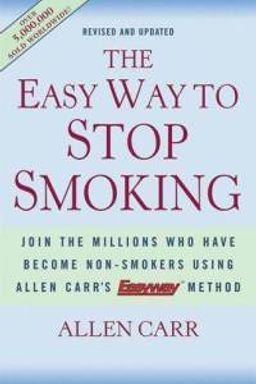
Have you ever asked yourself why you keep doing something that hurts you, costs you money, and makes you miserable—yet feels impossible to quit? In Easy Way to Stop Smoking, Allen Carr argues that quitting isn’t about willpower, deprivation, or suffering at all. It’s about understanding and removing the brainwashing and fear that keep you trapped. Carr doesn’t treat smoking as a mere habit, but as a psychological trap reinforced by nicotine addiction and cultural conditioning. Once you see through the illusion that cigarettes give pleasure or relieve stress, the desire to smoke simply dissolves.
Carr’s core claim is radical: stopping smoking is easy once you understand what cigarettes actually do. They don’t relax you or make you happy—they create the discomfort they supposedly cure. Smoking is like wearing tight shoes to enjoy taking them off. Every puff only replenishes the craving that the previous cigarette created. When you stop feeding that craving and remove the mental illusions that accompany it, not only can you quit—you can enjoy quitting.
The Fear That Keeps You Hooked
The root of smoking isn't pleasure, Carr explains, but fear. Smokers fear life without cigarettes: that they’ll never enjoy parties, cope with stress, or feel at ease. Yet every benefit that smokers attribute to cigarettes—relaxation, confidence, concentration—is an illusion created by addiction. If nicotine hadn’t first caused agitation, its removal wouldn’t feel like calm. Carr urges you to question every belief about smoking. Ask why you can drive, eat, or read comfortably without cigarettes—yet panic at the idea of quitting entirely. The truth is, the fear itself is the problem, not the absence of nicotine.
Brainwashing: Smoking’s Invisible Web
Carr explains that society’s messages—advertising, movies, even our friends—glamorize smoking as sophisticated, rebellious, or stress-relieving. These subtle influences form what he calls the ‘sleeping partner’ of the subconscious mind, which stores associations between smoking and comfort, adulthood, or success. Over the years, these associations keep smokers trapped, even when rationally they know it’s destroying them. Carr compares this to hypnotic conditioning; the cure is not outside intervention but awareness. Once you consciously expose these illusions, the subconscious loses its power, and the desire to smoke evaporates.
The Nicotine Trap: A Self-Perpetuating Cycle
Nicotine addiction works deceptively. Each cigarette delivers a brief relief from the irritation that nicotine withdrawal creates—but at a cost. As soon as the cigarette is extinguished, nicotine levels drop, and discomfort returns. You light another one, and the cycle continues. Carr describes nicotine as the ‘little monster’ inside your body—easy to kill once you stop feeding it—but supported by a ‘big monster’ of mental fear and conditioning. The little monster dies quickly, within a few weeks; it’s the big monster that must be dismantled through understanding. If you realize that smoking doesn’t give pleasure but instead removes the pain caused by previous cigarettes, the illusion collapses.
Why This Method Works
Unlike conventional approaches based on willpower or nicotine substitutes, Carr’s method tells you not to quit immediately. Instead, keep smoking while you read and build your awareness. Cutting down or using gum only reinforces the idea that nicotine is necessary. Substitutes and abstinence make quitting seem like sacrifice; Carr makes it a liberation. When you finally smoke your “last cigarette,” you do so consciously, tasting its poison and realizing you never needed it. For Carr, understanding replaces coercion, and freedom replaces fear.
The Marvellous Truth
Carr insists that freedom from cigarettes is the most joyful experience a person can have. You don’t lose anything—on the contrary, you regain health, wealth, self-respect, confidence, and the ability to live without guilt. He frames smoking as a lifetime of self-imposed slavery that ends the moment you realize you were never chained at all. His readers often describe quitting as a revelation rather than a struggle. Carr’s message: you don’t have to be strong to quit. You just have to see clearly.