
Idea 1
How a Local Spark Became Total War
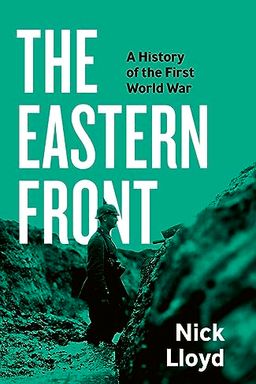
How can you trace a world war back to a single wrong turn? In this book, the author argues that World War I on the Eastern and Southern fronts grew from a small, violent spark in Sarajevo into a system-breaking conflagration because leaders mixed pride with miscalculation inside rigid alliance structures and unforgiving mobilization timetables. The core claim is that strategy, logistics, and political legitimacy proved as decisive as battlefield courage—particularly for Austria–Hungary, Russia, and Italy—while peripheral theatres (Balkans, Salonika, and the Alps) eventually delivered decisive shocks when central plans elsewhere failed.
You see how the July Crisis transformed one assassination into a continent-wide cascade. You then follow the Eastern Front’s early maneuver battles—Tannenberg, Galicia, the Carpathians—where prewar doctrines crashed into modern firepower and rail-driven operations. Next you watch coalitions bend and splinter: Serbia’s ordeal, Bulgaria’s entry, Salonika’s long stalemate and late breakthrough, Italy’s Isonzo grind and the Caporetto catastrophe. Finally, you witness Russia’s political implosion, Brest-Litovsk’s brutal peace, and Germany’s overreach in 1918, when the war’s end arrives not through one masterstroke in France but via the collapse of brittle allies in the south and east.
From Sarajevo to a Continental Crisis
The book opens with 28 June 1914 in Sarajevo, where Gavrilo Princip’s shots kill Archduke Franz Ferdinand and Sophie after a fateful wrong turn. Austria–Hungary frames the moment as an opportunity to humble Serbia and restore prestige; Germany’s unconditional backing—the notorious “blank cheque” on 5 July—removes Vienna’s last brake. The 23 July ultimatum mixes valid demands with humiliating intrusions, and Serbia’s partial acceptance is judged insufficient. With alliances primed and timetables rigid, restraint becomes harder than war.
Structure accelerates choice: the Triple Alliance and Triple Entente channel decisions into escalation; railway schedules and pre-set war plans (e.g., Schlieffen/Moltke biases) narrow options. Yet personalities matter too—Conrad von Hötzendorf’s offensive creed, István Tisza’s hesitation, the Kaiser’s bravado—so you learn to read 1914 as agency constrained by machine-age mobilization. It is a pattern that repeats: actors choose, but systems hurry their choices forward.
Maneuver Meets Modern Firepower
Early battles on the Eastern Front mix sweeping marches with sudden annihilation. In Galicia, Austro-Hungarian aggression scores local wins (Kraśnik, Komarów) but bleeds officer cadres and exposes artillery shortages. At Tannenberg, Hindenburg and Ludendorff use rail mobility, wireless intercepts, and decisive concentration to encircle Samsonov’s dispersed Second Army, capturing 92,000 prisoners. These episodes teach you formulas that recur: mobility plus information can shatter a poorly coordinated foe; valor without guns and supply chains invites slaughter.
Then winter descends. The siege of Przemyśl and the Carpathian offensives become bywords for attrition shaped by terrain and weather—frozen passes, starving garrisons, horses failing in snow. By spring 1915, Austria–Hungary is militarily and politically dependent on Germany, a subordination that will deepen after Brusilov’s earthquake in 1916.
Coalitions, Peripheries, and Political Erosion
The book argues that the peripheries matter because they expose coalition seams. Serbia humiliates Austria in 1914 but is crushed in 1915 when Mackensen attacks in concert with newly belligerent Bulgaria. The Allies land at Salonika to help—then spend years in a fortified cul-de-sac, limited by Greek politics, malaria, and competing national priorities. In Italy, Cadorna attempts to force a crossing of the Isonzo again and again; geography and Boroević’s defenses turn “elan” into attrition. These fronts do not decide the war quickly, but they fix troops, reshape morale, and create the conditions for decisive breaks when the enemy’s political fabric frays.
Meanwhile, Russia shows you how a great power can dissolve from the inside. Stavka’s logistical deficits, aging commanders, and planning failures (Lake Naroch) bleed armies already strained by shortages. Rasputin’s court scandals corrode legitimacy; Order No. 1 and soldiers’ committees erode command authority. The Provisional Government cannot reconcile war aims with revolutionary politics; the Bolsheviks seize power promising “peace, land, and bread,” then sign Brest-Litovsk under the gun to survive.
Endgame: Shock from the Margins
Brest-Litovsk frees Germany to gamble in the West in 1918, but occupation duties and thin allies strain the empire. The Spring Offensives exhaust elite divisions without achieving decision. Then the “peripheries” crack the alliance: Franchet d’Espèrey’s assault at Dobro Pole shatters Bulgaria; Diaz’s Vittorio Veneto finishes Austria–Hungary as nationalities peel away. Germany faces brittle flanks, a hungry home front, and Allies refreshed by American power. Strategic overreach meets political entropy.
Thesis in a sentence
Leaders chose war, but rails, shells, weather, and waning legitimacy decided how it unfolded—making peripheral fronts and political collapse the levers that ultimately toppled empires.
If you keep one lens, make it this: combine high politics, logistics, and morale when you read campaigns. That’s how the book turns scattered battles—Kraśnik, Tannenberg, Lutsk, Dobro Pole, Caporetto, Vittorio Veneto—into a coherent story about how modern states win, lose, and sometimes disintegrate in war. (Note: this approach echoes Hew Strachan’s emphasis on total-war systems and Isabel Hull’s focus on institutional cultures shaping strategy.)