
Idea 1
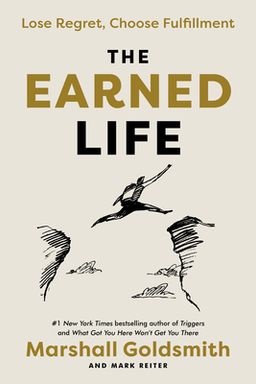
The Earned Life: Aligning Choice, Effort, and Purpose
How do you live a life that feels fully deserved—one where regret doesn’t outweigh fulfillment? In The Earned Life, renowned executive coach Marshall Goldsmith (with Mark Reiter) argues that happiness isn’t something that happens to you—it’s something you earn every day. True fulfillment, he contends, comes not from chasing rewards but from aligning your choices, risks, and efforts with an overarching sense of purpose, regardless of the outcome.
Goldsmith, whose insights have guided global leaders such as Alan Mulally (Ford), Jim Yong Kim (World Bank), and Frances Hesselbein (Girl Scouts USA), reframes personal growth into a lifelong creed of earning—continually creating meaning through mindful action. The book explores the tension between regret and fulfillment, urging readers to minimize one by maximizing the other through conscious, purpose-driven living.
Regret vs. Fulfillment: The Lifelong Continuum
Goldsmith opens with a haunting story about his friend Richard, a man paralyzed by a moment of cowardice decades earlier. His failure to act on a romantic opportunity leads to a lifetime of regret—a vivid entry point into one of the book’s central arguments: regret and fulfillment sit on a continuum, and where you live on that line is dictated by the quality of your choices and the openness with which you pursue life’s opportunities. The antidote to existential regret, Goldsmith insists, is deliberate effort—not drifting through life, but earning it.
The Six Fulfillers
To help you gauge your sense of fulfillment, Goldsmith introduces six key markers—what he calls the Fulfillers: purpose, meaning, achievement, relationships, engagement, and happiness. These are the compass points that guide an earned life, but they’re also fragile and impermanent. Like happiness itself, which flickers and fades from moment to moment, each fulfiller demands constant attention and renewal. This impermanence, echoing the Buddhist principles Goldsmith adopts throughout, means that earning must be continual—it’s never once and done.
“Every Breath I Take Is a New Me”
At the heart of the book lies the Every Breath Paradigm—Goldsmith’s interpretation of a Buddhist insight that “every breath you take is a new you.” He contrasts this Eastern embrace of impermanence with the Western myth of permanence—the “I’ll be happy when…” delusion. Each breath, he teaches, gives you the chance to start over, to earn again, to forgive your past self, and to re-center on what truly matters in the present. This philosophy becomes the foundation for all other ideas in the book: mindfulness, accountability, and constant renewal.
“You’re only a success in the moment of the successful act. Then you have to do it again.”
—Phil Jackson, quoted by Goldsmith, encapsulating the spirit of earning.
Living Without a Trophy Ceremony
For Goldsmith, life’s ultimate measure isn’t a career title or net worth—it’s alignment. When your daily actions serve your higher purpose, you are living an earned life. He cautions against depending on “earned rewards”—temporary highs like titles, promotions, or praise—because they fade. The real prize is the ongoing process of effort and renewal. “The reward of living an earned life,” he concludes, “is being engaged in the process of constantly earning it.”
The Path through Earning
From there, The Earned Life unfolds as a lived philosophy broken down into practical systems. Part I teaches you how to choose the trajectory of your life—what stops you, what motivates you, and how to avoid letting referent groups, inertia, or comfort zones dictate your choices. Part II introduces the mechanics of earning through structure: Goldsmith’s Life Plan Review (LPR) method, a weekly self-reflection system built on accountability, community, and measurable effort. Later chapters show how to sustain the earning habit through empathy, credibility, and continual reinvention.
What makes Goldsmith’s message powerful is its humility. Approaching his seventies, he admits he’s still earning his life—writing this very book while confronting his finite time. His tone blends self-reflection, Buddhist wisdom, and boardroom practicality. Whether you’re a CEO, an artist, or someone searching for meaning between success and satisfaction, The Earned Life challenges you to stop chasing delayed happiness and start earning fulfillment—one deliberate breath at a time.