
Idea 1
The Fragility and Future of Citizenship
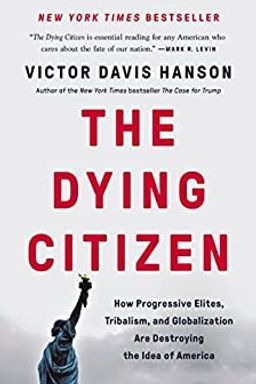
What makes a citizen different from a subject, a tribesman, or a consumer? Victor Davis Hanson argues that citizenship is the rarest and most fragile political construct in human history. It is not merely a legal status but a moral, economic, and civic compact. You inherit this achievement, but also the risk: republics collapse when citizens forget the habits that sustain them. The book as a whole is a tour from classical antiquity to twenty-first century America, revealing how civic trust, institutional restraints, economic middleness, and shared national culture build—and can quickly unravel—the idea of the citizen.
From Tribe to Citizen
In pre-political societies, human beings bound together by blood, not law. Hanson reminds you that the Greek polis was revolutionary because it forged identity through citizenship rather than clan. Cleisthenes reorganized Athenian life to replace tribal loyalty with civic duty, inaugurating the world's first political equality among free individuals. Rome refined this through the civis Romanus—the citizen-soldier bound by shared duty and law. For both cultures, citizenship demanded property, arms, and service; political freedom rested on economic independence and public virtue.
The American founders consciously extended that tradition. They combined ancient ideas of the self-reliant smallholder (Aristotle’s mesoi) with Enlightenment notions of rights and consent. The resulting Constitution, with its careful balance of powers and guarantees of speech, assembly, and due process, made citizenship both universal and conditional: anyone could rise to it, but only if all respected laws, duties, and the integrity of institutions. Hanson’s central thesis is that these preconditions—material security, civic education, and legal equality—are now eroding.
Modern Drift: Comfort and Amnesia
As prosperity spreads, self-restraint weakens. Hanson observes that long periods of peace and wealth can soften civic fiber: prosperous citizens start to see government as caretaker, not instrument. In the extreme, that mentality reverts to tribal or client-based dependence. It is a cycle familiar from antiquity—Athens after the Peloponnesian War, Rome after Augustus, and modern democracies when bureaucracy and entitlement replace voluntary action. The very freedoms that citizens enjoy tempt them to neglect the behaviors that freedom requires. (Alexis de Tocqueville made a similar observation in Democracy in America.)
Themes of Decline and Resistance
Across the book’s sections, Hanson tracks how citizenship decays under converging pressures: erosion of the middle class, unchecked immigration and the blurring of legal categories, tribal identity politics, bureaucratic autonomy, and elite reinterpretations of the Constitution. Each of these functions like a solvent, dissolving the cultural adhesive that holds a republic together. He warns that rights endure only when attached to explicit duties, that the rule of law survives only when applied impartially, and that equality of opportunity turns hollow when policymaking elites substitute their own progressive morality for democratic consent.
Yet this is not a lament alone. Hanson also gestures toward renewal. Citizenship can be rebuilt through education that conveys a common civic story, economic policies that restore middleness, and political courage that reins in bureaucratic and corporate overreach. Above all, it requires personal agency—citizens taking back responsibility for their institutions. By blending history with contemporary critique, the book becomes less prophecy of decline than manual for revival.
Core Idea
Citizenship is not self-sustaining. It is a rare inheritance requiring constant maintenance—economic balance, civic virtue, institutional restraint, and cultural cohesion. Lose those and a republic quickly becomes a hierarchy of dependents and rulers.
By tracing the continuity from classical civitas to modern America, Hanson offers a single sobering conclusion: free people do not lose liberty from invasion but from internal forgetfulness. The citizen’s task is to remember—to know the laws, to keep faith with institutions, and to guard the civic and moral boundaries that make freedom work.