
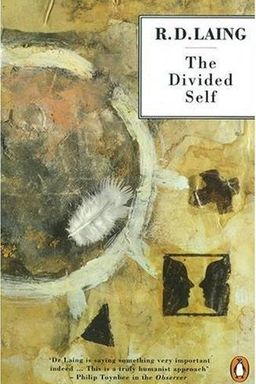
The Divided Self cover

The Divided Self

by R.D. Laing

The Divided Self offers groundbreaking insights into the minds of those detached from their bodies. R. D. Laing explores the psychological consequences of such detachment, shedding light on identity, sanity, and the human condition. This book challenges our assumptions about mental illness and provides a crucial understanding of schizophrenia and ontological insecurity.

Sanity and Madness as Human Experiences

What if the line between sanity and madness was not as definite as we’ve been taught? In The Divided Self, Scottish psychiatrist R.D. Laing challenges conventional psychiatric wisdom by suggesting that psychosis—particularly schizophrenia—is not a meaningless disease but a comprehensible form of human experience. He argues that the so-called “mad” person is trying, under unbearable conditions, to preserve his sense of self and existence. Madness, in Laing’s view, is not the absence of meaning but rather a desperate, distorted struggle for authenticity.

Laing’s book, first published in 1960, emerged at a time when psychiatry viewed schizophrenia primarily as a biological brain disease. But Laing turned that model on its head. Drawing from existential philosophy, particularly the works of Heidegger, Sartre, and Binswanger, he proposed that mental illness must be understood as a way of “being-in-the-world.” For Laing, what we label as madness often begins as the individual’s attempt to survive psychological violence, to protect what he calls his “true self” from encroaching threats—family, society, or even the self’s own divided layers.

The Existential Turn in Psychiatry

Laing’s approach was revolutionary because it turned psychiatry into a form of philosophy. He asked psychiatrists to abandon the language of symptoms and instead to listen—to try to understand how life feels from inside the patient’s world. Instead of labelling hallucinations and delusions as defective brain signals, Laing saw them as expressions of profound existential distress. “No one has schizophrenia,” he writes. “A person is schizophrenic.” This subtle change of grammar reframes psychosis as a way of being—a state of profound disconnection and fragmentation, not an objectified illness to be eradicated.

His existential-phenomenological perspective insists that a person cannot be described meaningfully without understanding their lived world. This means that the psychotic person’s behavior—no matter how bizarre—has a logic if one can reconstruct the world as it appears to them. For example, a man who says he is made of glass may not be ‘insane’ in a random sense; he may be expressing an unbearable sense of fragility and transparency in the face of others’ scrutiny.

A Divided Self and a False Self

Central to Laing’s argument is his portrayal of the “divided self.” This occurs when a person can no longer feel at home in his body or world. The individual’s sense of identity splits: an outward, adaptive false self that conforms to social expectations, and an inward, secret self that feels isolated, fragile, and in danger of annihilation. The false self interacts with others, pretending to be genuine, while the true self withdraws into an internal world where it cannot be touched or hurt. Over time, this estrangement deepens and can develop into schizoid or schizophrenic modes of existence.

Through vivid case studies, Laing brings this duality to life. David, a philosophy student, lives as though on a stage, performing roles to protect his hidden identity. Another, Peter, feels decaying and hollow, using rituals of isolation to guard against the gaze of others. Laing shows how these individuals withdraw not out of hostility but out of fear—the fear that to be seen is to be destroyed.

Why This Matters Today

Half a century after its publication, The Divided Self continues to resonate because it addresses universal questions: What does it mean to be a person in a dehumanizing world? How do we maintain authenticity amid social conformity? Laing’s critique goes beyond psychiatry to indict modern civilization itself. He suggests that “normal” society is often pathogenic—that alienation, not madness, pervades modern life. In this way, his work anticipates Michel Foucault’s later critiques of institutional psychiatry and the “antipsychiatry” movement that questioned the moral legitimacy of labeling difference as disorder.

Yet Laing did not romanticize psychosis. His empathy was radical, but his aim was not to glorify madness; he wanted to understand and alleviate it by making contact across the abyss. He believed that if we can see “the mad” as fellow human beings—people whose defenses have collapsed under unbearable existential pressure—we might heal both them and ourselves. By combining rigorous philosophy, psychotherapy, and human compassion, Laing’s book remains one of the most important attempts to bridge sanity and madness.

In the pages ahead, you’ll explore how Laing redefines mental illness as a form of existential crisis, how he interprets the “false-self system” that colonizes modern identity, how love and understanding can sometimes bridge even psychosis, and why the struggle for authenticity is both dangerous and sacred. Ultimately, this book is not only about schizophrenia—it is about what it means to remain human when the world insists you are not.


The Schizoid Split: Being-in-the-World Divided

Laing begins with the notion of the “schizoid” person—a being torn between two worlds. Such a person, he explains, lives a split existence: one part still inhabits the external world of social relations, while another is cut off, hidden, alienated. This division reflects what philosopher Martin Heidegger called “being-in-the-world”—that our existence is always relational. But when that relation fractures, when the person cannot safely feel themselves ‘with’ the world, the result is an unbearable sense of isolation.

The Sense of Not Being Real

For Laing’s patients, life often felt unreal or staged. One young man described himself as “a response to other people”—he did not exist except as a mirror to their expectations. Another felt as if he were transparent glass; others were always looking through him. These metaphors—transparency, hollowness, being a puppet—express what Laing calls ontological insecurity: a profound uncertainty about being real, continuous, and autonomous. The schizoid individual clings to their mind at the expense of their body, becoming a spectator to their own life rather than a participant.

Existence as Defense

Laing shows that schizoid withdrawal is not meaningless but defensive. By retreating into inner seclusion, the person avoids what they perceive as engulfment by others—the fear of being consumed or obliterated by love, judgment, or understanding. One of Laing’s patients described arguing only to “preserve my existence.” When ordinary interaction becomes existentially threatening, isolation becomes survival. The core dilemma is paradoxical: to relate risks annihilation, but isolation brings emptiness. This dynamic, Laing says, defines the schizoid condition and, in extreme form, becomes psychosis.

An Existential Mirror

Through vivid analysis, Laing invites you to see fragments of this condition in everyday life. Who hasn’t at times felt like an actor rather than a person, afraid to be genuine for fear of rejection? In existential terms, the schizoid experience is an intensification of the modern condition of alienation. It is as if modern man, estranged from his own depth, becomes divided between an internal observer and the mechanical routines of his daily persona. The madness we pathologize, Laing suggests, may simply be the extreme end of a spectrum we all share.

By grounding schizophrenia in human experience rather than medical pathology, Laing restores meaning to madness. The “divided self” is not only the psychotic’s affliction—it is the human condition stripped bare.


Ontological Insecurity and the Fear of Nonbeing

At the heart of Laing’s analysis is the concept of ontological insecurity—the feeling that one’s existence is precarious. While most people take their being for granted, the ontologically insecure person does not. They fear being engulfed by others, imploded by reality, or turned to stone under another’s gaze. These fears—engulfment, implosion, petrification—are Laing’s triad of existential terror that define the schizophrenic’s world.

Engulfment: Losing the Self

Engulfment occurs when love or understanding threatens to swallow the self. For someone who lacks autonomy, to be understood too well can feel like annihilation. Laing recounts a patient who feared that being “grasped” by another’s comprehension would destroy his independence. To defend against this, he isolates himself or retreats behind superficial compliance. Relationships become perilous because intimacy means the death of self. The tragedy is that what heals—relationship—is also what terrifies.

Implosion: The Crushing Weight of Reality

Implosion refers to the sense that reality itself threatens to collapse inward and crush one’s identity. The world feels too solid, too powerful, while the self feels hollow and weightless. One of Laing’s patients likened this to a vacuum that might be filled suddenly by a destructive influx of ‘realness.’ Everyday perception becomes overwhelming, leading the person to detach from the physical world. It is not apathy but terror that fuels their withdrawal.

Petrification: Turning to Stone

Finally, petrification captures the dread of becoming a lifeless object in another’s eyes—or of turning others into objects to defend oneself. To be seen is to risk being frozen as a “thing.” Some patients describe feeling as if others’ gaze physically penetrates them. This explains the haunting image of transparency and dehumanization that recurs in schizophrenia. Yet, to become invisible is also unbearable—hence the schizophrenic oscillates between desperate self-exposure and self-erasure.

Laing reframes these terrors as existential—not pathological—responses to a world that denies one’s authenticity. The psychotic does not abandon reality; reality has already failed to be a home for the self.


The Embodied and Unembodied Self

Laing describes how many of his patients experienced a fundamental split between mind and body—what he calls the difference between an “embodied” and an “unembodied” self. To be embodied is to feel grounded in one’s body and life; to be unembodied is to feel detached, as if one’s mind is watching life from a distance. For the unembodied person, the body becomes a puppet operated by a remote mind. This disconnection, common in modern alienation, is extreme in schizophrenia.

Case Study: David’s Acting Self

David, Laing’s well-known patient, was an 18-year-old philosophy student who lived as if performing. He wore a theatrical cloak, spoke in quotations, and believed his real self was hidden behind his “personality.” To protect this fragile real self, he created multiple personas—sometimes deliberately, sometimes compulsively. At times he played being himself. He was terrified that spontaneous action might expose or dissolve his true identity. His life became a mask worn for safety, leaving him hollow beneath.

From Defense to Disintegration

Laing interprets such behavior as an attempt to cope with ontological insecurity. By treating one’s body and actions as “not-me,” the self preserves its purity but also cuts itself off from reality. The false-self system gradually expands until almost the entire person’s being is colonized by artificial behavior. The individual becomes both actor and observer, monitoring every gesture for falseness. What begins as a defense against anxiety ends as the collapse of vitality—a living death.

In existential terms, this is the root of many modern afflictions. When you feel alienated from your work, your roles, even your own emotions, you are enacting the same distance Laing saw in his patients. To lose embodiment is to lose the ground on which the self stands.


The False-Self System: Compromise and Collapse

Laing’s concept of the “false-self system” is one of his lasting contributions to psychology. Borrowing from D.W. Winnicott but extending the idea existentially, Laing shows how people construct a false self to survive environments that threaten the authenticity of their being. In families or societies where spontaneous feeling is punished or misunderstood, the individual learns to wear a compliant mask. Over time, this mask takes on independent life, and the true self retreats into secrecy or silence.

When the Mask Becomes the Person

In Laing’s case studies—such as that of Peter, who suffers from the delusion that he emits a rotten smell—this process reaches its climax. Peter feels unworthy of existence, guilty “for being in the world.” To protect himself from humiliation, he withdraws behind meticulous routines and anonymous living. His false self becomes a selfless shell. Yet as he stops “being” anyone, he begins to feel dead. His body decays in his imagination because it no longer carries life or desire. For Laing, this is not a fantasy but an existential truth: when the self cannot find expression, it decomposes into nothingness.

Love, Hatred, and Authentic Guilt

Laing carefully distinguishes between false guilt—imposed by social standards—and authentic guilt, the pang that arises when one betrays one’s true being. Schizoid guilt stems from the awareness that one is living falsely. This is why Peter feels guilty whether he acts or abstains: both compromise the self. In therapy, Laing believes, healing begins when a person reclaims the right to be—when they can be “somebody” without annihilation or pretense.

The false-self system, while pathologized in schizoid individuals, is a metaphor for all of us. Modern life demands masks; Laing only shows what happens when the mask forgets it’s a disguise.


Psychosis as a Meaningful Journey

For Laing, psychosis is not simply a disease to be cured—it can also be a voyage. Many of his case histories show individuals undergoing states of disintegration that paradoxically contain moments of insight and renewal. In later works like The Politics of Experience, he would call this a potential “voyage of discovery.” In The Divided Self, the seeds are already clear: the person labeled mad may be undergoing an inner struggle toward authenticity in a world that demands conformity.

The Case of Joan

Laing recounts an American patient, Joan, analyzed by Hayward and Taylor. Joan’s schizophrenic breakdown emerged after years of being a perfect “good girl.” Inside, she raged against the smothering love of her family. Her catatonic withdrawal, in which she felt “buried alive,” was both a breakdown and a rebellion. Her eventual recovery came not through shock therapy but through a therapist’s compassion—a relationship where she could safely be herself. “If you could like the real me,” she told her doctor, “then I could too.”

Madness and the Search for Self

Laing insists that behind every psychotic utterance lies a story of survival. When a woman mutilates herself to “feel real,” or a man hallucinates voices blaming him for murder, these are existential metaphors for lost being. In this sense, psychosis reveals truths that our rational world suppresses. Madness becomes, in Laing’s words, an expression of “existential despair.” Therapy, then, is not about removing delusion but restoring dialogue between divided selves.

Psychosis, in Laing’s vision, holds within it the possibility of transcendence. What psychiatry calls regression may in fact be a regression in the service of renewal.


Understanding over Objectifying: The Ethics of Contact

Laing not only redefines madness—he redefines psychiatry. He condemns the clinical stance that treats patients as objects of study rather than subjects of experience. Quoting philosopher Karl Jaspers, he reminds doctors that true understanding is not mechanical explanation but empathy born of shared existence. Psychiatry’s obsession with objectivity, Laing warns, mirrors the very depersonalization that drives people mad.

The Human Science of Persons

Laing’s “science of persons” begins from the recognition that every act of observation alters the observed. To see the patient as an “it” is to commit what he calls an existential fallacy—linguistically and morally reducing a human being to a thing. In his reinterpretation of Emil Kraepelin’s clinical vignette of a catatonic boy, Laing reads the boy’s rambling speech not as meaningless word salad but as protest: “You’re measuring me… I won’t be measured.” What Kraepelin saw as nonsense, Laing hears as a cry for recognition. To listen is to become responsible.

Love as Comprehension

Laing provocatively equates understanding with love. Not sentimental affection, but the disciplined willingness to enter another’s world without losing one’s own. “For understanding,” he writes, “one might say love.” The therapist’s task is to meet the person’s reality without invalidating it. This radical empathy transforms therapy from control into communion. In this ethic of contact, the relationship itself—not medication, not interpretation—is the catalyst of healing.

For you as a reader, this ethic extends beyond therapy. Every time you truly see another person as they see themselves, you challenge the madness of a world that prefers objects to people.


Madness and Modern Civilization

Though grounded in psychiatry, Laing’s argument expands into a critique of the entire modern world. If society itself enforces false selves, then sanity may be complicity with madness. When he distinguishes between the ‘sane’ who live in artificial adjustment and the ‘mad’ who refuse false reality, he echoes Dostoevsky, Nietzsche, and Kierkegaard—all of whom saw modern man as divided between conformity and authenticity.

The Politics of Alienation

Laing’s later work, The Politics of Experience, would expand this critique, but the seeds are already in The Divided Self. Families, he suggests, often function as microcosms of oppressive systems, teaching children to deny their real feelings in favor of a socially acceptable false identity. The result is a “normal” schizophrenia: people who appear adjusted but are internally estranged. This insight would later influence family therapy, anti-psychiatry, and cultural theory alike.

The Courage to Be Real

Laing’s ultimate message is ethical: sanity demands courage. To be sane in an insane world means to resist the anesthetizing forces of conformity. Schizophrenia, he warns, is humanity’s collective shadow—it reveals our shared vulnerability to alienation. The task, then, is not only to heal individuals but to remake society so that authentic being becomes possible. As Laing concludes through his patients’ struggles, “The greatest act of sanity is to open oneself to the reality of others.”

Seen this way, The Divided Self is not just about madness. It is a call to live—and to see—without disguise.

Dig Deeper

Get personalized prompts to apply these lessons to your life and deepen your understanding.

Go Deeper

Get the Full Experience

Download Insight Books for AI-powered reflections, quizzes, and more.