
Idea 1
The Four Pillars of Building a Great Life and Work
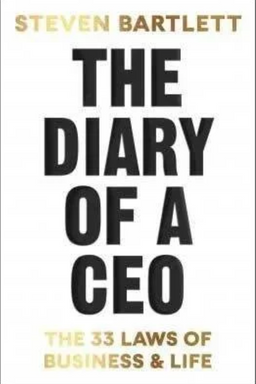
What does it really take to become great—not just successful, but profoundly fulfilled and effective across all areas of your life? In The Diary of a CEO, entrepreneur and podcast host Steven Bartlett argues that greatness isn't a matter of luck, privilege, or sheer talent. Instead, it's determined by obeying a set of psychological and philosophical laws that govern both personal and professional success. Bartlett, who went from a broke university dropout to a multimillionaire CEO before the age of thirty, insists that these laws are universal—they apply whether you're a business leader, a creative, or simply striving to live a meaningful life.
Drawing from hundreds of interviews on his globally renowned podcast, as well as his own business ventures, Bartlett distills success into four fundamental pillars: The Self, The Story, The Philosophy, and The Team. Each pillar, he says, is indispensable for building something that lasts—whether that’s a company, a legacy, or a great sense of personal self-mastery.
Mastering the Self
According to Bartlett, self-mastery is the cornerstone of greatness. Echoing Leonardo da Vinci’s belief that self-control is the highest form of power, he suggests that everything we build externally reflects how we manage ourselves internally. In this first pillar, he presents psychological laws that reshape the way you think, behave, and grow—from prioritizing knowledge and skills over quick rewards (“fill your five buckets in the right order”) to cultivating habits that sustain you without draining willpower.
Bartlett’s approach challenges conventional self-help norms. He doesn’t tell you to “believe in yourself” or “stay positive.” Instead, he insists that self-belief must be earned through evidence. Every small act of perseverance, every uncomfortable truth faced, and every disciplined choice adds proof to the self-story you’re writing—a story that determines how you meet life’s obstacles. (This mirrors Angela Duckworth’s findings in Grit, where sustained effort, not raw talent, predicts long-term success.)
The Story You Tell the World
Once you master yourself, Bartlett says, you must learn to master your story—because humans are wired for narrative, not data. As he puts it, “everything that stands in your way is a human, and nothing persuades humans more effectively than a story.” Leaders who can frame their message engagingly wield extraordinary influence. In the book’s second pillar, he introduces laws drawn from marketing psychology and storytelling craft: how to grab attention (“fight for the first five seconds”), how to make meaning through emotion, and even why “you must piss people off” to stay memorable. These sections blend science and showmanship, demonstrating that attention—our era’s most valuable currency—belongs to those who can tell stories that bypass the brain’s habituation filters.
For example, Bartlett’s first marketing company became famous for its giant blue office slide—a seemingly ridiculous purchase that nevertheless symbolized creativity and disruption. As he notes, people remember absurdity more than practicality. In business as in life, your story isn’t just what you say—it’s the feelings people associate with you.
Living by a Powerful Philosophy
The third pillar moves from psychology to philosophy—the inner compass that guides daily decisions. Your beliefs, Bartlett says, predict your behavior, and your behavior determines your legacy. He draws on neuroscience, behavioral economics, and his conversations with experts like Tali Sharot to reveal how unseen biases shape our choices. From “making pressure your privilege” to “the power of negative manifestation,” he reframes obstacles as opportunities for growth. The goal is to turn challenge into clarity—cultivating calm under pressure, logical optimism, and a bias for action even when failure feels certain.
Bartlett’s philosophy sections recall classics like Viktor Frankl’s Man’s Search for Meaning and Stephen Covey’s 7 Habits of Highly Effective People. Yet his tone is far more modern—grounded in startup grit and scientific pragmatism rather than moral idealism. He repeatedly reminds readers that modern comfort is our greatest enemy: if you want growth, “you have to risk the ordinary to achieve the extraordinary.”
Building a World-Class Team
No one builds greatness alone. The fourth pillar, The Team, addresses how to find the right people, create trust, and construct a culture that outlasts any individual leader. Bartlett’s own companies have employed thousands, and here he distills insights from interviews with legendary founders, managers, and athletes. His message is simple: culture beats strategy. You can’t manufacture motivation through pay or perks; you must craft a sense of purpose so strong that your team feels part of something far greater than themselves.
He cites examples from Sir Alex Ferguson’s Manchester United, Amazon’s relentless experimentation culture, and Toyota’s “kaizen” method of incremental improvement. Whether in business or personal life, progress—not perfection—fuels human engagement. “Tiny progress,” Bartlett writes, “means a lot to people. When they feel it, they realize they can do it again tomorrow.”
Why These Ideas Matter Now
In an economy of distraction and short-term ambition, The Diary of a CEO feels both a manifesto and a mirror. Bartlett reveals that the same principles that build billion-dollar businesses also build resilient, emotionally intelligent humans. His “laws” are not motivational slogans but scientific and philosophical truths about how to think, act, and lead in modern life. Each law connects seamlessly across the four pillars: self-awareness gives you authenticity; storytelling gives you influence; philosophy gives you purpose; and teamwork gives you scale.
Ultimately, Bartlett’s core argument is as practical as it is profound: becoming great is less about knowing what to do, and more about mastering how to think. Once you align your inner world with timeless external principles, success ceases to be situational—it becomes inevitable. The book isn’t just a collection of insights; it’s an operating manual for human potential in the age of complexity.