
Idea 1
Science, Secrecy, and Surrender
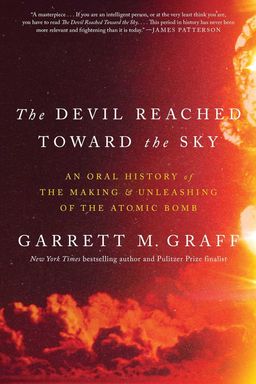
How do you get from a philosopher’s atom to a mushroom cloud that forces a nation to surrender? This book argues that the atomic bomb emerged from a long arc of ideas meeting wartime urgency—science, industry, policy, and secrecy converging into a single instrument of war. You watch classical physics give way to quantum mechanics, émigré scientists carry knowledge across borders, bureaucrats awaken to strategic risk, and military leaders transform laboratories into a hidden industrial state. The story does not end with a flash; it follows the blast wave into hospitals, newspapers, and public memory, asking what it means when knowledge remakes geopolitics overnight.
From ideas to fissionable reality
You begin with centuries of physics: Democritus imagines atoms; Newton’s mechanics orders motion; Maxwell unifies electromagnetism; Planck quantizes energy; Einstein ties mass to energy (E = mc2). That conceptual stack meets experimental breakthroughs—Röntgen’s X-rays, Becquerel and the Curies’ radioactivity, Rutherford’s nucleus, Chadwick’s neutron—until a neutral particle makes it possible to probe nuclei without Coulomb barriers. Fermi’s neutron bombardments, Hahn and Strassmann’s “barium from uranium” puzzle, and Lise Meitner with Otto Frisch’s snowy-walk calculation turn chemistry shock into physics clarity: the nucleus can split and release about 200 MeV, plus extra neutrons that hint at a chain reaction. You feel the moment when scientific curiosity becomes an engineering problem: can you gather enough fissile material to make a runaway chain?
Geopolitics concentrates genius
The book shows you why the next steps happen in Allied labs. Fascism shatters Europe’s universities and drives out talent—Fermi, Wigner, von Neumann, Szilard, Teller, Bethe, and many others land in the U.S. and Britain, remaking American research capacity. That migration is not just a headcount; it brings a culture of crossing theory and practice under pressure. Leo Szilard worries early about Nazi interest in uranium and recruits Einstein to sign a letter to FDR. The Einstein–Szilard letter, delivered by Alexander Sachs, translates scientific danger into political language and starts a chain of committees, funding streams, and priorities that grows into the Manhattan Project.
Policy ignition and military scale
Action is halting until the British MAUD Committee, built on the Peierls–Frisch memo, concludes a bomb is feasible in a few years with focused resources. Mark Oliphant’s blunt trip jolts Washington, and Vannevar Bush and James Conant push for Army control. Leslie Groves, a demanding and decisive engineer, takes command; Arthur Holly Compton concentrates reactor science in Chicago; multiple fissile routes (U‑235 and plutonium) run in parallel to hedge risk. The Met Lab achieves CP‑1 criticality under Stagg Field, proving controlled chain reactions. Oak Ridge’s X‑10 pilot reactor produces gram-scale plutonium; Hanford’s desert complex grows into an industrial engine—reactors, “Queen Mary” separation canyons, and an army of tradesmen—overcoming xenon poisoning through conservative design and fast theory (John Wheeler’s diagnosis).
The mesa and the gadget
Los Alamos becomes the weapon-design crucible and a fenced town. Secrecy shapes daily life—aliases like “Nicholas Baker” for Niels Bohr, colored badges, censored mail—while community improvises schools, theater, and skiing. A technical crisis drives the lab: reactor plutonium contains Pu‑240, whose spontaneous fission threatens gun-type assembly with predetonation. The lab pivots to implosion, where Seth Neddermeyer’s idea meets John von Neumann’s math, George Kistiakowsky’s explosive lenses, and Luis Alvarez–Lawrence Johnston’s microsecond detonators. Trinity’s dawn detonation confirms the gadget works, turning a risky physics bet into wartime fact.
Planes, targets, and ground truth
The 509th Composite Group trains in secret with modified Silverplate B‑29s and rehearses tactics like the steep “donut turn.” On Tinian, Project Alberta assembles the devices; USS Indianapolis delivers uranium components just before its tragic sinking. Enola Gay bombs Hiroshima with Little Boy; Bockscar, after cascades of mishaps, drops Fat Man on Nagasaki. The books’ final turn is human: eyewitnesses in Hiroshima describe a magnesium-like flash, shock, and firestorm; hospitals collapse into chaos; radiation’s invisible arc brings hair loss, bleeding, and marrow failure days later. Occupation authorities initially constrain reporting; Wilfred Burchett writes of an “atomic plague,” and John Hersey’s 1946 piece reframes American memory from triumph to testimony.
What the book contends
The bomb was not a single invention but a system—an alliance of physics, migration, management, and war—whose consequences extend from desert test sites to occupied hospitals and the global imagination.
As you move through the narrative, you see patterns that still matter: how science needs policy storytellers, how secrecy protects and distorts, how parallel engineering hedges uncertainty, and how memory fights to include those who suffered. (Note: Readers of Richard Rhodes will recognize the technical scaffolding; this account adds rich community detail from Los Alamos and survivor voices that shift the center of gravity to lived experience.)