
Idea 1
Vision and Violence in the Gilded Age
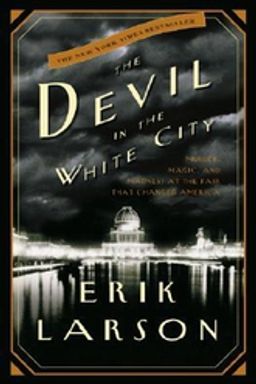
How can beauty and horror coexist in the same city? In The Devil in the White City, Erik Larson reveals how two parallel stories—Daniel Burnham’s creation of the 1893 World’s Columbian Exposition and H. H. Holmes’s spree of murders—intertwine to show the dual spirit of modern progress. Larson argues that the fair’s construction represents not only civic achievement but also the anxieties and darkness underlying urban modernity.
You step into a narrative of contrast: the pristine White City, the fair’s neoclassical utopia of order and brilliance, and the Black City of smoke, corruption, and invisible violence. Burnham, Root, Olmsted, and Ferris each push technological and artistic boundaries to redeem Chicago’s image, while Holmes exploits the same city’s transience and optimism to conceal monstrous acts. The book’s argument rests on this tension—progress and decay, vision and cruelty existing side by side.
Architects of Order
Daniel Burnham, as Director of Works, becomes the orchestrator of civic possibility. His mantra—“Make no little plans”—drives the project as a national symbol of ambition. Paired with John Root’s technical genius, Burnham transforms impossible deadlines and disunity into a feat of engineering coordination. Frederick Law Olmsted adds aesthetic conscience: his Wooded Island and landscaped lagoons remind you that nature and architecture must feel integrated. Every one of these men seeks permanence and moral elevation in a city known for grit and vice.
Burnham operates through power and persuasion. He negotiates with architects from New York—McKim, Hunt, and Post—while calming Chicago firms’ jealousies. The result is an urban orchestration, combining complementary visions under an almost military schedule. Chicago’s redemption depends on spectacle: a city reborn as symbol of modern grace.
The Black City’s Shadow
While Burnham’s fair rises above the shore, Holmes emerges within Chicago’s darker maze. His medical education and charm hide his pathology, his hotel—“The Castle”—a design of gas-filled chambers, soundproof rooms, and acid vats. Larson contrasts the fair’s scientific triumphs with Holmes’s perverse use of science. The same industrial anonymity that supports progress—the packed trains, transient workers, and corroded moral oversight—also shields crime. Holmes embodies the darker possibilities of human ingenuity: efficiency turned inward toward death.
Chicago itself amplifies the dual theme. Its slums and rail yards feed both civic aspiration and predation. The influx of young women seeking independence becomes the fair’s labor supply but also Holmes’s victim pool. In this setting, modern metropolitan life appears both liberating and perilous.
Engineering, Art, and Crisis
The fair’s construction becomes a metaphor for American persistence under duress. You see Burnham managing strikes, weather disasters, and collapsing timetables. Root dies just as plans peak; Ferris builds a massive wheel meant to rival Eiffel; and Olmsted fights delays in botanic supply. The White City’s smooth surface—painted plaster, electric brilliance—is sustained through risk and improvisation. Yet as storms and accidents strike, the illusion trembles. Workers die; the Panic of 1893 empties trains; the Cold Storage fire claims lives and sets Burnham under indictment. Progress demands sacrifice.
Light, Midway, and Cultural Transformation
Larson also uses night as metaphor. When thousands of incandescent bulbs ignite the Court of Honor, the fair becomes dreamlike. Spectacle covers imperfection—“Night is the magician.” The Midway Plaisance offers cultural collage: exotic villages, Buffalo Bill’s Wild West, belly dances, and early consumer products. Electric light, amusement, and performance combine to introduce a new mass culture. The Fair invents entertainment as industry; imagination becomes economy.
Exposure and Justice
Detective Frank Geyer’s pursuit of Holmes restores moral order after chaos. His methodical checking of hotel logs and neighbor memories leads to the unearthing of murderous evidence in Toronto. Geyer’s work symbolizes reason reclaiming ground from deceit—procedure as counterweight to pathology. Holmes’s trial and execution conclude the book not as triumph but warning: the same society that builds monuments to civilization also harbors its demons beneath polished marble.
Final Reflection
You emerge from Larson’s story understanding modernity as paradox: beauty and horror advance together. The White City’s light is inseparable from the Black City’s shadow. This is a history of human ambition—how idealism and cruelty, invention and exploitation, can thrive in the same gleaming metropolis.