
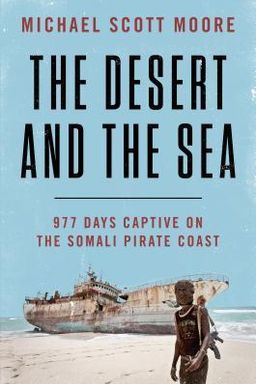
The Desert and the Sea cover

The Desert and the Sea

by Michael Scott Moore

In ''The Desert and the Sea,'' journalist Michael Scott Moore shares his gripping story of survival during a 977-day captivity by Somali pirates. Through his ordeal, Moore explores resilience, empathy, and the complexities of human endurance, offering a compelling narrative that sheds light on the harsh realities of modern piracy and the strength of the human spirit.

Information Power and Human Resilience

In Michael Scott Moore’s account of his Somali captivity, you learn that survival is as much about managing stories and belief as it is about enduring hunger or fear. The book unfolds in overlapping realms—Somalia’s clan politics, the global economics of maritime labor, and the psychological tactics that allow hostages to remain human. It is both a personal memoir and a field study in fragile governance, rumor, and resilience.

Rumor as governance

Early in Moore’s story, a whisper in Galkayo—"a bounty for the foreign journalist"—changes everything. You see how Gerüchteküche, the “rumor kitchen,” functions not as gossip but as institutional power. In a collapsed state, rumors organize action: they replace law, direct fear, and make unstable truths perform like orders. One word from a guard or elder can trigger flight, negotiation, or panic. That ecosystem of rumor shapes not only hostage politics but also daily life in Somalia’s post-state environment.

Clan structures and moral economies

Behind every rumor is clan logic. Pirates like Mohamed Garfanji thrive because clan ties supply loyalty, manpower, and regional protection where institutions fail. The Sa’ad, Suleiman, and other groups form the scaffolding of authority. When Moore hears “President Alin cannot stop the pirates,” it is not exaggeration—it reflects how legitimate and illegitimate powers coexist. The pirates behave not just as criminals but as entrepreneurial warlords whose kinship and business dealings blend into local governance. Understanding this web is how you survive in spaces where law dissolves into clan etiquette.

Economic desperation and global entanglement

Piracy itself emerges as an economic answer to collapse. Depleted fisheries, unfair foreign competition, and global overstretch of cheap maritime labor push young Somali men toward ransom-taking. Moore’s ship, the Naham 3, became a captive marketplace—tuna and shark fins traded for khat money, ransom demands shifting from millions of dollars to livestock offers. Pirates, crew, and hostages inhabit the same distorted economy, where cash is scarce but rumor and violence can yield temporary profits.

Captivity as microcosm of humanity

Once aboard the Naham 3, ordinary survival replaces high politics. Captivity turns time into mechanical rhythm: generator hums, prayer calls, kettles boiling. The hostages trade milk powder, improvised coffee, and jokes as forms of dignity. Pirates steal trivial items—oatmeal or soap—yet these become tests of agency. Moore describes shipboard economies based on barter and moral micro-justice: shouting matches about coffee or fairness become tiny acts of resistance. This attention to detail teaches you how dignity is a daily construction, not a given trait.

Psychological survival and meaning-making

Over months of confinement, Moore builds mental armor—Stoic readings, yoga lessons shared with guards, imagined recipes recited from memory. (Note: comparable to Viktor Frankl’s insights into meaning during suffering.) He transforms routine into resistance: physical stretches, journals of the mind, and moments of empathy across cultures. Even amid theft and violence, friendship with men like Rolly or Li Bo Hai creates fragile solidarity that keeps the psyche intact. Captivity teaches that control of imagination is survival’s foundation.

Negotiation, media, and rescue politics

Meanwhile, negotiation operates as theater. Families, FBI agents, and local mediators trade rumor for leverage while pirates stage proof-of-life videos as emotional commodities to drive ransom prices. Moore’s mother balances silence and publicity, baking for agents while bargaining through intermediaries like Fuad and Sheikh Mohamud. Media exposure, she learns, raises value and risk simultaneously. Even military and intelligence interventions—the Navy SEAL rescue of another hostage—illustrate how power is constrained by moral, logistical, and political trade-offs.

Release and renewal

Moore’s eventual rescue comes through a patchwork of private pilots, negotiation networks, and government coordination. His reunion with surviving crew years later closes the narrative circle: piracy remains, Somalia remains unstable, but individual humanity endures. Across the entire book, you realize information is never neutral, economics never isolated from emotion, and survival never purely physical. It is a meditation on how stories—rumors, prayers, and recipes—can constitute the last structures of order when politics disintegrate.


Rumor, Power, and Fragile Truth

Rumor is this book’s secret protagonist. In central Somalia’s rumor kitchen—a web of whispers, calls, and gestures—truth becomes a weapon. You see Moore learning that a single sentence can rearrange convoys, guard loyalties, and even international decisions. Information itself is dangerous currency.

How rumor governs behavior

In an environment without functioning institutions, rumor substitutes for verification. Guards and elders spread stories that enforce obedience. When Hamid tells Moore there’s a bounty on his head, it triggers real political effects—heightened guards, changed routes, moral panic. Later, when Garfanji demands a “White House letter,” rumor becomes weaponized theater. These stories end up shaping official negotiations and public perception as much as facts do.

The social logic of rumor

Because rumor works as collective governance, it punishes skepticism. In weak systems, to ignore rumor is riskier than acting on falsehoods. For the pirates, rumor creates markets—claims of multimillion-dollar ransoms inflate bargaining positions; false affiliations with governments add legitimacy. For Moore, understanding rumor means surviving its manipulative theater. His counterstrategy—verifying through the FBI or family communication—demonstrates that truth must be actively manufactured in crisis zones.

Core lesson

In fractured societies, rumor functions as a moral and political institution—it directs behavior more efficiently than law but with far more volatility.

If you operate or report in such environments, Moore’s experience warns: manage stories as if they were tactical assets. Trace origins, protect secure channels, and treat information like physical armor. Facts preserve life only when filtered through disciplined skepticism.


Clan Power and Collapse

Piracy in the book grows from clan webs, not chaos. After Somalia’s state collapse, traditional kin networks become the only functioning authority. You meet elders like Digsi and political figures such as President Alin of Galmudug, men navigating bare legitimacy amid territorial fragmentation.

How clan logic replaces government

Pirate leadership draws strength from clan identity: loyalty to kin trumps legal order. Moore realizes that every guard’s allegiance depends on lineage, not contract. When negotiations unfold, clan mediators decide whether rescue or revenge makes sense. Thus, every transaction becomes a moral calculus within lineage politics.

Pirates as political entrepreneurs

Garfanji’s investments—paying local doctors, buying property—show pirates acting as quasi-public figures, funding services the state cannot. Their criminal economies blur into basic governance. This integration of informal authority and economic entrepreneurship reveals how local disorder generates hybrid forms of power—simultaneously criminal and civic.

Practical takeaway

You cannot treat pirates merely as criminals—they are actors within a regional moral economy whose incentives stem from systemic absence of state services.

To move safely or negotiate effectively in a collapsed state, you must read its human map. Loyalty flows through kinship, reputation, and reciprocal debt—the unspoken architecture behind every Somali transaction.


Economics of Captivity

Captivity turns global inequality into lived experience. Moore’s ordeal lays bare maritime labor’s dark underside: foreign shipowners profit; international consumers eat cheap fish; and hostages, guards, and pirates migrate through economic desperation. Piracy is an accidental node in global trade.

Ransom, fish, and side hustles

The economics on the Naham 3 are surreal—ransom calculations fluctuate from twenty million dollars to symbolic payment in camels. Guards, unpaid or underpaid, steal soap or milk from hostages to survive. Pirate bosses fund operations with khat sales, fish harvesting, and shark-fin trades. The book captures how criminal enterprise merges with subsistence welfare.

Global labor chain

The crew themselves—Filipino, Vietnamese, Cambodian, Chinese—represent globalization’s bottom tier. Recruited by offshore agencies, they endure impossible hours and minimal wages. Piracy magnifies exploitation rather than creating it. Moore’s empathy with these men transforms the hostage narrative into critique of international labor systems that funnel poverty toward danger zones.

Economic insight

Piracy thrives where global capitalism extracts and excludes—coastal collapse translates into criminal entrepreneurship when legitimate incomes vanish.

The author’s message is economic morality: preventing piracy requires not only patrol boats but fair fisheries and dignified work. Crime there is not pathology but distorted survival strategy.


Life on the Naham 3

The Naham 3 becomes a floating anthropology lab—a society of fear, barter, and solidarity. Captives and guards improvise routines that preserve sanity while eroding moral boundaries.

Daily cycles of confinement

You live by mechanical rhythms: boiling kettles, generator hums, prayer calls. Coffee theft or a bowl of rice can provoke more fury than major events, because such micro-conflicts define dignity. Pirates regulate every bodily movement—bathroom trips, sleep, and food rationing—through informal hierarchies. Moore’s stolen oatmeal mantra becomes emblematic: in captivity, trivial loss equals existential insult.

Micro-economies and solidarity

Within the ship, barter creates a fragile social economy. Crew exchange cigarettes, milk, or humor. Friendship and empathy bridge ethnic lines—Tony shares a Bible, Li Bo Hai offers ginger oil, Rolly tells stories to sustain morale. These acts engineer community under coercion, showing that compassion is not erased by terror but disguised as routine.

Moral insight

Solidarity under duress produces ethical clarity: when systems collapse, moral life continues in gestures of sharing and humor.

Moore’s shipboard detail teaches you to read humanity in fragments—a cup of coffee, a smile, or folded paper cranes as the last architecture of hope.


Faith and Moral Theatre

Religion functions throughout as a paradox—both sincere comfort and moral camouflage. Pirates fast and pray while stealing from non-Muslims; faith becomes behavioral code and justification system at once.

Dual performance of belief

During Ramadan, Moore witnesses real piety: guards doze through fasting, and Abdinasser offers him food and kindness. Yet others manipulate scripture to legitimize theft—arguing that taking money from non-believers serves religious struggle. This use of selective ethics turns devout language into moral theater.

Faith shaping captivity

Prayer times, scriptural debates, and “inshallah” delays form operational rhythm. Religious talk cools tempers, excuses theft, or smooths negotiation. Moore learns to read these rituals strategically—understanding them as both cultural sincerity and political currency.

Core observation

Faith here is social technology—it orders daily life, obscures moral contradictions, and establishes temporary peace amid lawlessness.

The author’s balanced view encourages empathy with individual believers while unmasking religion’s instrumental use in power negotiation.


Negotiation and the Price of Hope

Negotiation for a hostage is a moral, psychological, and media battlefield. In Moore’s case, intermediaries, government agents, and pirates stage a long, theatrical market in trust and desperation.

The layers of mediation

Fuad, Abdurrahman, and Sheikh Mohamud each claim authority to broker ransoms. Their motives range from idealistic to self-serving. Proof-of-life videos and calls validate existence but also create leverage. Negotiation oscillates between hope and betrayal, tracing every rumor back through human intermediaries with competing reputations.

Media as moral calculus

Publicity can save or endanger—Moore’s mother restricts press coverage to keep value low, then confronts the paradox that silence slows official action. Negotiation becomes a balance between emotional transparency and strategic opacity. Each piece of evidence—a photo or speech—reshapes the hostage’s market value.

Important takeaway

Every exchange of information during hostage crises is also a trade of dignity and price—silence and speech carry tangible cost.

Negotiation teaches patience and skepticism. Progress happens through layered signals, not decisive bargains, demanding emotional endurance as much as strategic skill.


Escape, Surveillance, and Force

Rescue in Moore’s world is rare and ambiguous. You watch him plan an ocean jump with desperate precision—an LED lighter as signal, timing with aircraft—and see military surveillance translating to hostages’ trembling hope. Force, he learns, has limits shaped by politics and morality.

The logic of desperation

The leap from the Naham 3 is an act of calculated faith. Warm water, failed signal, painful retrieval—his plan costs him solitary confinement and worsens guard suspicion. Other prisoners’ failed escapes confirm the same moral truth: heroism under captivity implicates others. You act with courage but bear collateral guilt when others suffer.

Surveillance and limits of rescue

Military drones and helicopters symbolize possible salvation, yet their presence increases pirate paranoia. The Navy SEAL raid that kills captors elsewhere reminds you that rescue success is rare and politically contingent. Moore turns to signalling the sky—Morse-coded light and hope—but learns that visibility can endanger.

Moral paradox

Power can save lives or heighten suffering; surveillance reassures families but provokes captors. Every act of visibility is a double-edged form of hope.

From escape attempts to SEAL raids, the book concludes that courage must pair with cold realism. Tactical patience often saves more than spontaneous boldness.


Rescue and Renewal

Moore’s eventual release closes the circle of governance, rumor, and resilience. After endless negotiation, he is freed through a mosaic of local pilots, global agencies, and simple courage. Freedom itself becomes another bureaucratic theater.

The mechanics of extraction

Leaving Galkayo means crossing checkpoints, boarding light planes, and trusting strangers with your life. The pilot Derek’s light aircraft and the multinational coordination form a quiet counterpoint to the chaos that preceded it. Each segment—from car to C-130—represents cumulative effort rather than miracle.

Aftermath and reintegration

Freedom brings confusion: medical exams, FBI debriefs, silence about trauma. Moore’s reunion with his mother and later with surviving crew exposes delayed grief—his grandmother’s death, crew injuries, lost years. Post-rescue life demands psychological reconstruction; small pleasures like clear water or unbarred windows acquire moral gravity.

Closing thought

Rescue is less a triumph than proof of interconnected compassion—the sum of strangers, institutions, and deliberate acts that rebuild one life from disorder.

In the book’s final tone, gratitude and realism coexist. Somalia’s turmoil persists, yet the endurance of empathy—pilots, guards, and mothers alike—remains the lasting redemption.

Dig Deeper

Get personalized prompts to apply these lessons to your life and deepen your understanding.

Go Deeper

Get the Full Experience

Download Insight Books for AI-powered reflections, quizzes, and more.