
Idea 1
Why Your Twenties Matter More Than You Think
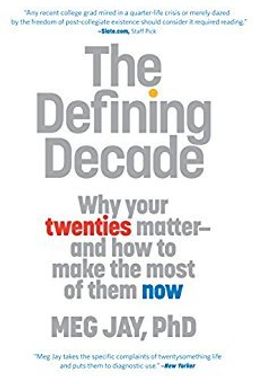
Have you ever been told that your twenties are the time to relax, experiment, and figure things out later? In The Defining Decade: Why Your Twenties Matter—and How to Make the Most of Them Now, psychologist Meg Jay argues that this cultural myth is dangerously misleading. She contends that far from being a throwaway decade, our twenties are the most pivotal years of adult development—the time when the choices we make quietly shape our entire future.
Jay’s core argument is simple but profound: your twenties are not rehearsal—they’re real life. With decades of research and stories from her own clinical practice, she shows how these years are a “critical period” for work, love, the brain, and the body, when small shifts can set the trajectory for career success, lasting relationships, and personal fulfillment. She challenges the comforting idea that “thirty is the new twenty” and insists that waiting to grow up is not only impractical but costly, both emotionally and materially.
A Generation Caught in Limbo
Jay begins by describing a generation caught between adolescence and adulthood. Many twentysomethings, she observes, feel directionless—educated, yet underemployed; connected online, yet isolated in real life. They’ve been told there’s time to figure everything out later, that career shifts and romantic decisions can wait. Yet research shows that 80% of life’s most significant events—career milestones, marriage, and even health patterns—happen before age 35. The irony is that while our twenties might feel provisional or inconsequential, they’re actually the years when everything is being decided.
This cultural confusion stems from the rapid social changes of the past half century—later marriage, longer education, and economic instability. But Jay warns that treating these years as optional preparation rather than active adulthood leads to long-term regret. The twenties, she writes, “aren’t a mystery; we know how they work. They deserve to be taken seriously.”
Work, Love, and the Brain as Turning Points
Jay structures her book around three transformative areas: Work, Love, and the Brain and Body. In “Work,” she explores how early professional experiences build what she calls identity capital—the collection of skills, habits, and relationships that shape our future opportunities. Even modest jobs in our twenties matter; they open paths we may follow for decades. She uses real examples—from Helen, who turned a near aimless nannying life into a film career, to Kate, who learned that waiting until thirty to start living was a losing bet—to show that progress begins when we act intentionally.
In “Love,” she makes an equally striking point: how we approach relationships in our twenties is as consequential as our career choices. Premature cohabitation or choosing partners for convenience rather than values often leads to long-term dissatisfaction. Through cases like Emma, who learned to “pick her family,” and Jennifer, who realized her marriage collapsed because she slid into cohabitation without conscious choice, Jay reveals that love in our twenties demands discernment, not just chemistry.
The Science Behind the Decade
Jay blends narrative with neuroscience, explaining that our brains finish major development during our twenties. The frontal lobe—responsible for decision-making and planning—undergoes rapid growth and pruning. Every experience and habit becomes part of its wiring. The lessons we learn, the risks we take, and the routines we build define how we think and act for decades to come. In short, adulthood doesn’t start at thirty—it’s being built every day in your twenties.
She also explores fertility, showing how delaying childbearing too long can carry emotional and physical consequences most young women never anticipate. Biology, Jay reminds readers, hasn’t caught up with social progress, and thinking strategically about timing isn’t old-fashioned—it's responsible.
Intentionality Over Optimism
Ultimately, The Defining Decade is about reclaiming adulthood through intentionality. Jay warns against what she calls “unrealistic optimism,” the assumption that things will somehow work out without deliberate effort. Hope, she says, is a good breakfast but a bad supper. What twentysomethings need isn’t blind optimism but informed, active planning. She encourages readers to live life “in real time”—to start building careers, relationships, and habits with awareness that time isn’t infinite.
“The unlived life is not worth examining,” Jay writes, flipping Socrates’ famous quote. Reflection matters—but only when life is being lived with purpose.
Through stories, psychology, and cultural insight, Meg Jay reframes your twenties from a time of uncertainty into one of immense possibility. Whether you’re struggling with career decisions, romantic confusion, or fear of failure, her message is both sobering and empowering: what you do now matters—and it might matter more than anything you’ll ever do again.