
Idea 1
Rethinking Money, Deficits, and What Truly Limits Us
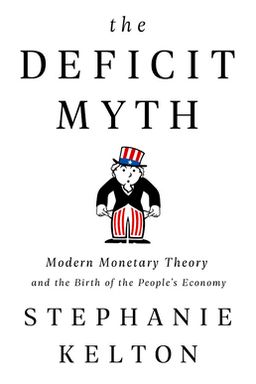
What if everything you’ve been taught about government finance is backwards? In The Deficit Myth, Stephanie Kelton challenges the conventional wisdom that the U.S. federal government must tax or borrow before it can spend. Drawing on Modern Monetary Theory (MMT), she argues that because the United States issues its own currency, it can never go broke in its own money. The true constraint is not revenue but the availability of real resources—labor, materials, and productive capacity. Kelton’s project is both diagnostic and emancipatory: she wants to show you that what we call fiscal constraints are actually political choices.
Kelton’s argument unfolds in a provocative sequence. First, she dismantles the “government as household” analogy and explains the difference between currency issuers and currency users. Second, she redefines what deficits, debt, and inflation mean within a sovereign monetary system. Third, she examines how MMT reframes debates about entitlements, jobs, trade, and climate. Finally, she invites you to focus on the real deficits that threaten prosperity—deficits of health, education, infrastructure, and democracy.
Currency Issuer vs. Currency User
You balance your checkbook because you’re a currency user. But the U.S. government is the currency issuer—it creates dollars by spending them into existence. When Congress authorizes spending, the Treasury instructs the Federal Reserve to credit a recipient’s bank account. No taxpayer’s wallet is opened first. Taxes and bond sales merely change where the dollars reside and help regulate demand and inflation, not fund spending. Warren Mosler’s story about paying his kids with business cards captures the logic perfectly: the cards had value only because he demanded them in payment for “taxes.” In the same way, federal taxes create demand for dollars but do not finance the government’s ability to spend them.
Kelton sums this up with the sequence S(TAB): spend first, then tax and borrow. The conventional order—(TAB)S—is a political illusion. Understanding that order is like switching from a geocentric to a heliocentric model of fiscal reality.
Deficits as Surpluses for the Private Sector
A federal deficit is not evidence of waste; it’s a mirror of private-sector savings. According to economist Wynne Godley’s sectoral balances framework, one sector’s deficit is another sector’s surplus. When Washington spends more than it taxes, households and firms accumulate net financial assets—government bonds and deposits that make up private wealth. This reverses the “crowding out” myth. Rather than draining the pool of savings, deficits expand it. When policymakers cut deficits too aggressively, they remove financial assets from the private sector, often leading to recessions (as the U.S. experienced after the budget surpluses of 1835 and 1999).
Inflation, Not Insolvency, as the Real Limit
If the U.S. can create unlimited dollars, doesn’t that mean runaway inflation? Kelton’s answer is nuanced: deficits become dangerous only when they push spending beyond real productive capacity. The limit isn’t financial; it’s real. Inflation occurs when demand outpaces the economy’s ability to produce goods and services. Thus, the job of fiscal policy is functional—not to balance books but to balance the economy. When unemployment is high, deficits are necessary; when inflation accelerates, taxes or spending cuts can slow demand.
To stabilize prices and employment simultaneously, Kelton and other MMT economists advocate a federal job guarantee—a standing offer of public employment at a fixed wage that anchors the labor market and replaces involuntary unemployment with a living-wage buffer. This policy acts as an automatic stabilizer, expanding in downturns and contracting in booms, while building public goods and services.
Debt and Global Finance Through a New Lens
Kelton reinterprets the national debt as the cumulative record of dollars the government has provided to the rest of us. Treasuries held by households, pension funds, or foreign governments are our assets, not future burdens. China’s holdings of U.S. bonds, for instance, represent its savings in dollars earned by exporting to America—not an instrument of control over U.S. finances. Insolvency risks arise only in nations that lack monetary sovereignty—countries that borrow in foreign currencies or peg their exchange rates (as Greece discovered under the euro).
The Moral and Political Reframing
Kelton’s deeper challenge is moral and political: she wants you to stop asking, “How will we pay for it?” and start asking, “Do we have the real resources and political will?” Programs like Social Security, Medicare, and climate adaptation aren’t unaffordable; they’re decisions about resource use. The Social Security trust fund is an accounting construct—its “shortfall” is legal, not monetary. Congress could alter the law tomorrow to guarantee payments indefinitely. What truly matters is ensuring there are enough doctors, caregivers, and sustainable energy systems to meet society’s needs without generating inflation.
In Kelton’s paradigm, the real “deficits” that deserve alarm are social and ecological: deficits of jobs, education, infrastructure, health care, and climate resilience. Modern Monetary Theory, in essence, reframes money as a public tool for collective well-being. By revealing that fiscal limits are choices, not natural laws, it transforms how you can imagine using public power to build a fairer, more sustainable future.