
Idea 1
The Fragile Architecture of Global Money
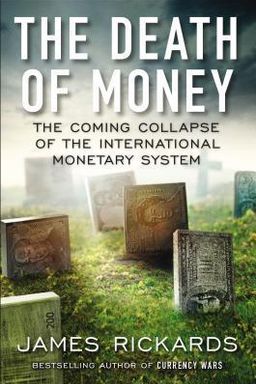
You live in a world where money itself has become an instrument of strategy, confidence, and conflict. James Rickards argues that modern finance is not a marketplace but a complex network of trust, policy, and warfare—a system balanced on the dollar’s credibility and the assumptions of central bankers. His core claim is that the international monetary system is fragile, structurally overleveraged, and nearing a critical transition toward either an IMF-led SDR regime, a return to gold, or collapse and social disorder.
Rickards blends economic history, intelligence operations, and complexity theory to show how currencies, markets, and even cyber systems have become fields of battle. He asks you to think of money not only as economics but as security and psychology. When confidence in the dollar falters, everything built upon it—from trade settlement to derivatives—shifts violently.
From Bretton Woods to monetary warfare
The dollar’s dominance stems from postwar agreements—Bretton Woods and Nixon’s 1971 decision to close the gold window—that redefined global liquidity as faith in the United States. Yet every few decades, that faith nearly fails: the 1978 panic, the 2008 financial crisis, and the 2020 pandemic all reveal how close collapse can come when trust wavers. Rickards traces these echoes to argue that the next crisis will not simply be financial, but systemic.
He introduces the idea of complexity: the global financial system behaves like an evolving ecosystem, not a stable equilibrium. Central banks treat it as linear, using simple cause-effect models (raise rates, slow growth; print money, raise inflation). But nonlinear dynamics mean small shocks—like liquidity freezes or cyberattacks—can cascade into collapses far larger than the initial event.
Confidence, contagion, and collapse
Rickards defines collapse not as hyperbole but as a rapid loss of faith in money’s future value. Investors dump dollars, buy real assets, bid up gold, and force wild shifts in interest rates. Collapse unfolds through behavior: once confidence fails, policy tools lose traction. The Fed can print currency, but it cannot print trust.
You see how inflation and deflation coexist—the inflation–deflation paradox. Central banks fight deflation (which worsens real debts) by printing money, but that printing can create asset bubbles and hidden fragility. Easy money props up prices yet weakens the system. The paradox locks policymakers into cycles of stimulus and panic with no sustainable equilibrium.
Multipolar pressure and emerging alternatives
While the dollar strains under debt and deficits, other actors move. China builds shadow-banking structures at home and covertly accumulates gold abroad. Russia and BRICS allies create new institutions—the New Development Bank and Contingent Reserve Arrangement—to bypass the IMF and dollar system. The euro hardens under Germany’s discipline, refusing collapse despite crisis. Collectively, these represent a shift toward a multipolar world where reserve diversification becomes both economic defense and political expression.
Rickards argues that the IMF could become the de facto global central bank, expanding its Special Drawing Right (SDR) currency to supply liquidity when national balance sheets fail. The SDR may evolve into true world money, backed partially by gold, institutional credibility, and multilateral consensus. Yet this transition would reallocate power—away from national sovereignty and toward supranational governance.
Learning from history and preparing for futures
To navigate this future, you must watch signals: gold prices, SDR issuances, dollar index lows, and central-bank balance sheets. The book blends intelligence analysis with investor guidance—advising you to think in scenarios, not forecasts. Preparation means holding assets resilient in both inflation and deflation, reading policy moves as psychological signals, and recognizing that global money now operates on confidence far more than credit.
Rickards’s message
The monetary system is not stable—it is complex and near criticality. Collapse will not look like a movie apocalypse but like cascading loss of trust where paper promises and digital balances suddenly convert, reprice, or freeze. You cannot predict the snowflake that triggers the avalanche, but you can measure the snowpack.
In sum, Rickards paints a world approaching a structural reset. The next regime will either centralize under the IMF’s SDR, decentralize via gold, or fracture under social strain. Whatever path emerges, the lesson is constant: confidence, not liquidity, is the true foundation of money—and preparing for its loss is the rational, not paranoid, response.